LACK OF ART — THE ART OF LACK
(NL) De titel draait op één woord in twee talen: in het Zweeds is lack lak of vernis — de afwerking, en de naam die IKEA deze tafel in 1979 gaf — terwijl het in het Engels afwezigheid betekent. Die afwezigheid is het onderwerp. LACK OF ART ontstond in 2022, uit een decennium waarin de markt zijn werk mocht doen en de cultuur als eerste werd losgelaten: alles voor de winst, zoveel mogelijk voor zo min mogelijk.
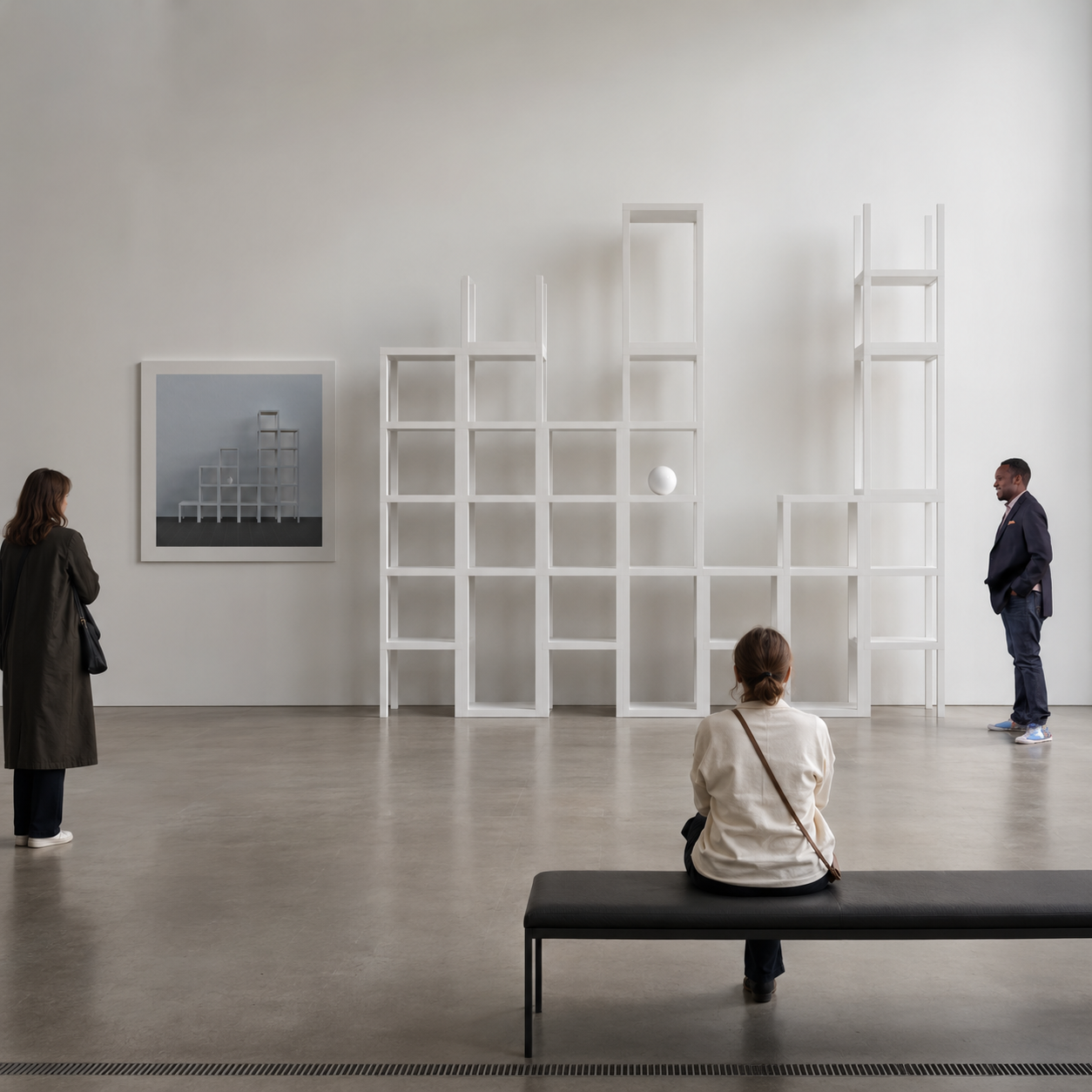
More For Less. De drager is daarom met opzet het goedkoopste dat er is — een kale LACK-bijzettafel, board-on-frame, €6,99. Geen minimalistische grap maar een bewijsstuk: zó goedkoop is kunst gemaakt. De regel is streng: neem de witte tafel, stapel haar één tot zes hoog, elk blad boven of onder, niets zijwaarts. Zes is het plafond — die hoogte raakt de kamer, en daar stopt het. Precies 126 verticale combinaties blijven over: een gesloten set, een DNA voor de serie (2⁷ − 2). Op die starre grammatica beweegt één vrij element — een bol die geen regel gehoorzaamt, een lichaam dat stijgt, valt en opnieuw begint binnen het systeem. De lijn is niet verborgen: de witte stapels zijn Judd, de regel-die-het-werk-maakt is LeWitt. En daar zit de pointe: het werk zegt dat iedereen kunst kan maken met een tafel van €6,99 — en verbiedt vervolgens bijna alles. De belofte van vrijheid levert een dwangsysteem. Die tegenspraak is de aanklacht.
More For Less. The Art of LACK.
LACK OF ART — THE ART OF LACK
(EN The title turns on one word across two languages: in Swedish lack is lacquer — the finish, and the name IKEA gave this table in 1979 — while in English it means absence. That absence is the subject. LACK OF ART began in 2022, out of a decade in which the market was left to do its work and culture was the first thing let go: everything for profit, as much as possible for as little as possible.
More For Less. The carrier is therefore deliberately the cheapest thing going — a plain LACK side table, board-on-frame, €6.99. Not a minimalist joke but evidence: this is how cheaply art has been made. The rule is strict: take the white table, stack it one to six high, each top up or down, nothing sideways. Six is the ceiling — that height meets the room, and there it stops. Exactly 126 vertical combinations remain: a closed set, a DNA for the series (2⁷ − 2). Across that rigid grammar one free element moves — a sphere that obeys no rule, a body that rises, falls and begins again inside the system. The lineage is not hidden: the white stacks are Judd, the rule-that-makes-the-work is LeWitt. And there the point sits: the work says anyone can make art from a €6.99 table — then forbids almost everything. The promise of freedom hands you a system of constraints. That contradiction is the indictment.
More For Less. The Art of LACK.
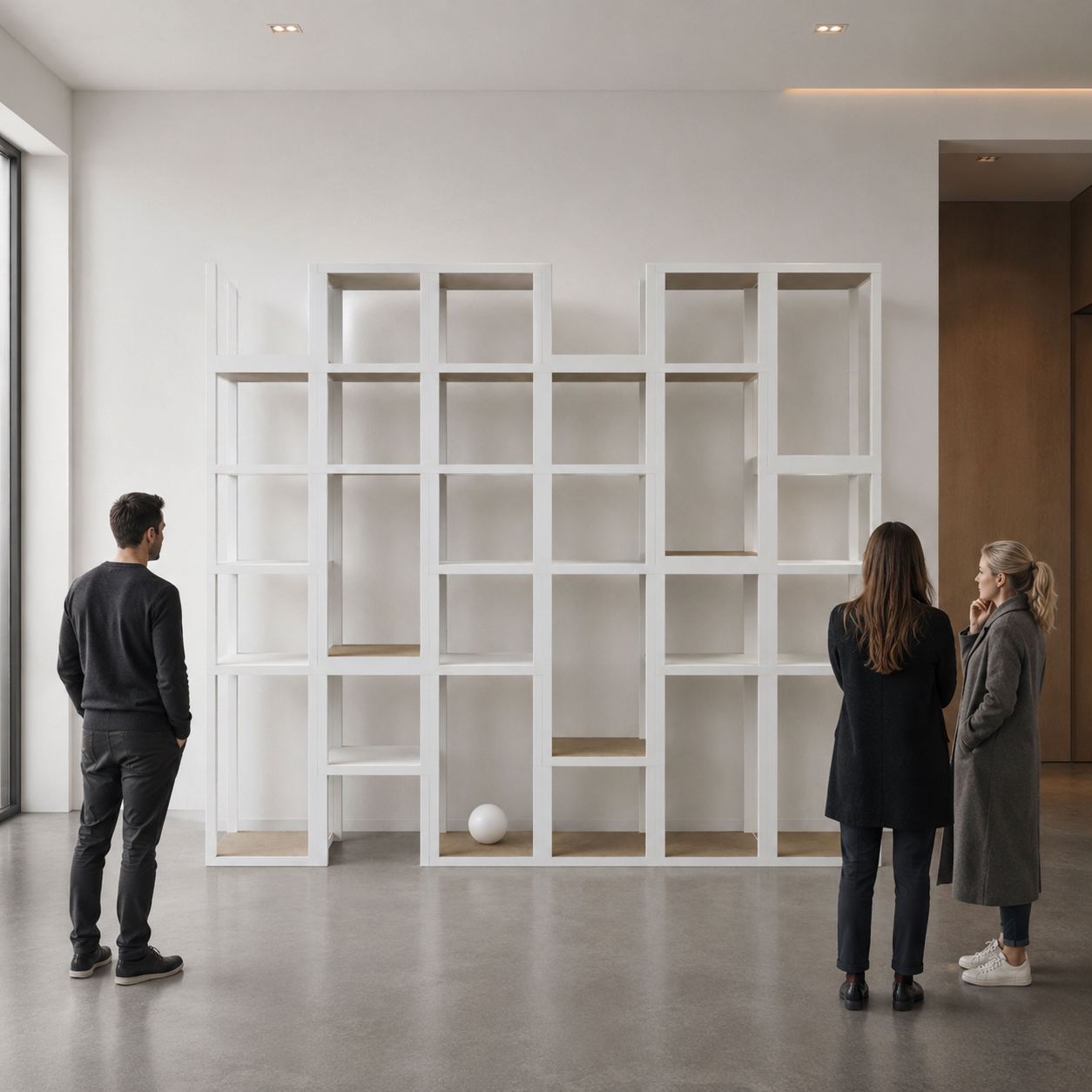
Model 6V023-6V014-6V002-6V029-6V025-6V024
The Movie with 720 Stop-Motion images and a total of 2160 renderings.
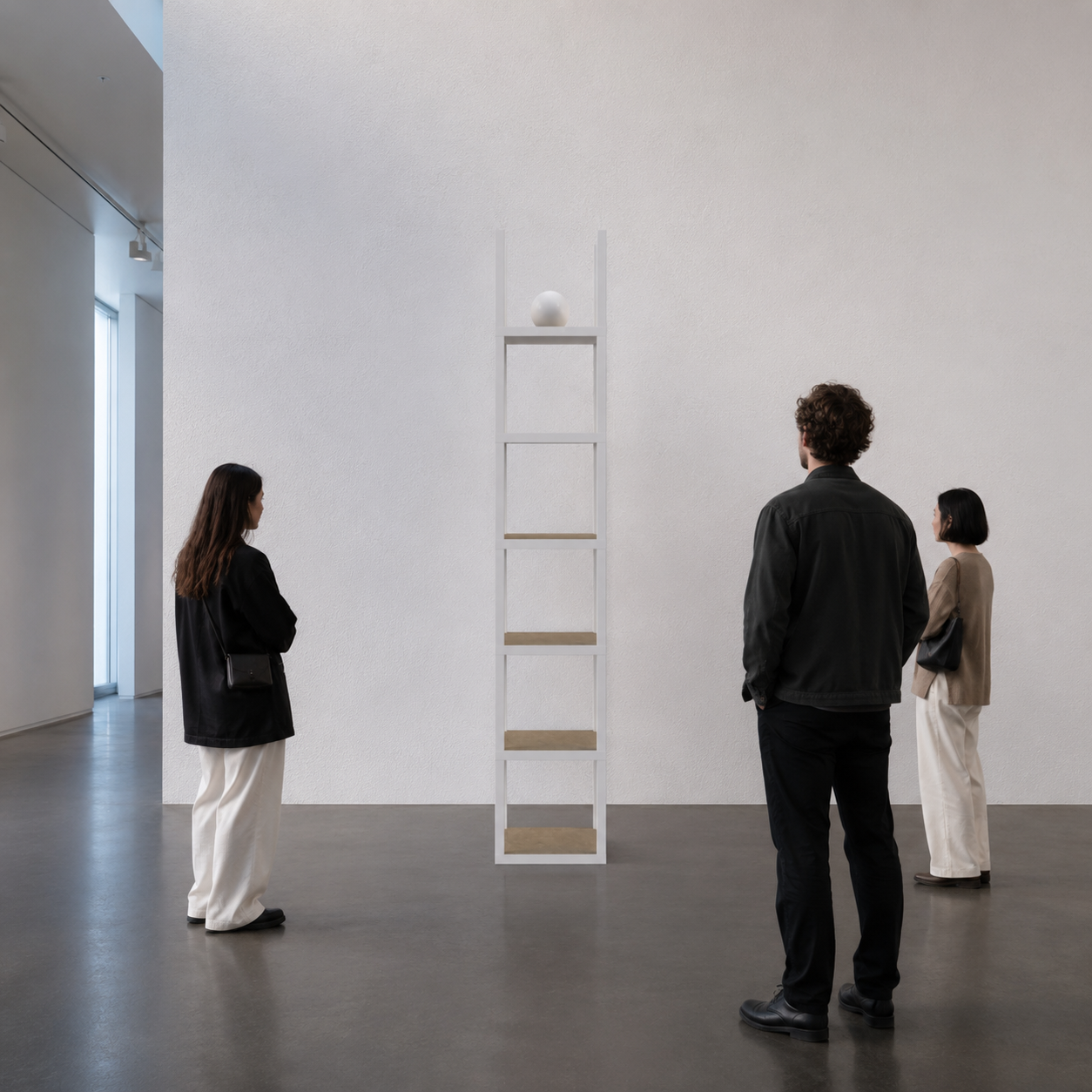
Model 6V007
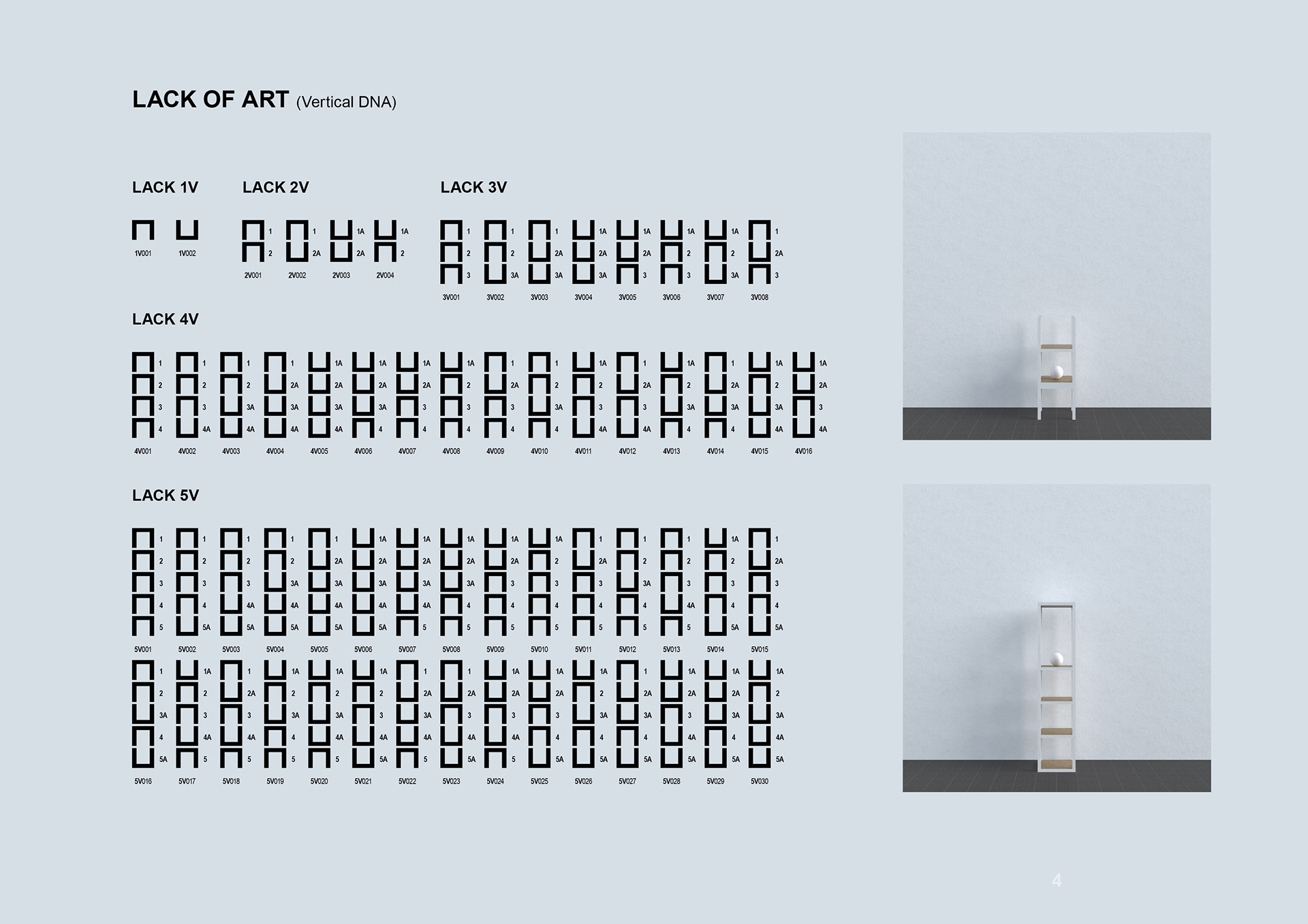
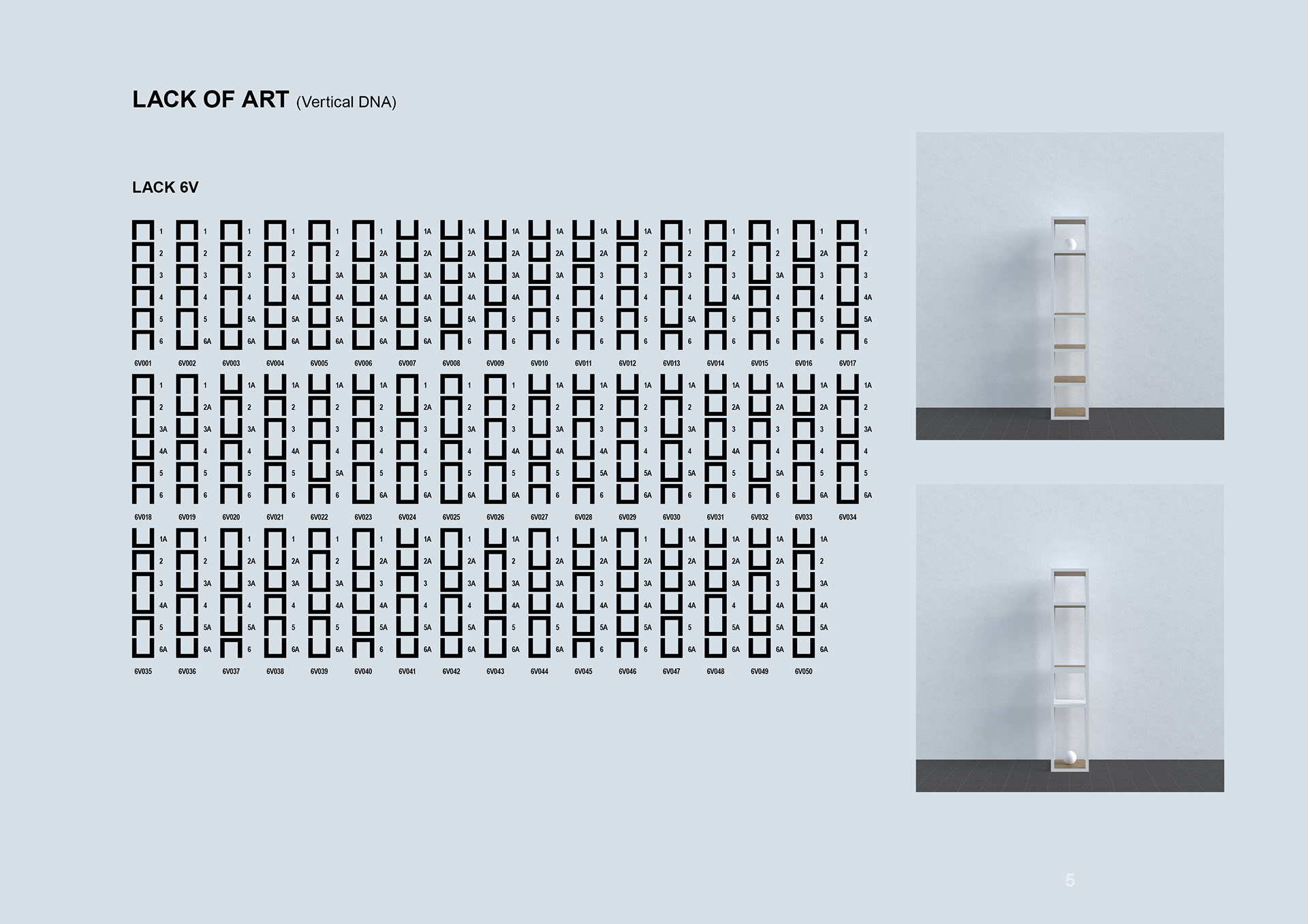
(NL) Het systeem kent twee bases. Elke LACK-tafel staat met het blad boven (1V001) of met het blad onder (1V002) — één keuze, één bit, één base-paar. Een stapel is niets anders dan een woord dat uit deze twee tekens is opgebouwd, en omdat de volgorde in de stapel meetelt, levert elke hoogte 2ⁿ mogelijkheden op: twee bij één tafel, vier bij twee, acht bij drie, en zo door tot vierenzestig bij zes. Samen zijn dat 2 + 4 + 8 + 16 + 32 + 64 = 126 configuraties, of in gesloten vorm 2⁷ − 2 = 126. Dit is het eerste niveau: het genoom van één element, na te tellen op de charts, waar de nummering in elke reeks precies tot 2, 4, 8, 16, 32 en 64 loopt. Zes is het plafond omdat die hoogte de kamer raakt; daar stopt het gen.
Het tweede niveau ontstaat wanneer de configuraties zelf de bouwstenen worden. Zet zes posities naast elkaar en geef elke positie vrij een van de 126 configuraties, dan wordt de rij een woord uit een alfabet van 126, zes tekens lang: 126⁶ = 4.001.504.141.376. Ruim vier biljoen rijen. Waar het eerste niveau uit twee bases 126 configuraties maakt, maakt het tweede uit 126 configuraties ruim vier biljoen composities. Base, gen, organisme — dezelfde generatieve logica op twee schalen. Dat is waarom DNA hier geen sierwoord is maar de structuur zelf. En pas op dit niveau wordt het beeld van „elke dag een nieuwe” waar: vier biljoen ontwerpen zijn genoeg voor een nieuw werk elke dag, meer dan tien miljard jaar lang — bijna zo lang als het heelal bestaat.
Twee getallen die verward mogen worden maar het niet zijn: 126 is het aantal configuraties, de losse stapels die kunnen bestaan. 21 is het aantal fysieke tafels dat nodig is om één volledige reeks van 1 tot 6 hoog tegelijk te bouwen (1 + 2 + 3 + 4 + 5 + 6). Het eerste telt vormen, het tweede telt materiaal. Beide zijn waar.
(EN) The system has two bases. Each LACK table stands top up (1V001) or top down (1V002) — one choice, one bit, one base pair. A stack is simply a word built from these two signs, and because order within the stack counts, each height yields 2ⁿ possibilities: two for one table, four for two, eight for three, on to sixty-four for six. Together that is 2 + 4 + 8 + 16 + 32 + 64 = 126 configurations, or in closed form 2⁷ − 2 = 126. This is the first level: the genome of a single element, countable on the charts, where the numbering in each series runs exactly to 2, 4, 8, 16, 32 and 64. Six is the ceiling because that height meets the room; there the gene stops.
The second level appears when the configurations themselves become the building blocks. Set six positions side by side and let each position freely take one of the 126 configurations, and the row becomes a word from an alphabet of 126, six signs long: 126⁶ = 4,001,504,141,376. More than four trillion rows. Where the first level turns two bases into 126 configurations, the second turns 126 configurations into more than four trillion compositions. Base, gene, organism — the same generative logic at two scales. This is why DNA here is not an ornament but the structure itself. And only at this level does the image of “a new one every day” come true: four trillion designs are enough for a new work every day for more than ten billion years — almost as long as the universe has existed.
Two numbers that invite confusion but are not the same: 126 is the number of configurations, the individual stacks that can exist. 21 is the number of physical tables needed to build one complete series from 1 to 6 high at once (1 + 2 + 3 + 4 + 5 + 6). The first counts forms, the second counts material. Both are true.
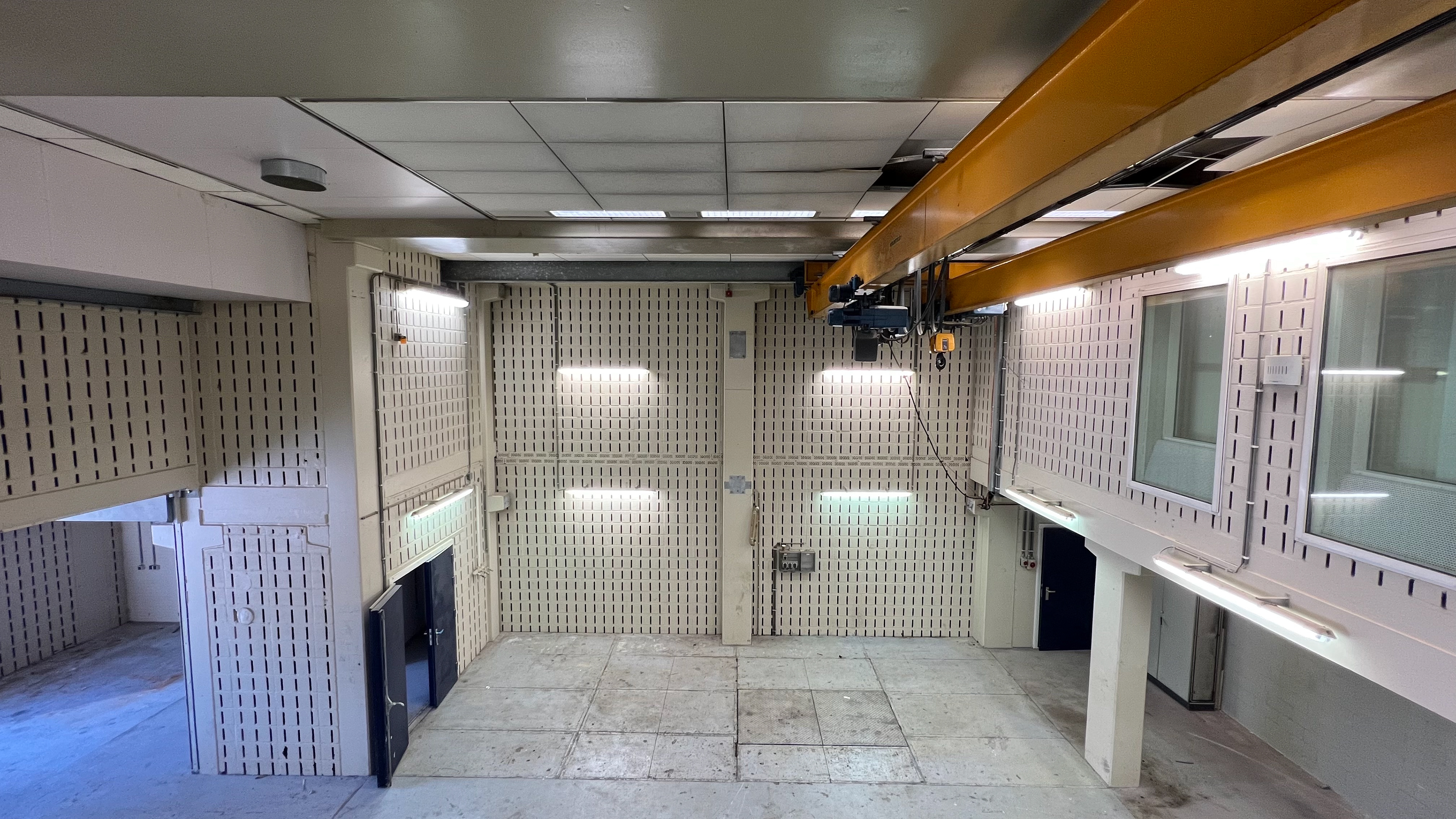
Exposition space at Perron038. Old machinebuilding space from the '70s. No permission to make adjustments to the floor, walls or ceiling.
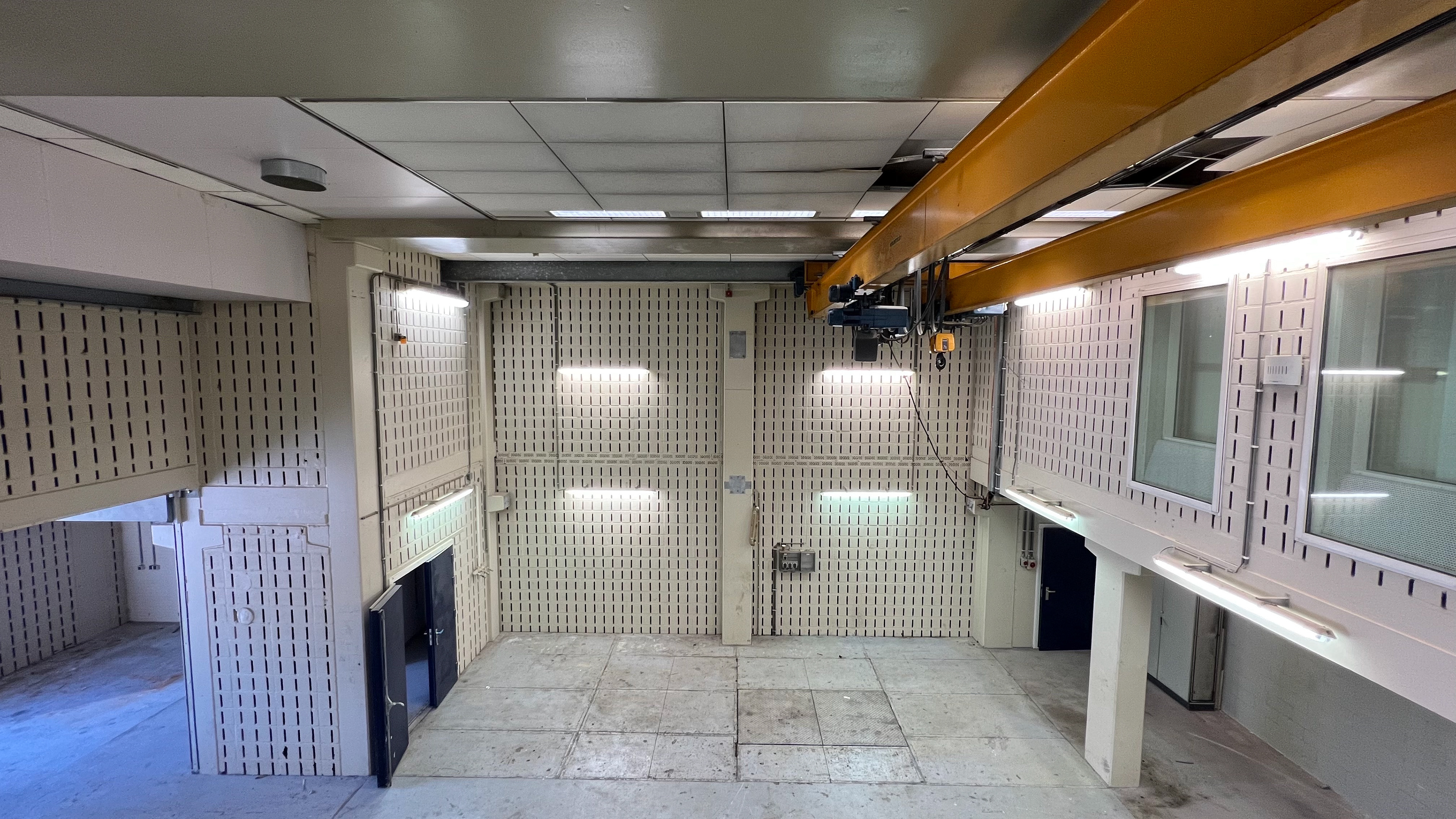
Exposition space at Perron038. Old machinebuilding space from the '70s. No permission to make adjustments to the floor, walls or ceiling.
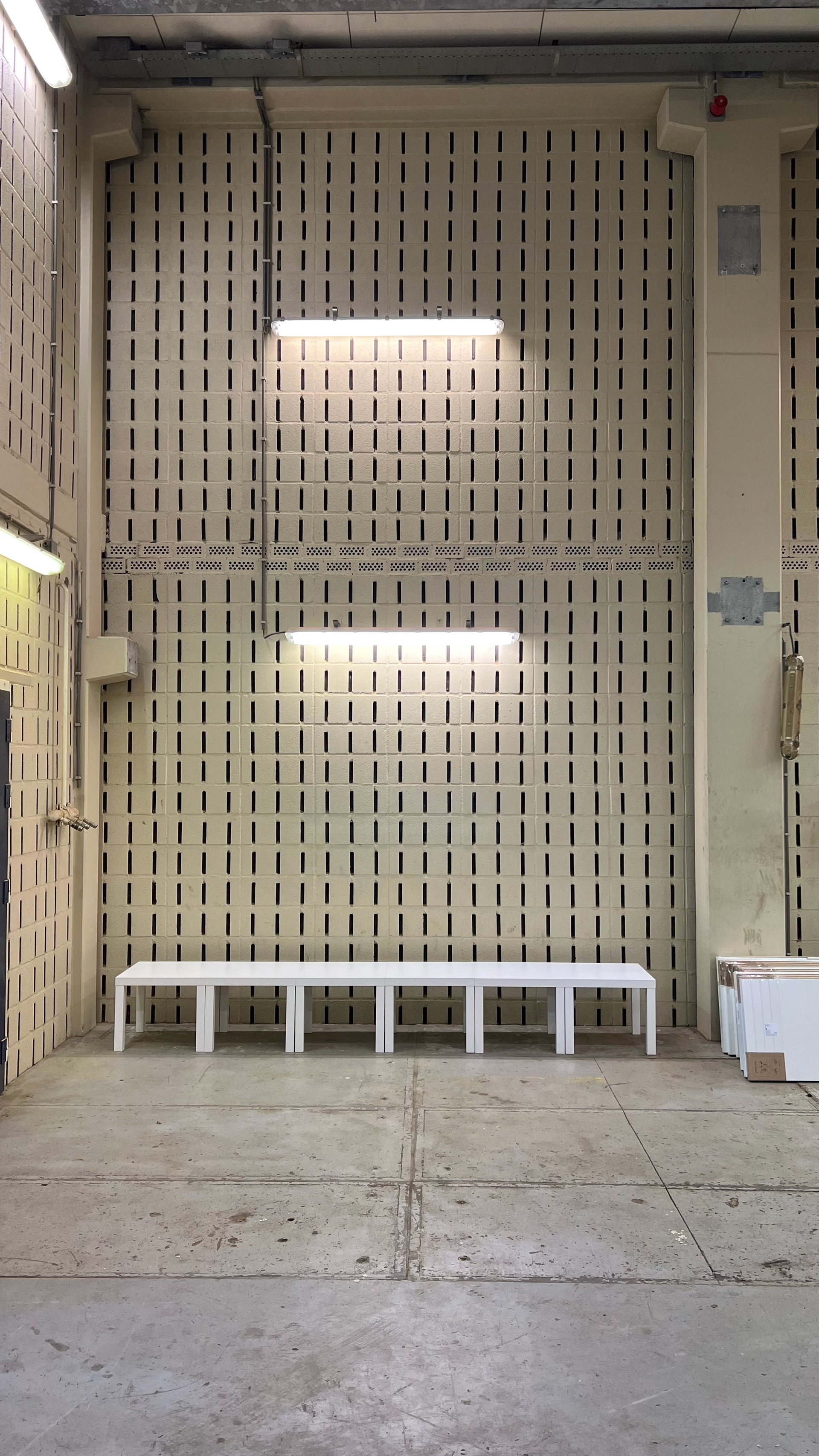
The Situation
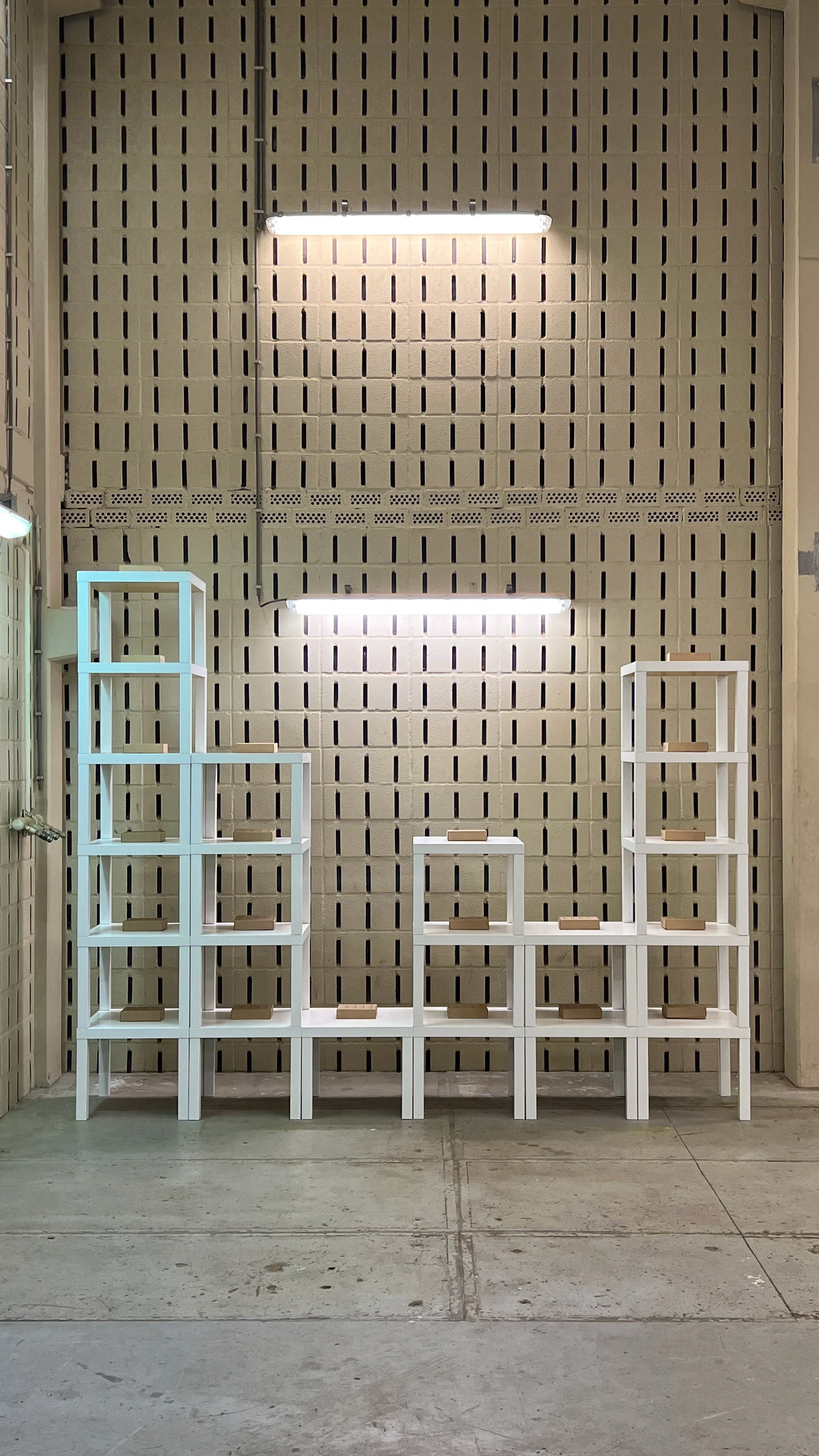
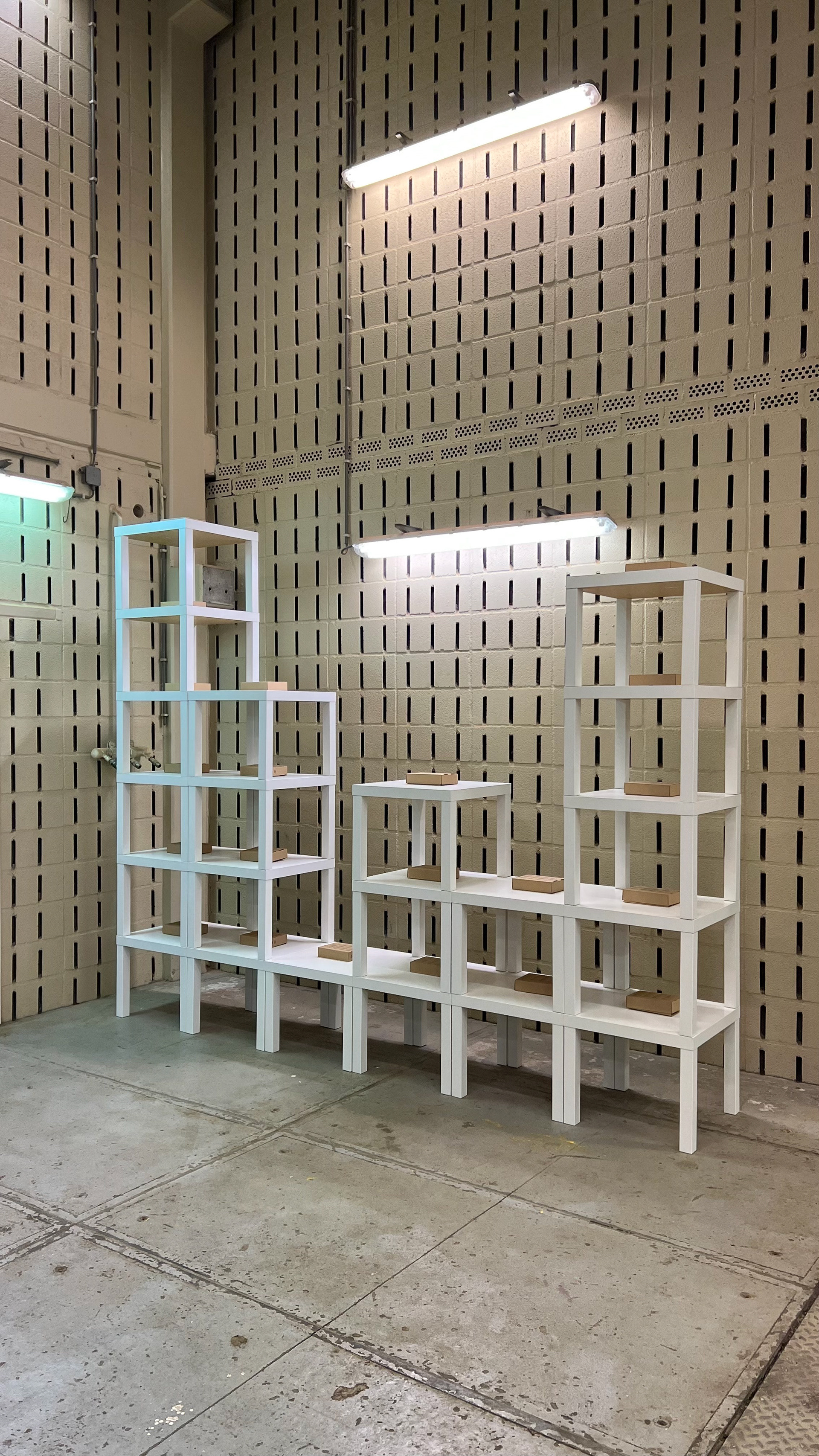
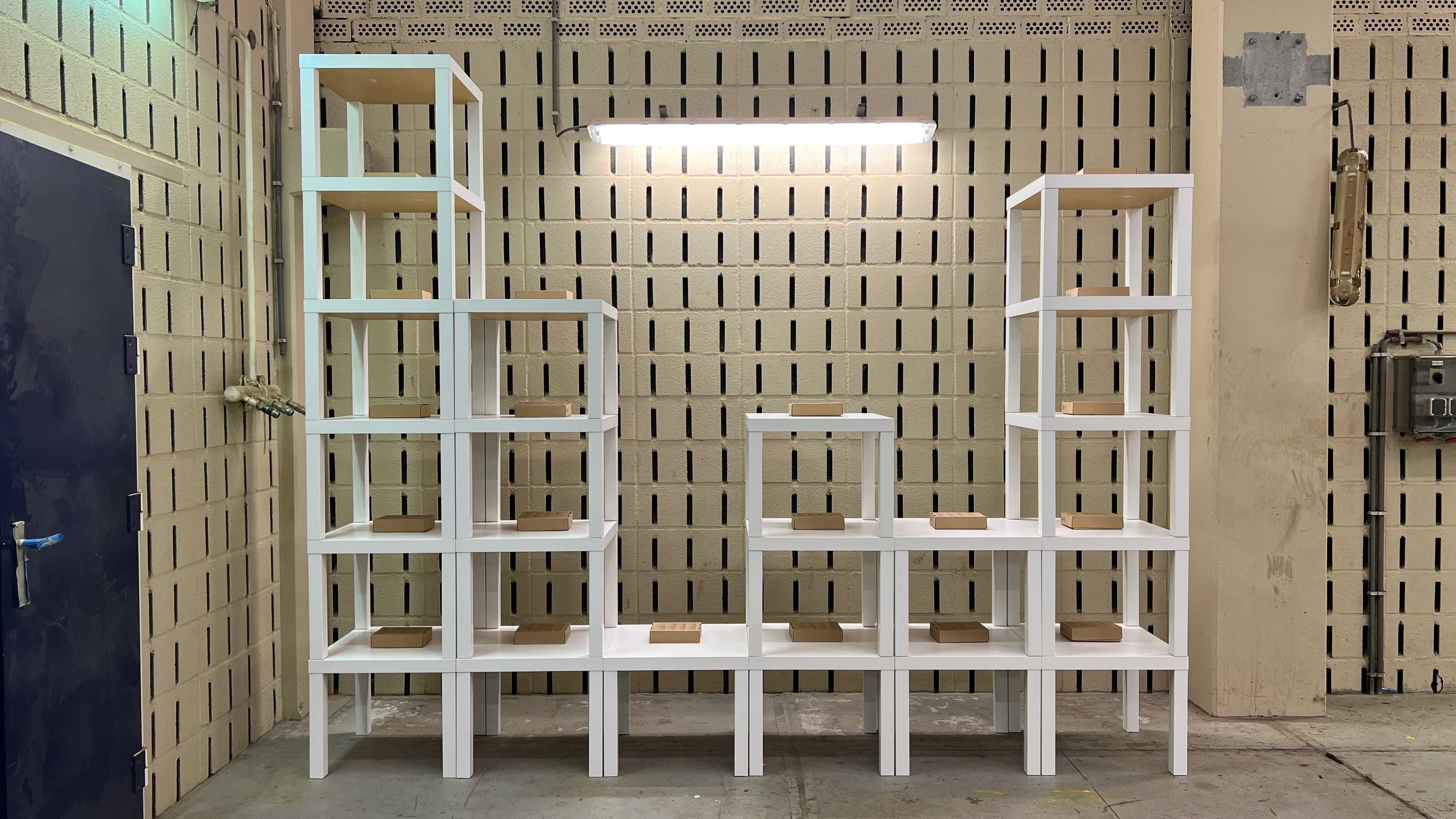
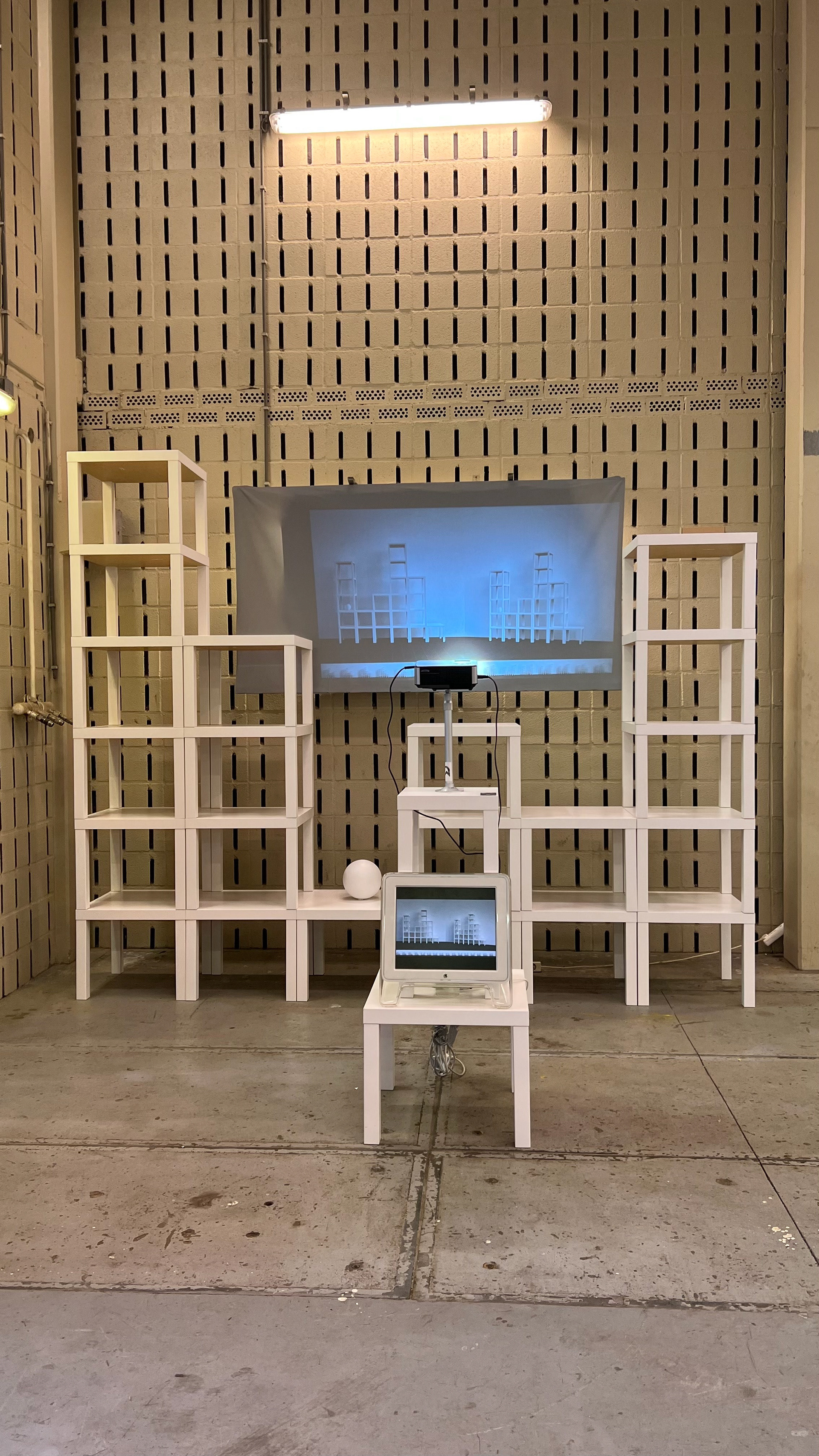
Final Design
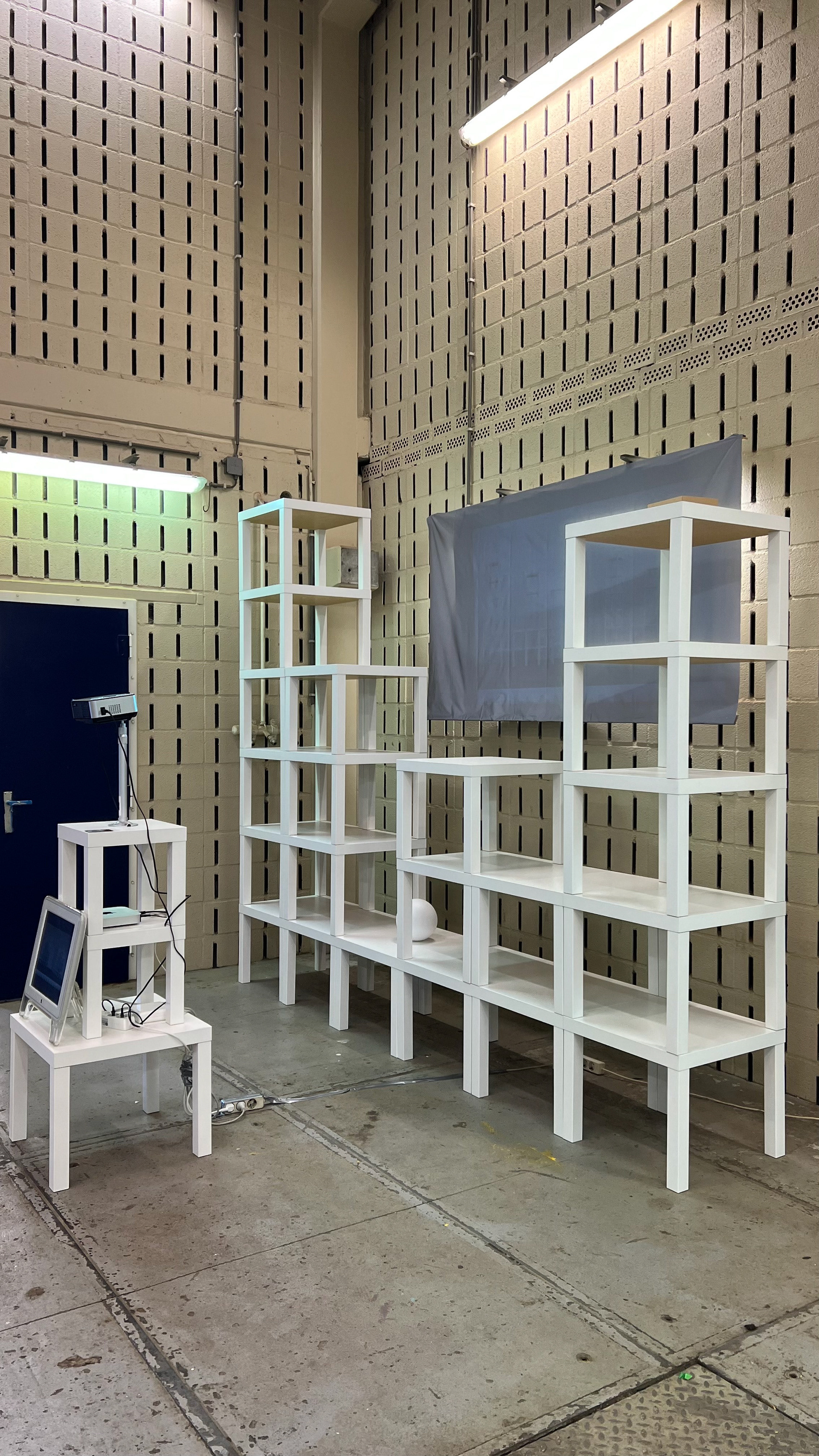
Final Design
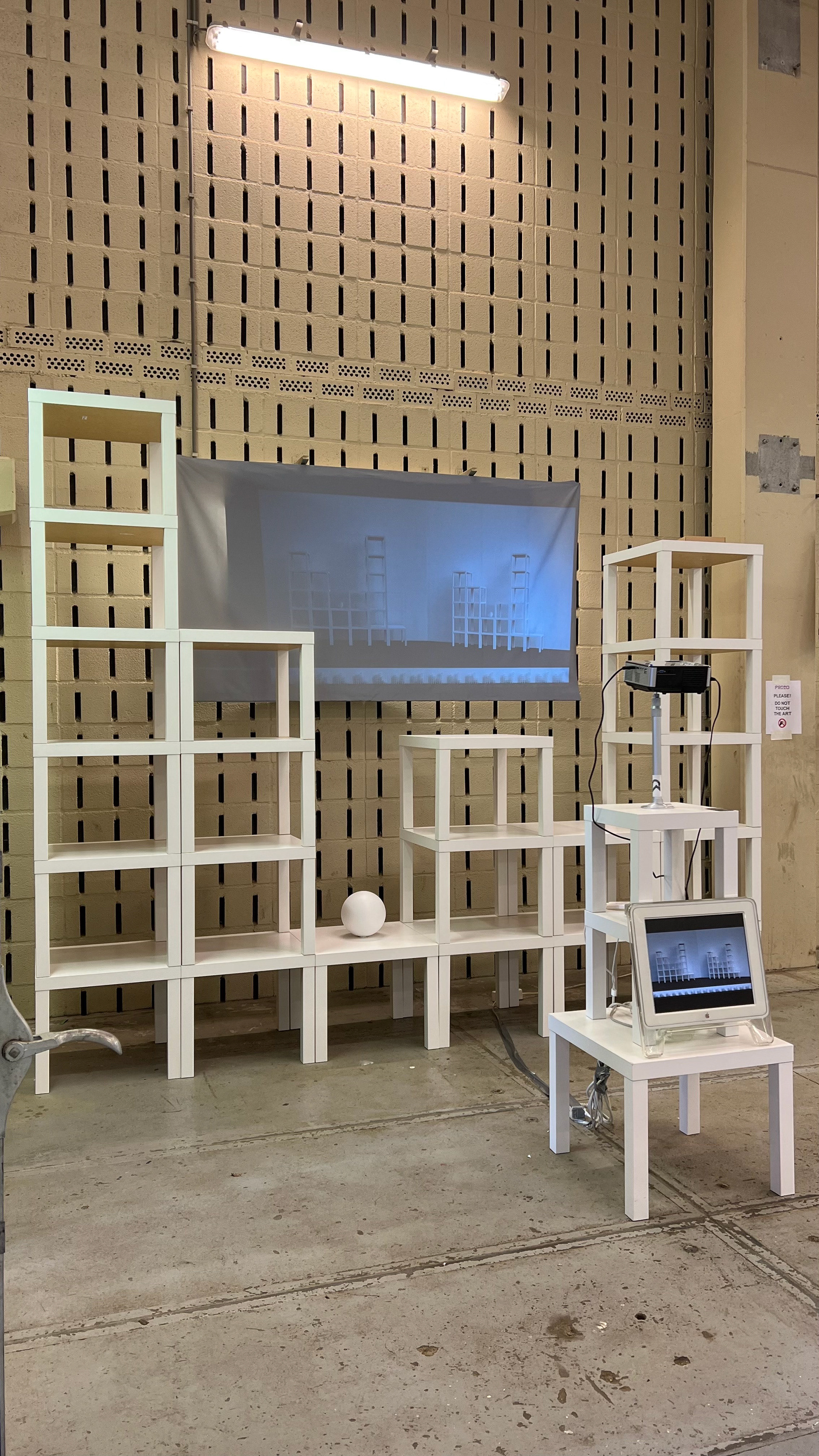
Final Design