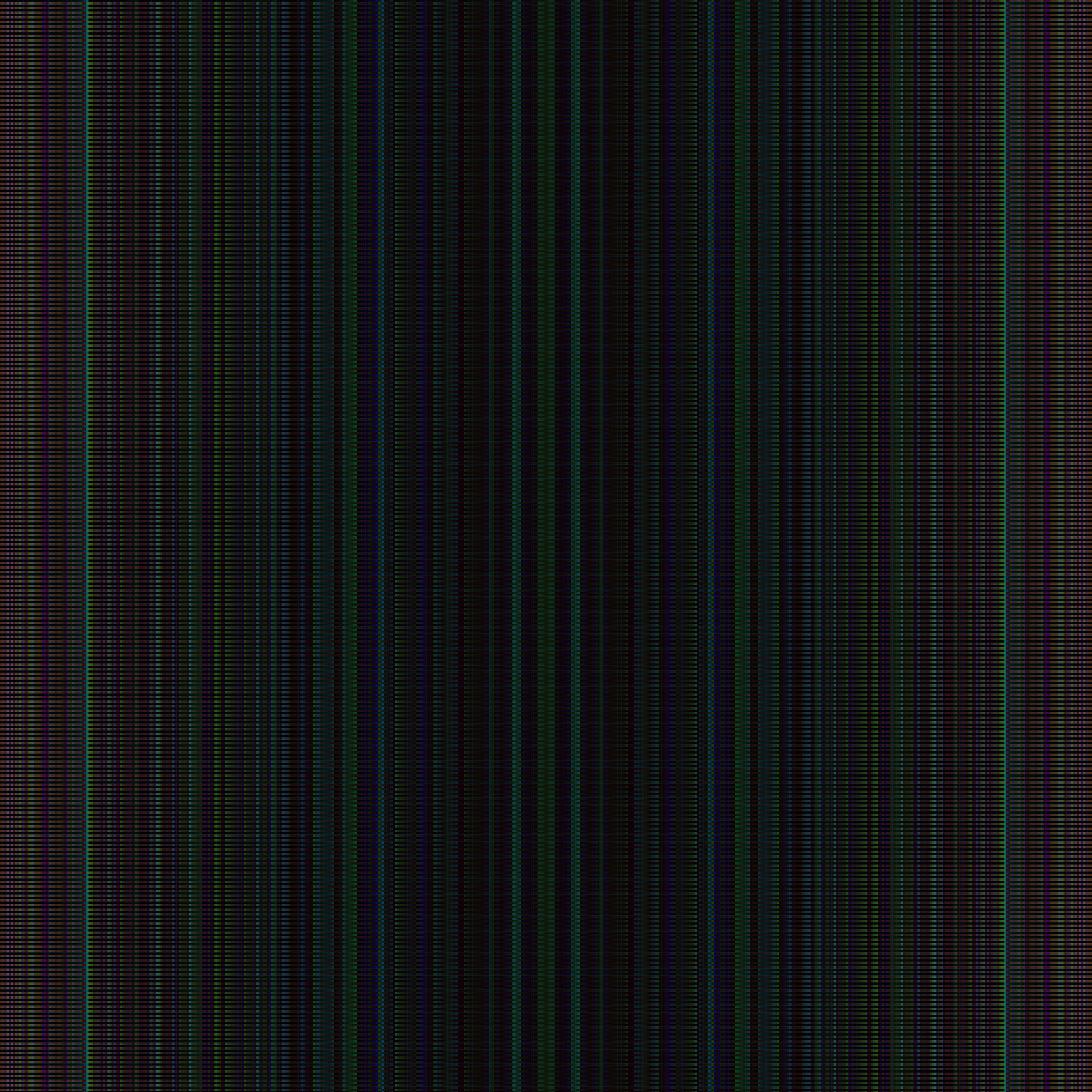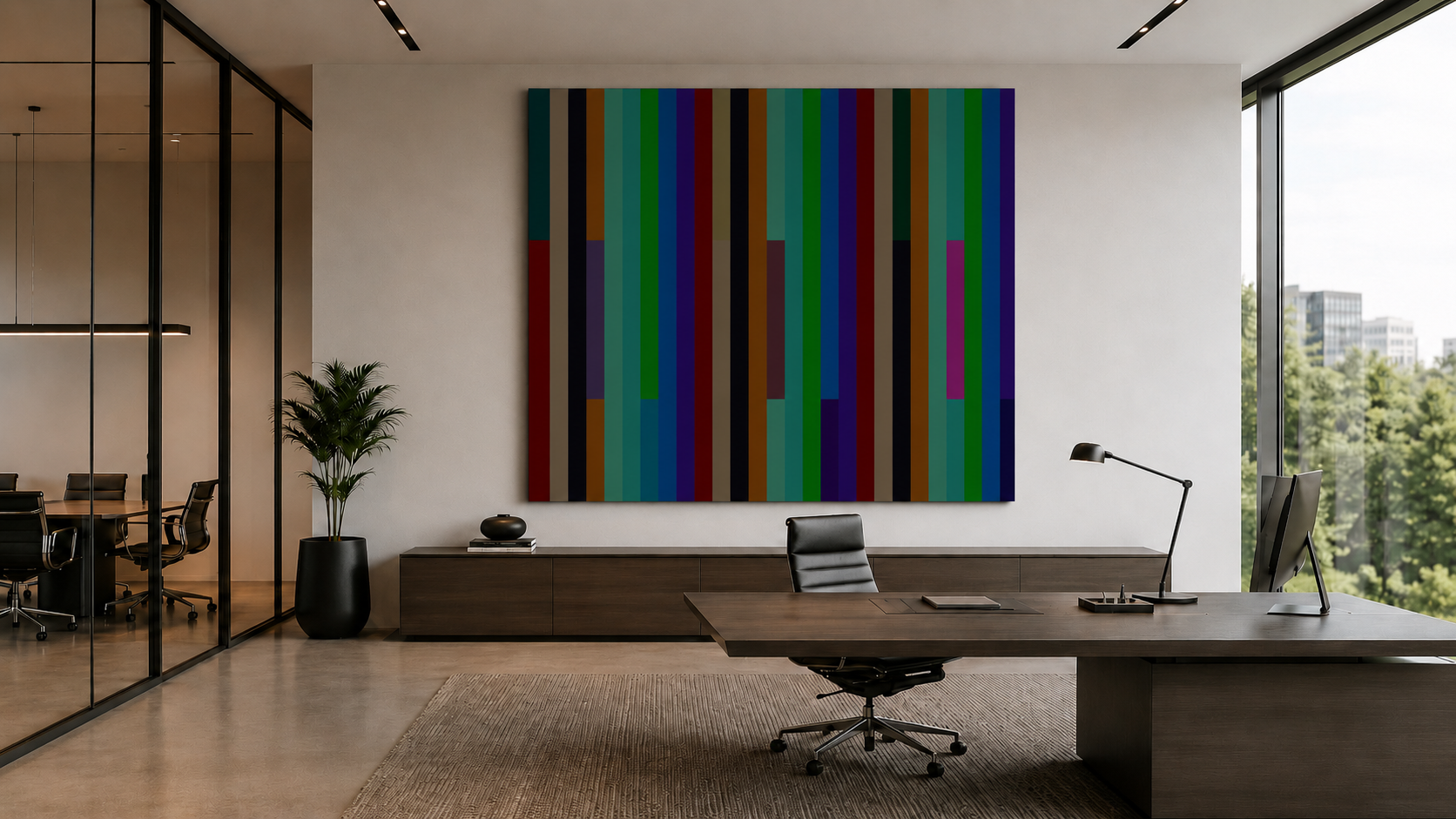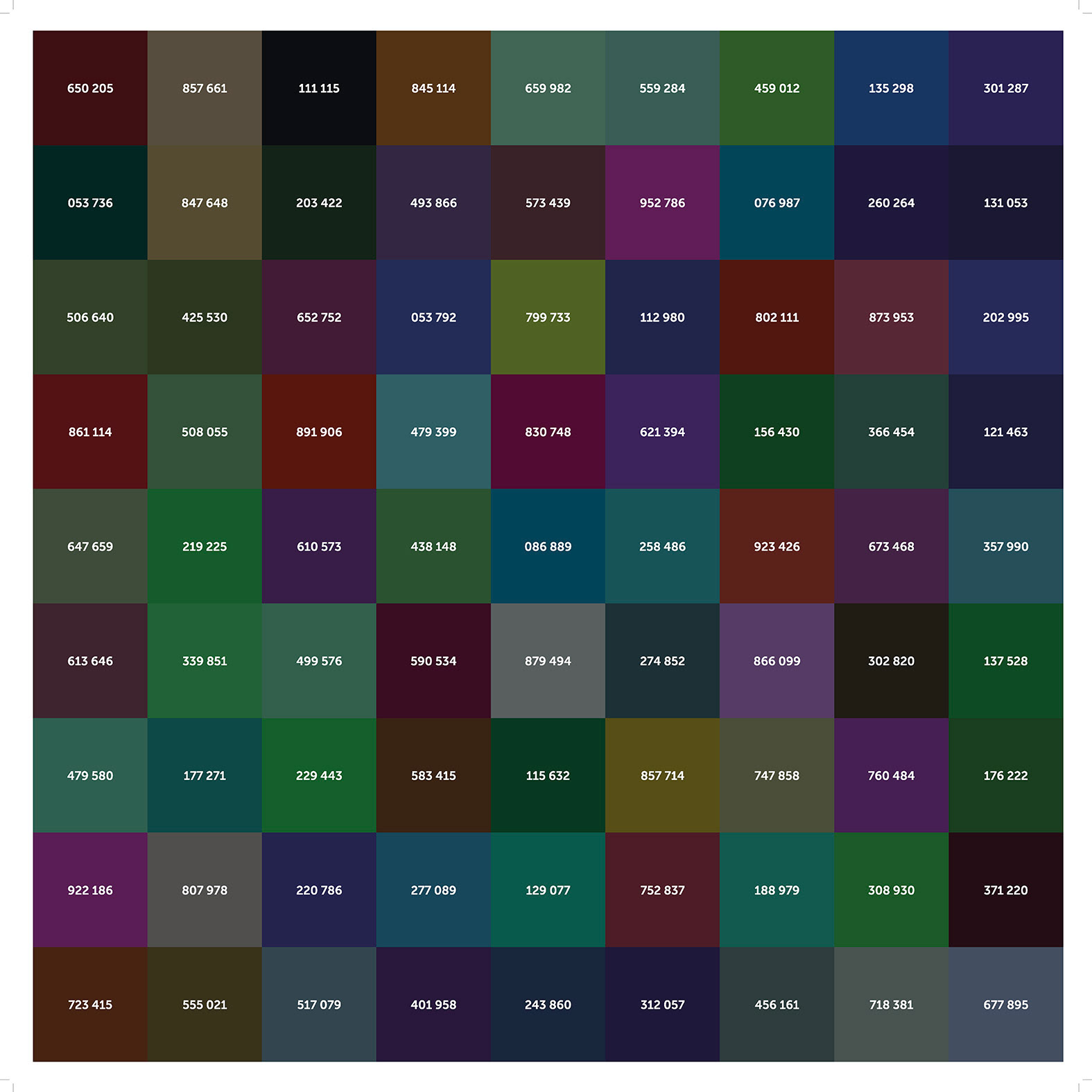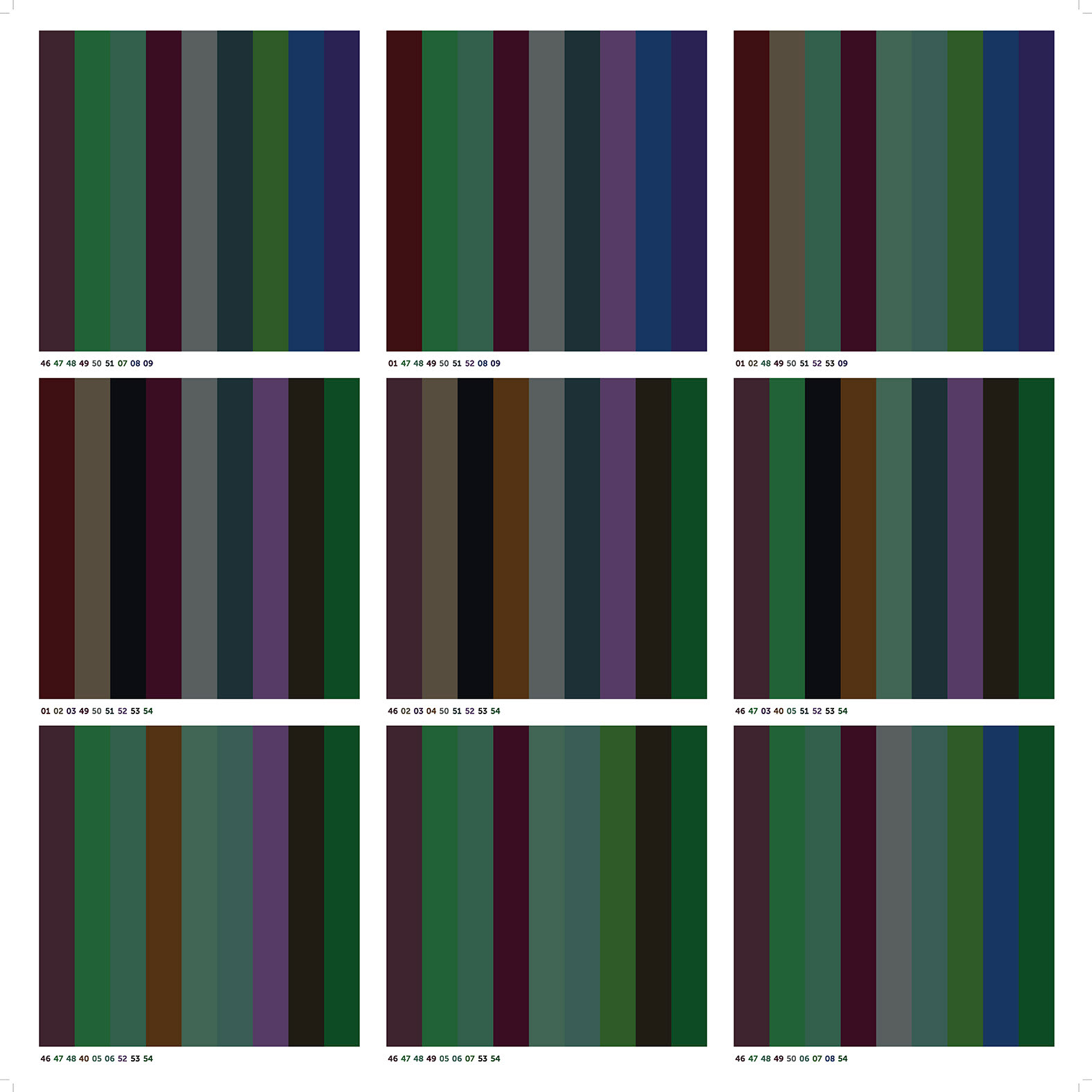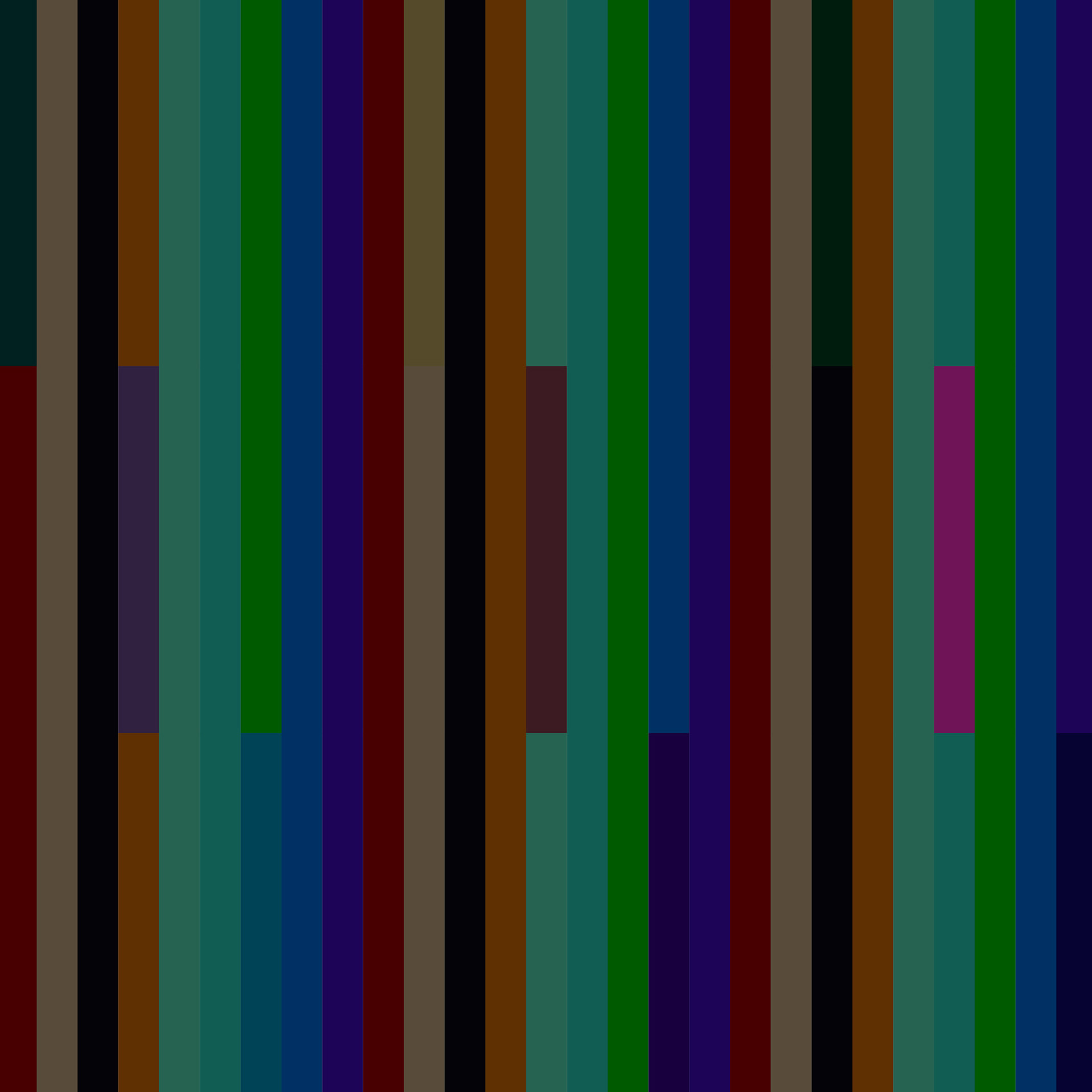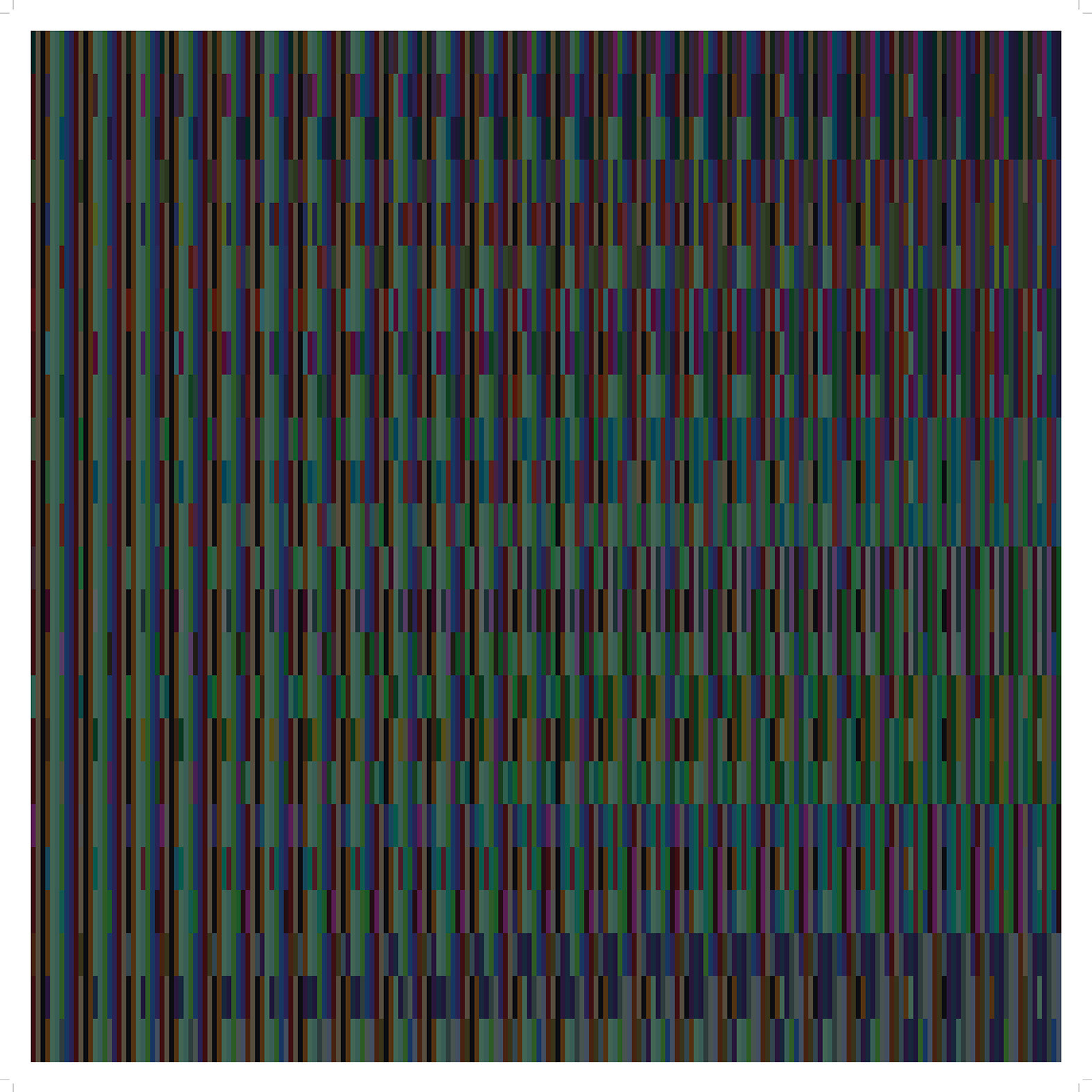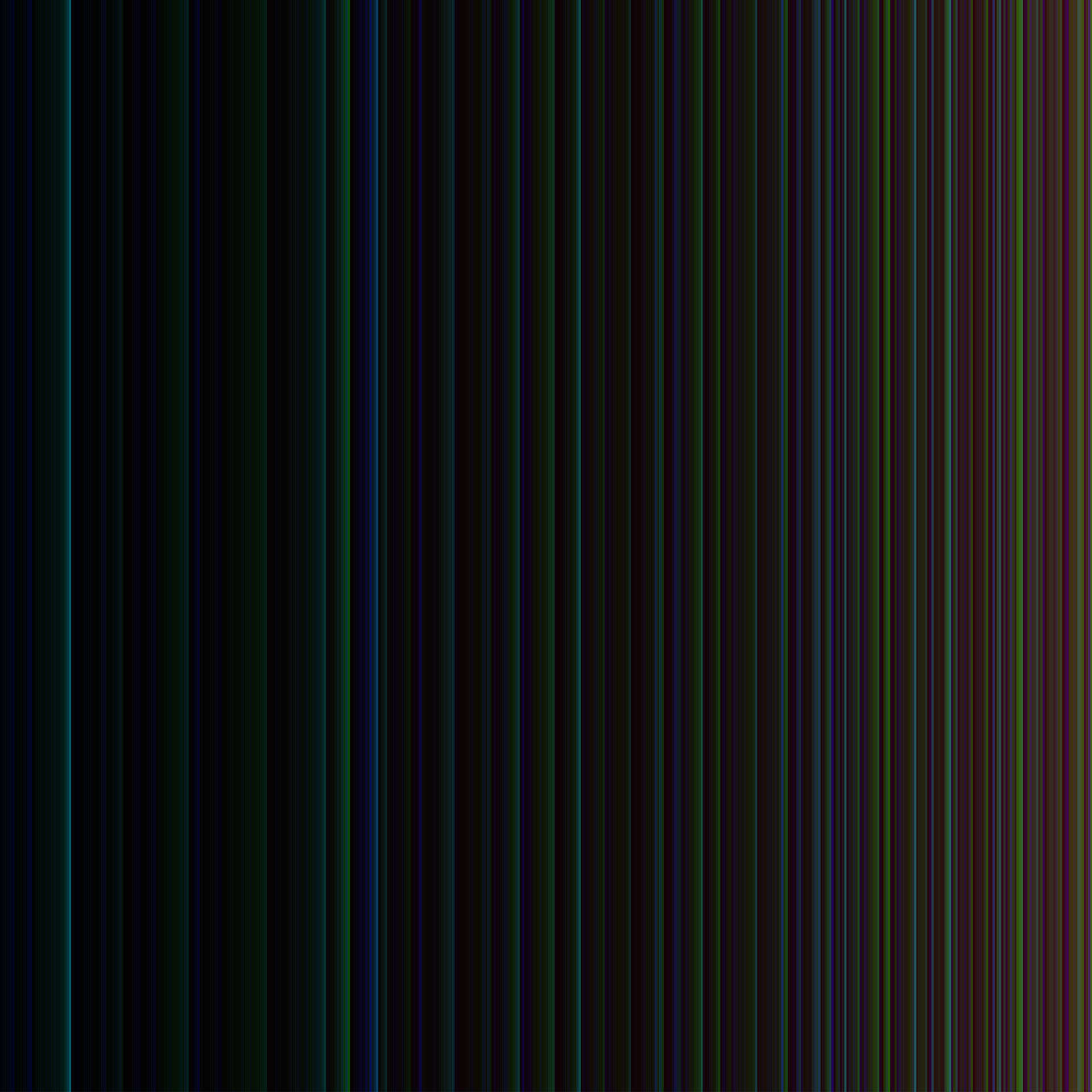
(NL) Toegangscodes is een visueel onderzoek naar identiteit, toegang en vergankelijkheid. Het project verzamelt tijdelijke cijfercombinaties — gegenereerd door systemen zoals tweestapsverificatie — die ontworpen zijn om te verdwijnen. Deze codes worden vertaald naar kleurvelden, afgeleid uit hun numerieke structuur. Wat functioneel en vluchtig is, wordt zichtbaar als chromatisch archief. Tijd manifesteert zich als interval: elke code bestaat slechts seconden, maar laat een blijvend spoor na in kleur.
Maar een code is nooit alleen een sleutel; hij is ook een grens. Het getal is willekeurig — niemand koos het, het bestaat een tel en is weg — en juist daarom is het zo zuiver: niet het cijfer beslist, maar de drempel die het bewaakt. Elke verificatie stelt dezelfde vraag — hoor je erbij? — en scheidt wie passeert van wie blijft staan. Wie de code heeft, neemt een plaats in, bezet een positie binnen het systeem; wie hem mist, blijft ervoor staan, in de tussenruimte: niet binnen, niet weg.
De data wordt niet geïnterpreteerd maar omgezet; het beeld ontstaat uit codering. Elke kleur is een residu van toegang — een moment van poging, verificatie en uitsluiting. Binnen GIS/WIS vormt Toegangscodes een archief van digitale drempels, waar identiteit, controle en tijd samenkomen in een systeem dat onophoudelijk beslist wie er hoort en wie ertussen valt.
(EN) Access Codes is a visual investigation into identity, access, and transience. The project collects temporary numerical sequences — generated by systems such as two-factor authentication — designed to disappear. These codes are translated into colour fields derived from their numerical structure. What is functional and fleeting becomes visible as a chromatic archive. Time manifests as interval: each code exists only for seconds, yet leaves a lasting trace in colour.
But a code is never only a key; it is also a border. The number is arbitrary — no one chose it, it lasts a second and is gone — and that is precisely what makes it pure: it is not the figure that decides, but the threshold it guards. Every verification asks the same question — do you belong? — and separates those who pass from those who are left standing. Whoever holds the code takes a place, occupies a position within the system; whoever lacks it remains before it, in the in-between: not inside, not gone.
The data is not interpreted but converted; the image emerges from encoding. Each colour is a residue of access — a moment of attempt, verification, and exclusion. Within GIS/WIS, Access Codes forms an archive of digital thresholds, where identity, control, and time converge in a system that endlessly decides who belongs and who falls between.