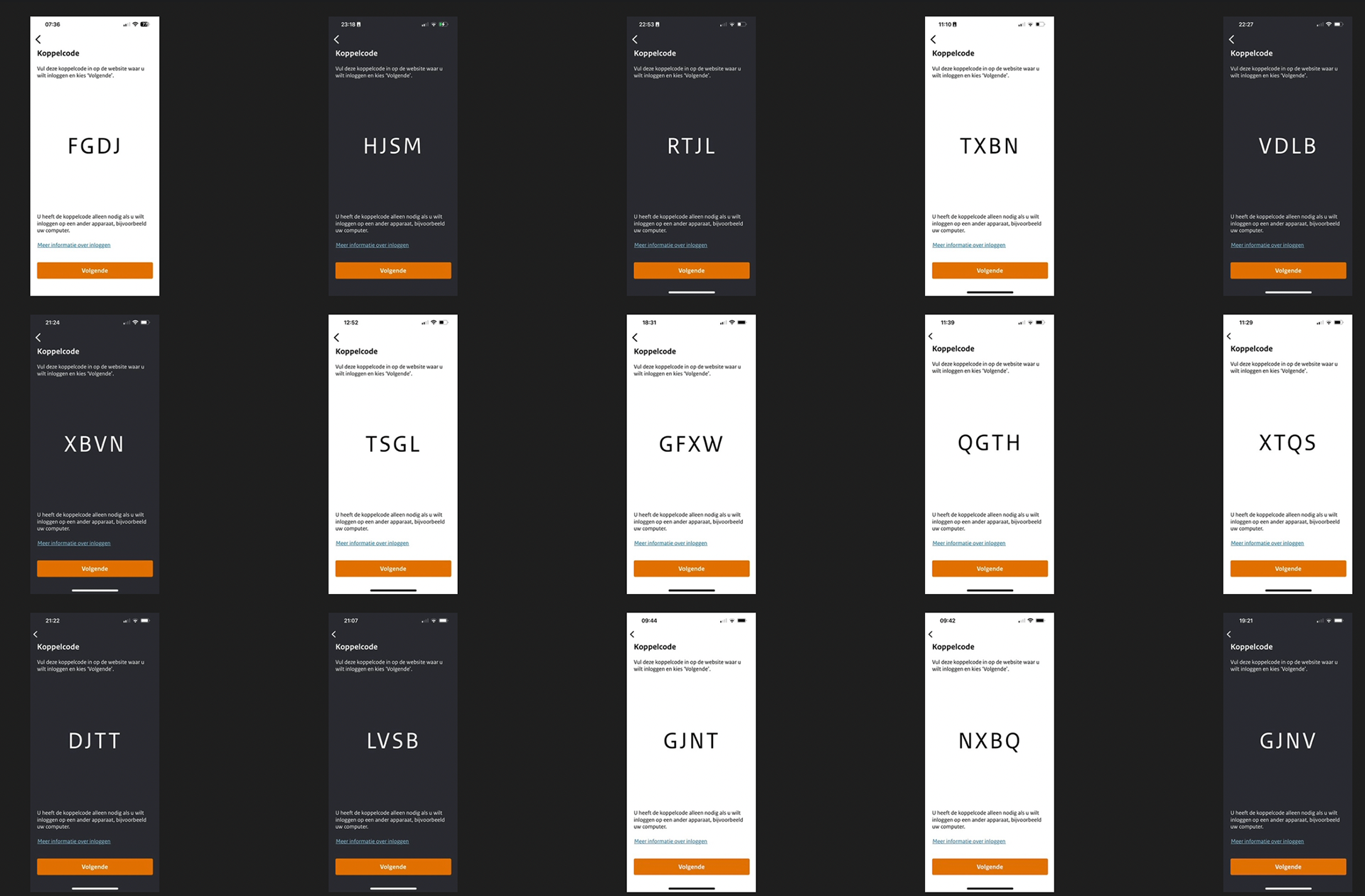
(NL) DigiD is een doorlopend visueel onderzoek naar digitale identiteit, toegang en vergankelijkheid. Sinds het begin bewaar ik elke koppelcode die ik ontvang — code na code, een archief dat blijft groeien.
DigiD is geen keuze maar noodzaak: zonder deze codes geen toegang tot overheid, huisarts, ziekenhuis, belastingdienst. Identiteit wordt hier niet vrijwillig getoond, maar afgedwongen als voorwaarde voor deelname.
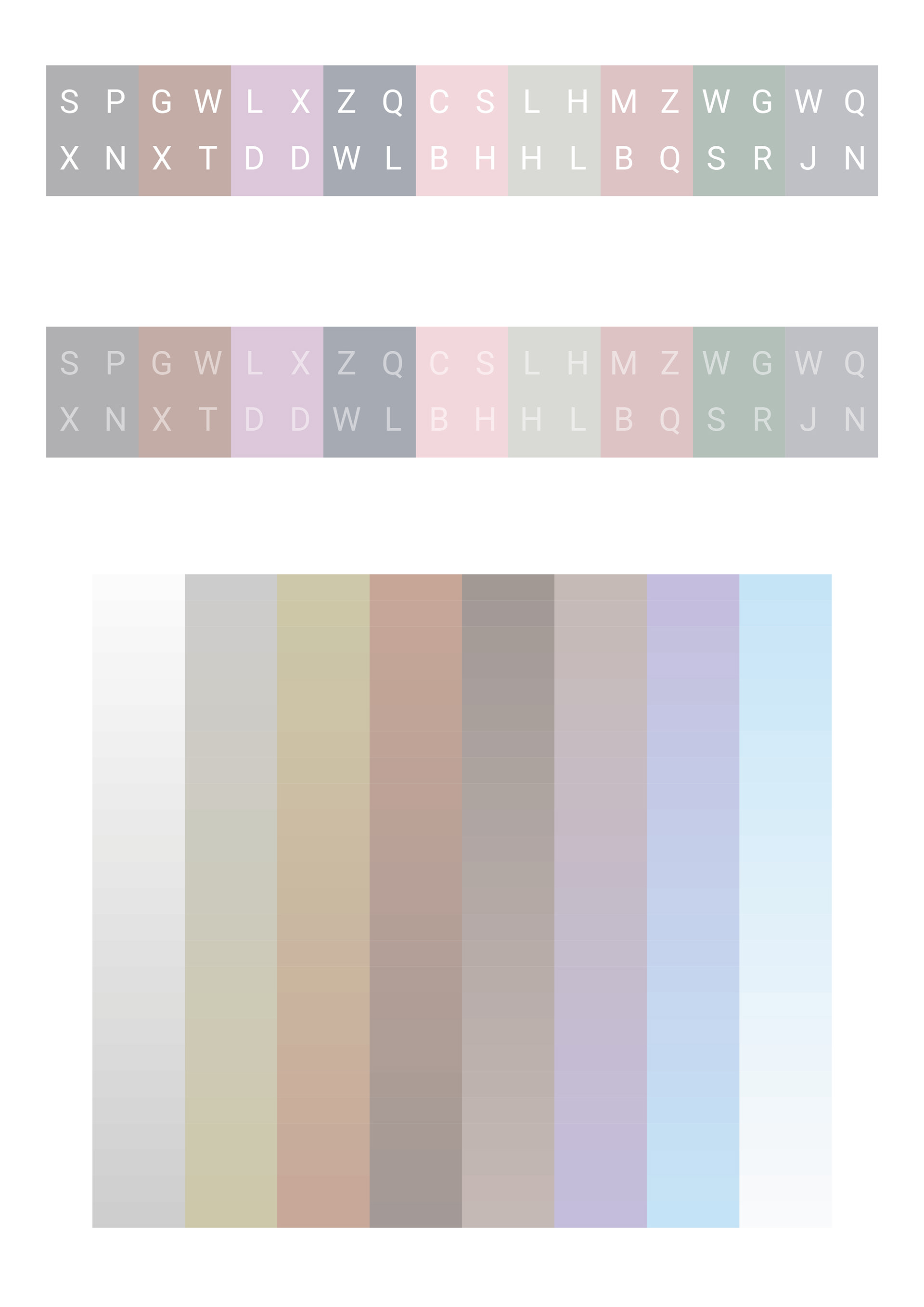
Elke code — uitsluitend medeklinkers, een letter maximaal tweemaal — is zelf al een arbitrair systeem binnen het systeem. Vertaald naar CMYK, zonder hiërarchie of narratief, worden de codes tot abstracte kleurvelden.
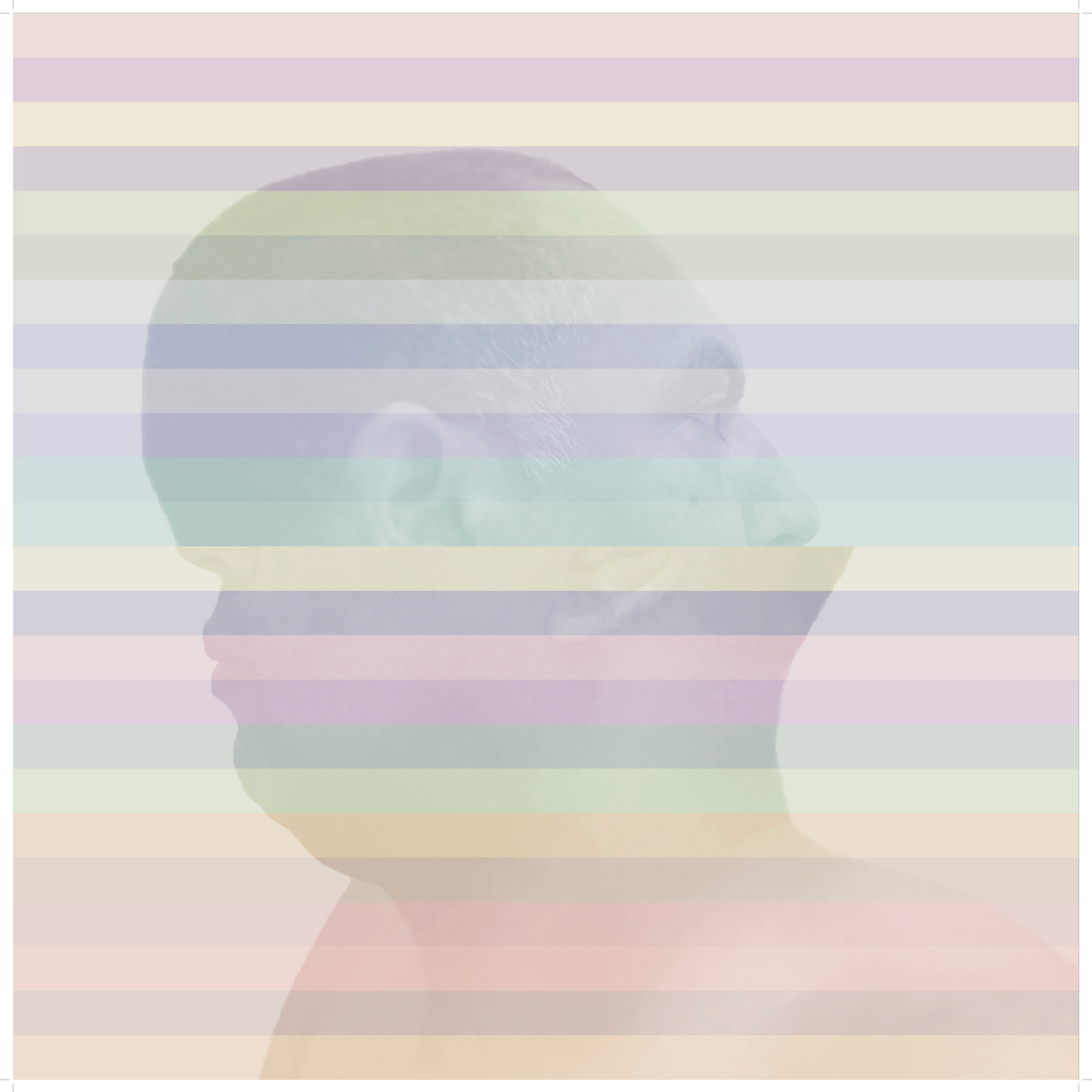
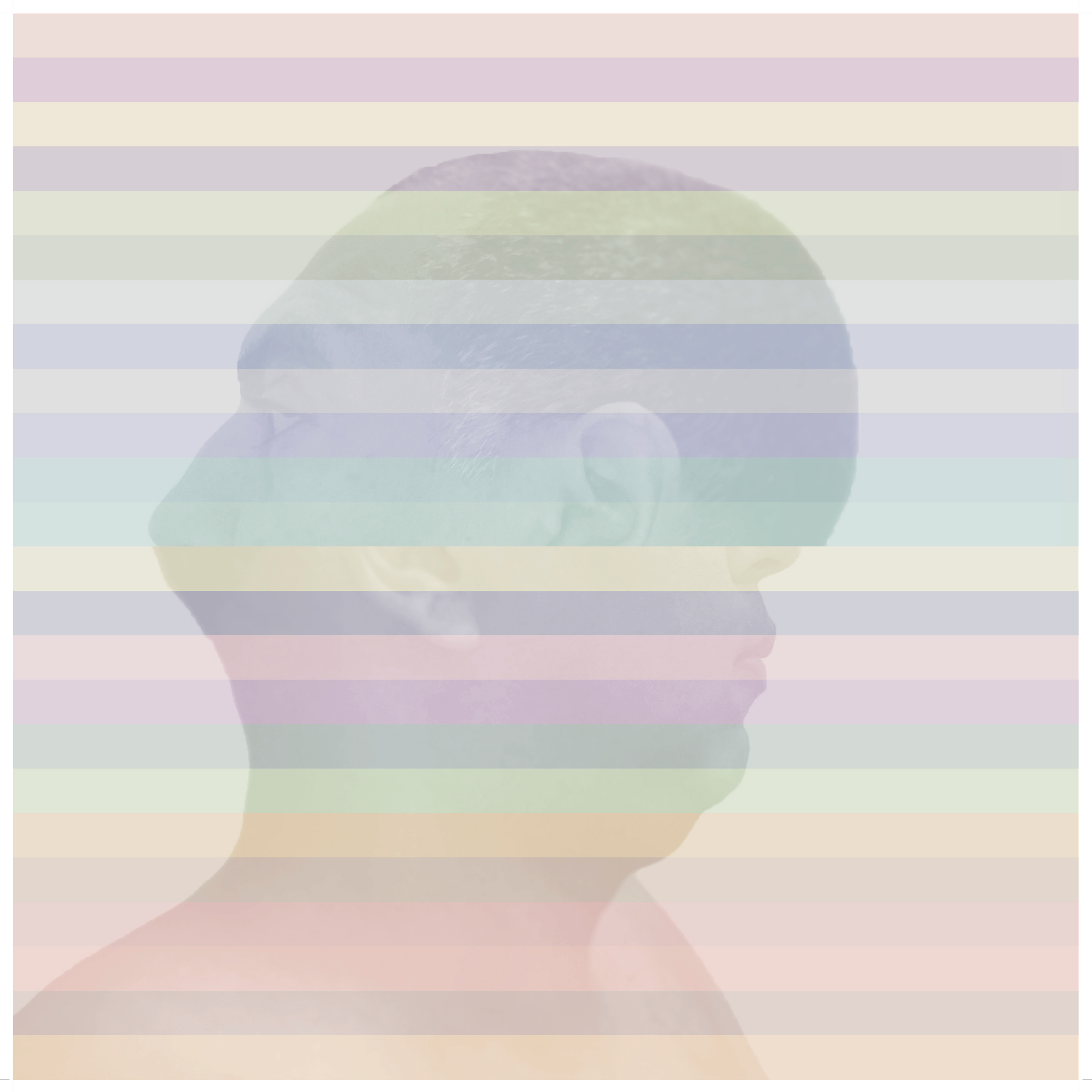
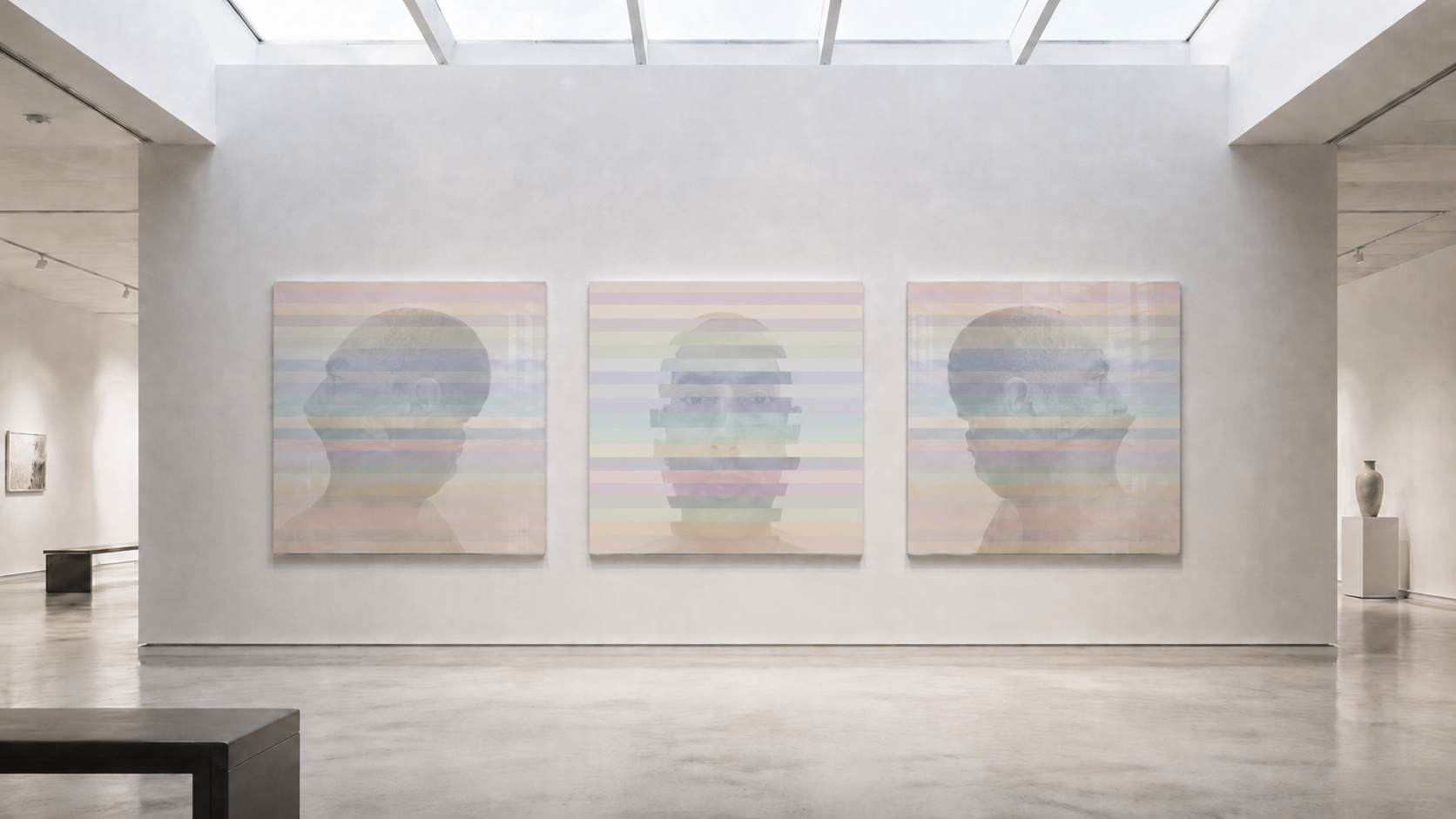
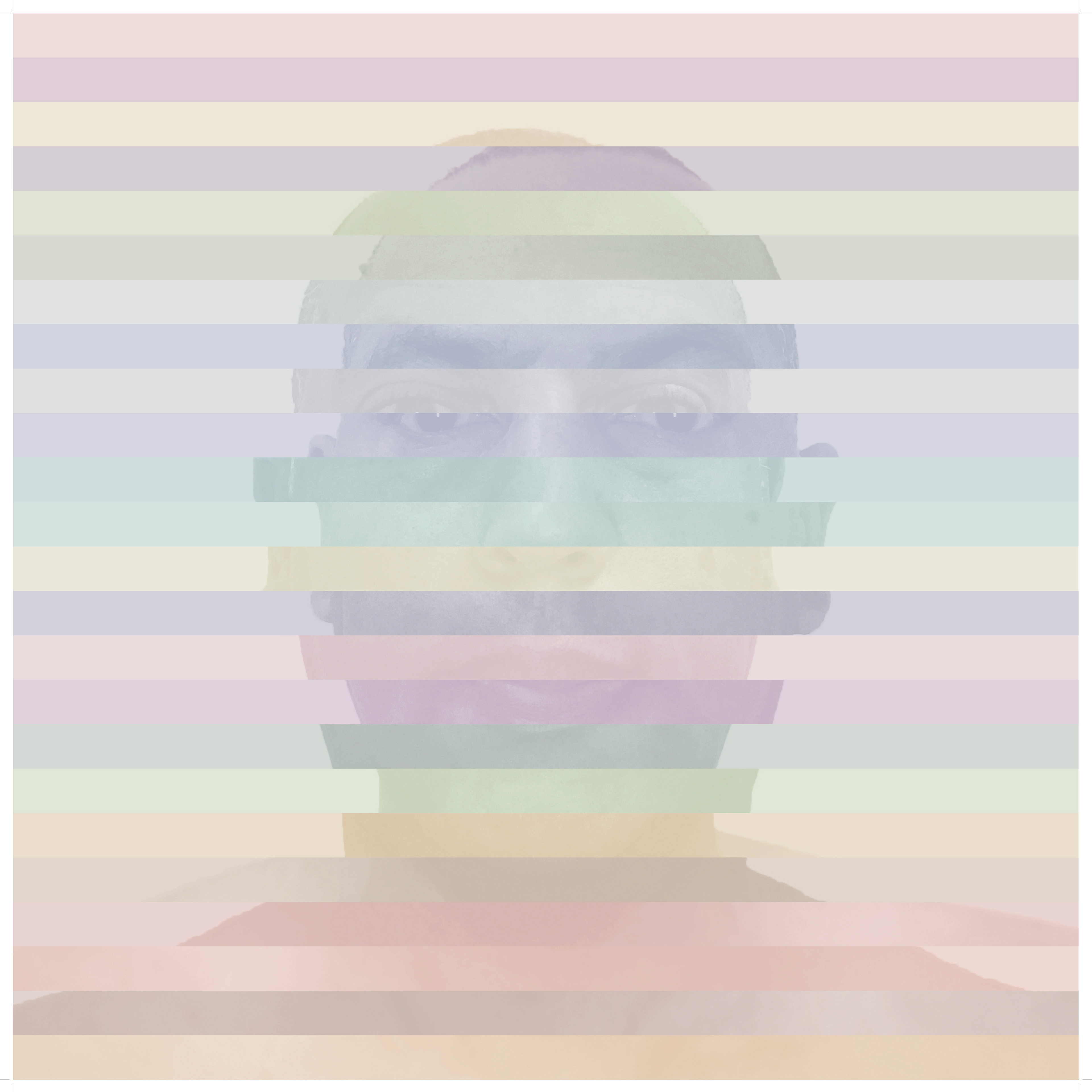
Het beeld toont mijn eigen profiel, en-face en en-profil — maar geen van beide is nog bruikbaar als gezicht. In het en-face-portret wordt het beeld per kleurbaan gespiegeld tot losse, verschoven fragmenten. In het en-profil-portret wordt de helft gespiegeld tot een symmetrie die geen gezicht van nature bezit. Beide ingrepen leggen dezelfde systeemlogica op als de codes: aanwezig, en tegelijk onleesbaar.
Toch bewaart elke code een tijdstip. Het systeem claimt neutraliteit, maar in de tijdstempels sluipt alsnog een ritme van dag en nacht binnen. Wat niet mocht vertellen, vertelt toch.
Binnen GIS/WIS vormt DigiD een archief van toegang en gecontroleerde verdwijning.
(EN) DigiD is an ongoing visual investigation into digital identity, access, and impermanence. Since the beginning I have kept every code I receive — code after code, an archive that keeps growing.
DigiD is not a choice but a necessity: without these codes, no access to government, general practitioner, hospital, tax authority. Identity here is not voluntarily shown, but demanded as a condition for participation.
Each code — consonants only, one letter at most twice — is itself an arbitrary system within the system. Translated into CMYK, without hierarchy or narrative, the codes become abstract colour fields.
The image shows my own likeness, en-face and en-profil — yet neither remains usable as a face. In the en-face portrait, the image is mirrored within each colour band into loose, shifted fragments. In the en-profil portrait, half the profile is mirrored into a symmetry no face possesses naturally. Both interventions impose the same system logic as the codes: present, and unreadable at once.
Yet every code retains a timestamp. The system claims neutrality, but within the timestamps a rhythm of day and night creeps in regardless. What was not meant to tell a story, tells one anyway.
Within GIS/WIS, DigiD forms an archive of access and controlled disappearance.