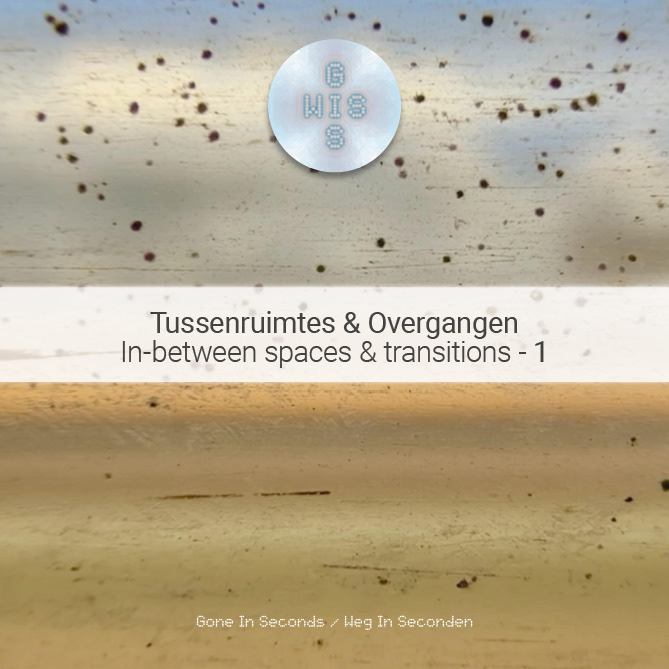
(NL) Tussenruimte & Beweging — Deel 1 onderzoekt hoe waarneming verandert in overgang en snelheid.
Het hoofdstuk richt zich op ervaring als lichamelijke positie in beweging.
Zien wordt hier bepaald door passage, niet door stilstand.
Centraal staat In Between, een fotografisch onderzoek naar kijken in transit.
Beelden ontstaan door treinramen, waar glas, reflectie en tijd het zicht filteren.
Het raam fungeert als interface, waarop informatie zich afzet: vuil, krassen, teksten en logo’s.
De wereld verschijnt als gelaagde constructie tussen binnen en buiten, beeld en drager.
Wat zichtbaar is, wordt gevormd door snelheid, afstand en het oppervlak van het glas.
Tijd manifesteert zich als verschuiving — een continu verschijnen en verdwijnen.
De data wordt niet gestuurd maar geregistreerd; het beeld ontstaat in de beweging.
Binnen GIS/WIS vormt dit hoofdstuk een archief van ervaring, waarin waarneming zichtbaar wordt als tussenruimte én als drager van sporen.
Het hoofdstuk richt zich op ervaring als lichamelijke positie in beweging.
Zien wordt hier bepaald door passage, niet door stilstand.
Centraal staat In Between, een fotografisch onderzoek naar kijken in transit.
Beelden ontstaan door treinramen, waar glas, reflectie en tijd het zicht filteren.
Het raam fungeert als interface, waarop informatie zich afzet: vuil, krassen, teksten en logo’s.
De wereld verschijnt als gelaagde constructie tussen binnen en buiten, beeld en drager.
Wat zichtbaar is, wordt gevormd door snelheid, afstand en het oppervlak van het glas.
Tijd manifesteert zich als verschuiving — een continu verschijnen en verdwijnen.
De data wordt niet gestuurd maar geregistreerd; het beeld ontstaat in de beweging.
Binnen GIS/WIS vormt dit hoofdstuk een archief van ervaring, waarin waarneming zichtbaar wordt als tussenruimte én als drager van sporen.
(EN) In Between & Motion — Part 1 investigates how perception changes through transition and speed.
The chapter focuses on experience as a bodily position in motion.
Seeing is shaped by passage, not by stillness.
At its core is In Between, a photographic investigation of perception in transit.
Images are captured through train windows, where glass, reflection, and time filter the view.
The window acts as an interface, carrying information: dirt, scratches, text, and logos.
The world appears as a layered construction between inside and outside, image and surface.
What is visible is shaped by speed, distance, and the condition of the glass.
Time manifests as shift — a continuous appearing and disappearing.
The data is not directed but recorded; the image emerges through movement.
Within GIS/WIS, this chapter forms an archive of experience, where perception becomes visible as an in-between state and a surface of traces.
The chapter focuses on experience as a bodily position in motion.
Seeing is shaped by passage, not by stillness.
At its core is In Between, a photographic investigation of perception in transit.
Images are captured through train windows, where glass, reflection, and time filter the view.
The window acts as an interface, carrying information: dirt, scratches, text, and logos.
The world appears as a layered construction between inside and outside, image and surface.
What is visible is shaped by speed, distance, and the condition of the glass.
Time manifests as shift — a continuous appearing and disappearing.
The data is not directed but recorded; the image emerges through movement.
Within GIS/WIS, this chapter forms an archive of experience, where perception becomes visible as an in-between state and a surface of traces.
UNDER CONSTRUCTION