(NL) Een patroon herhaalt gewoonlijk een vorm. Dit werk herhaalt iets anders: een regel. Sterker nog, twee regels werken tegelijk, en geen van beide laat ruimte voor smaak.
De kleur volgt de datum. Eén dag wordt gelezen door drie notatiesystemen — ISO, Europees en Amerikaans — en de cijfers van elke lezing worden percentages cyaan, magenta, geel en zwart. De kleur is niet gekozen maar berekend. Drie notaties, drie ringen, drie lezingen van hetzelfde moment.
De maat volgt de groei. De drie concentrische ringen meten 89, 55 en 34: opeenvolgende Fibonacci-getallen, elk in gulden-snedeverhouding tot de volgende. Alleen het hart breekt de reeks. Waar 21 zou moeten staan, is het heden op 13 gezet — kleiner dan de wet toestaat, uit de telling stappend. Het is de enige positie zonder kleur, omdat het geen datum is maar het moment van lezen zelf.
(EN) A pattern usually repeats a form. This work repeats something else: a rule. In fact two rules run at once, and neither leaves room for taste.
Colour follows the date. One day is read through three notation systems — ISO, European and American — and the digits of each reading become percentages of cyan, magenta, yellow and black. The colour is not chosen but calculated. Three notations, three rings, three readings of the same moment.
Size follows growth. The three concentric rings measure 89, 55 and 34: consecutive Fibonacci numbers, each holding the golden ratio to the next. Only the heart breaks the sequence. Where 21 should stand, the present is set at 13 — smaller than the law allows, stepping out of the count. It is the one position without a colour, because it is not a date but the moment of reading itself.
1 · De basis / The Base
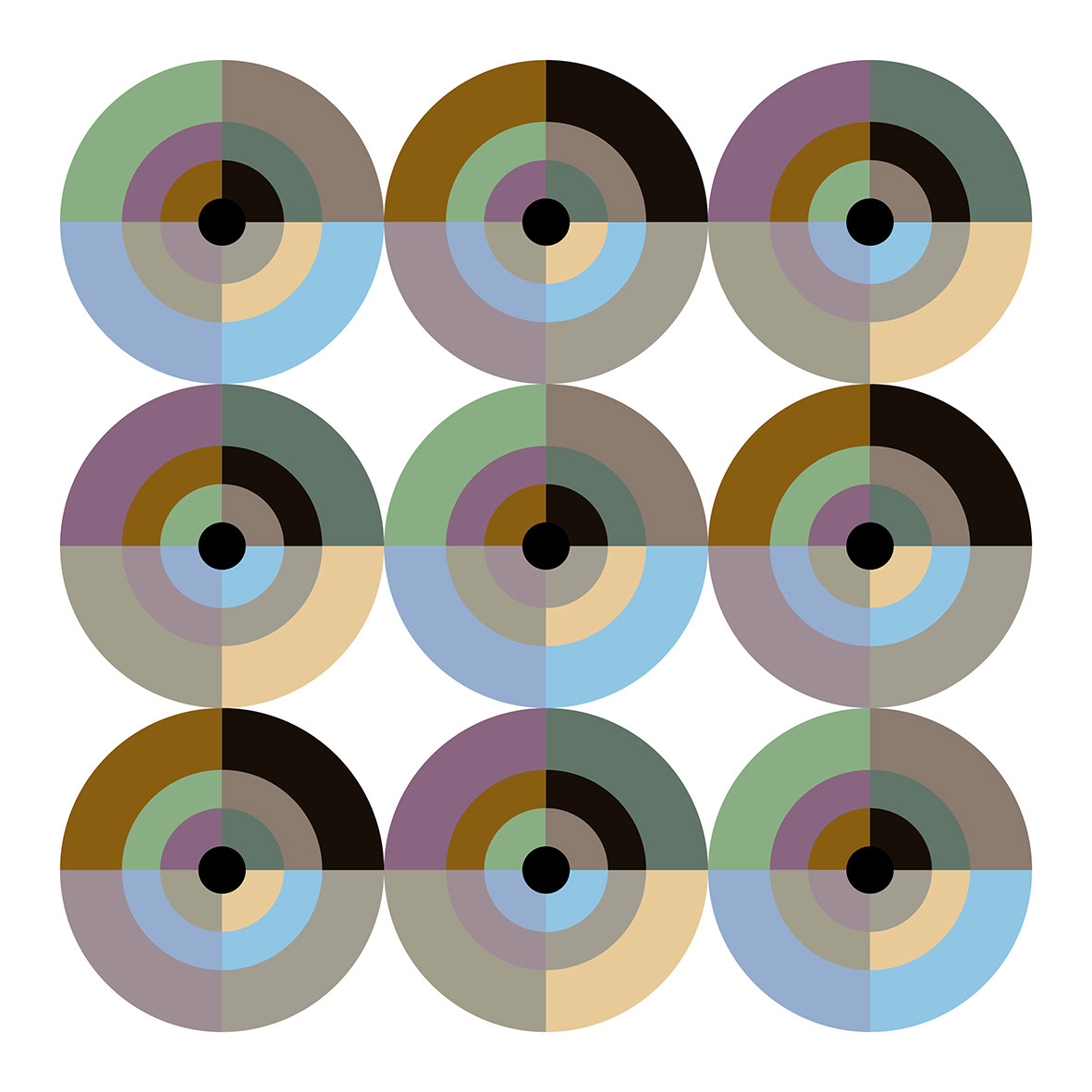
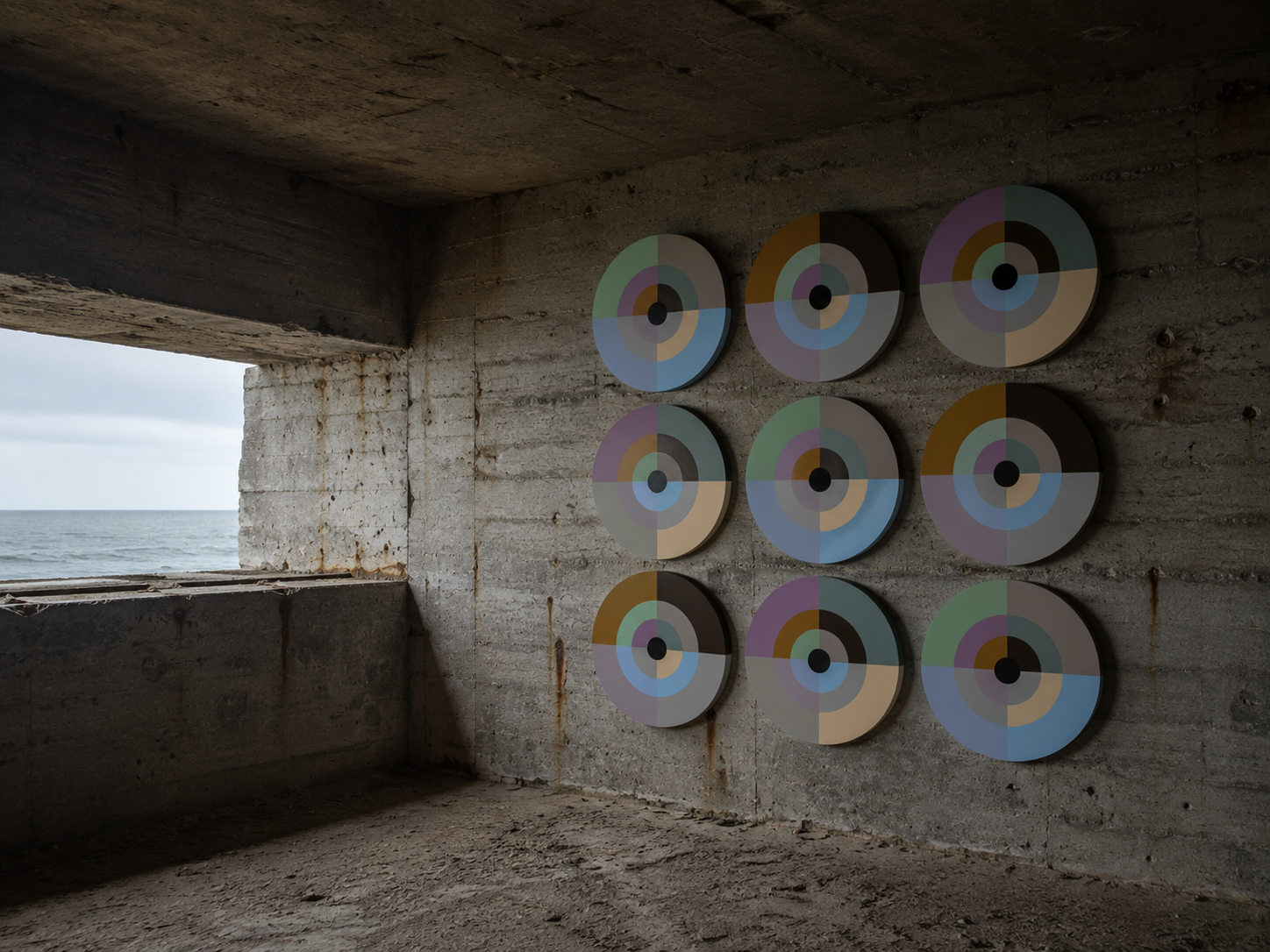
(NL) Negen chromatische lezingen van één datum. De ringen meten 89, 55 en 34; het stille centrum staat op 13, buiten de reeks. Dat centrum is het heden: de enige positie zonder kleur.
(EN) Nine chromatic readings of a single date. The rings measure 89, 55 and 34; the still centre is set at 13, outside the sequence. That centre is the present: the one position without a colour.
2 · De aanpassing / The Operation
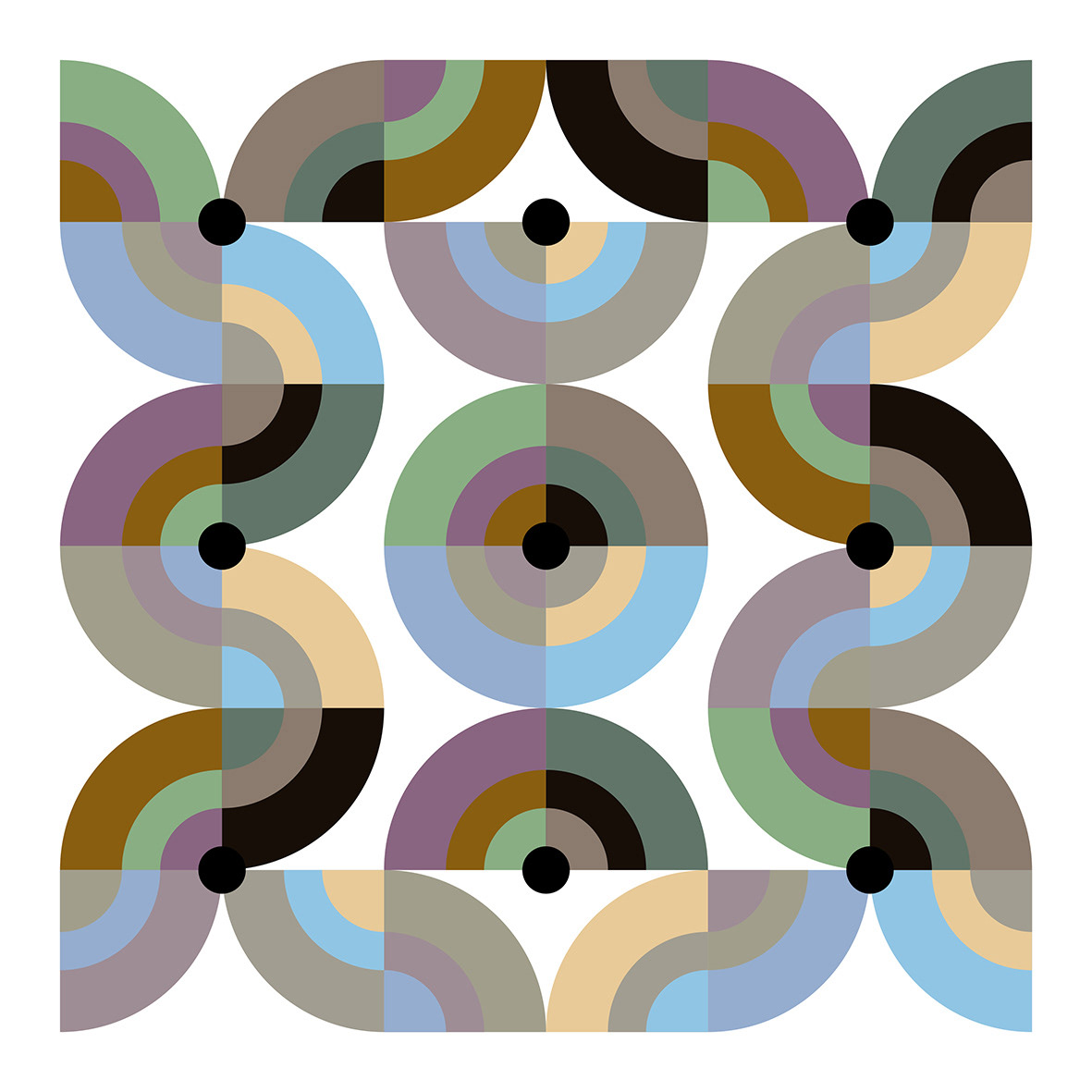
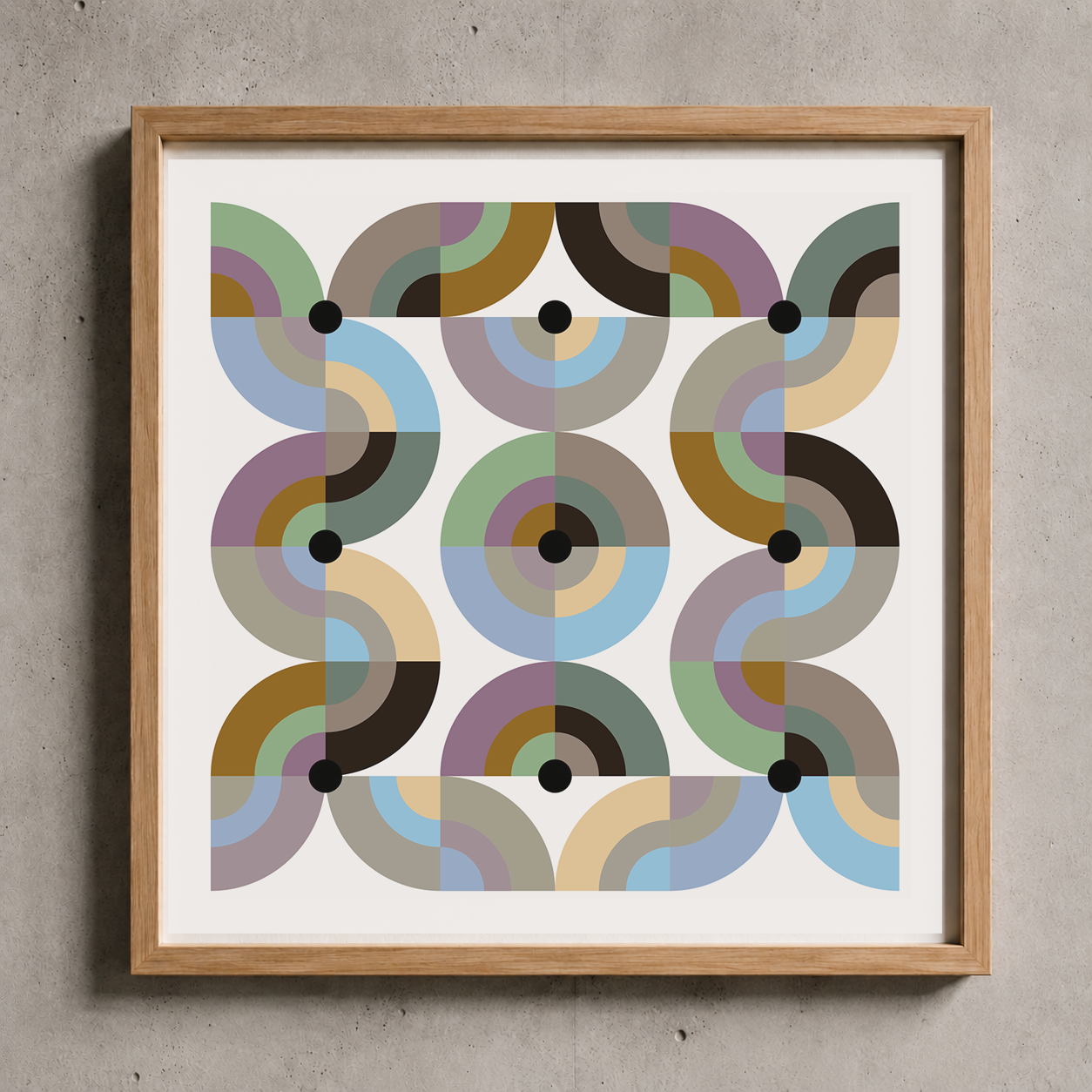
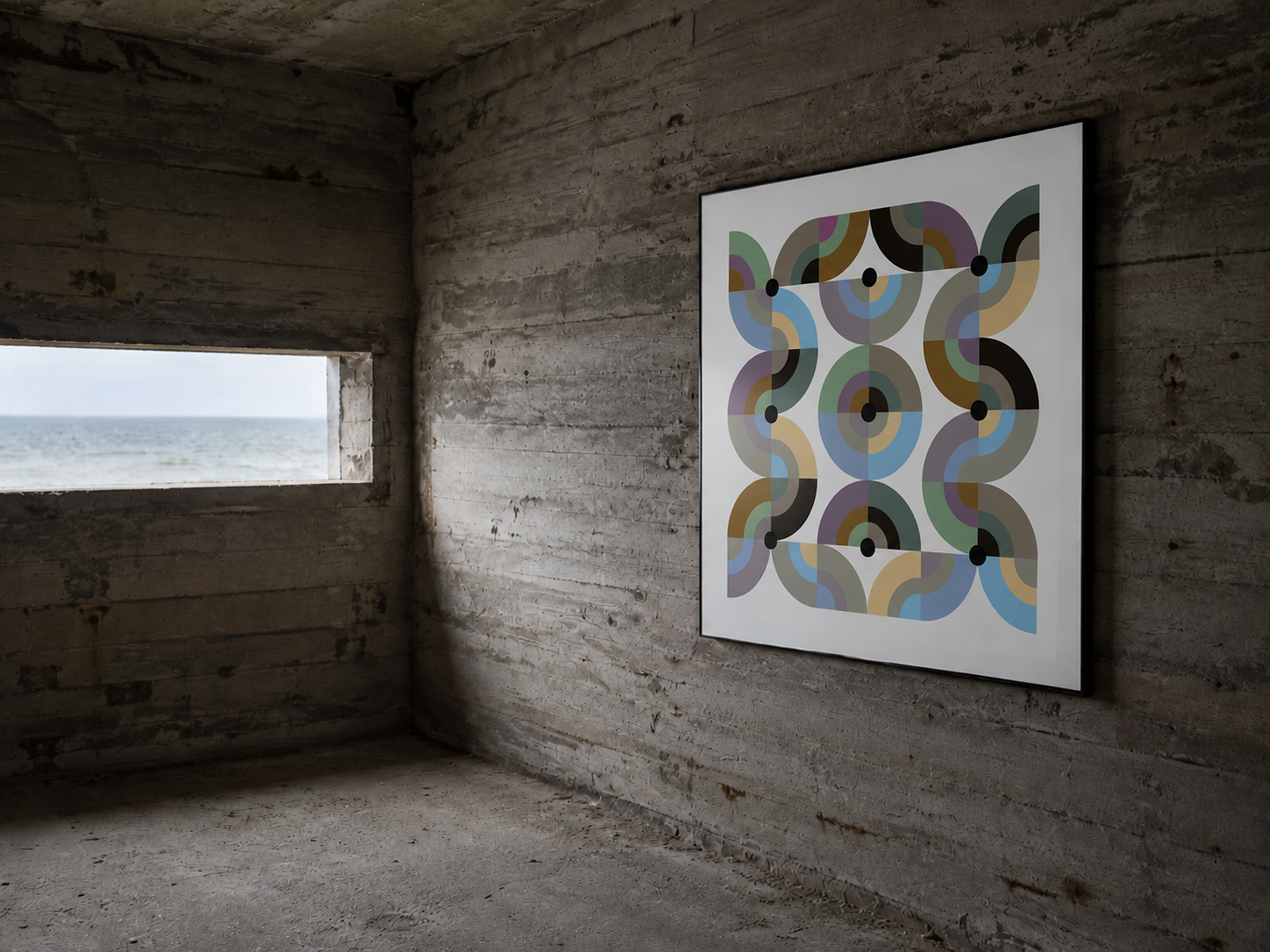
(NL) De schijven grijpen in elkaar en het centrum verhuist naar de naden ertussen. Aangrenzende lezingen schuiven naar binnen en komen samen rond een midden — de ene datum vloeit over in de volgende, een soft time traveling.
(EN) The discs interlock and the centre migrates to the joints between them. Neighbouring readings slide inward and meet around a middle — one date flows into the next, a soft time traveling.
3 · Het veld / The Field
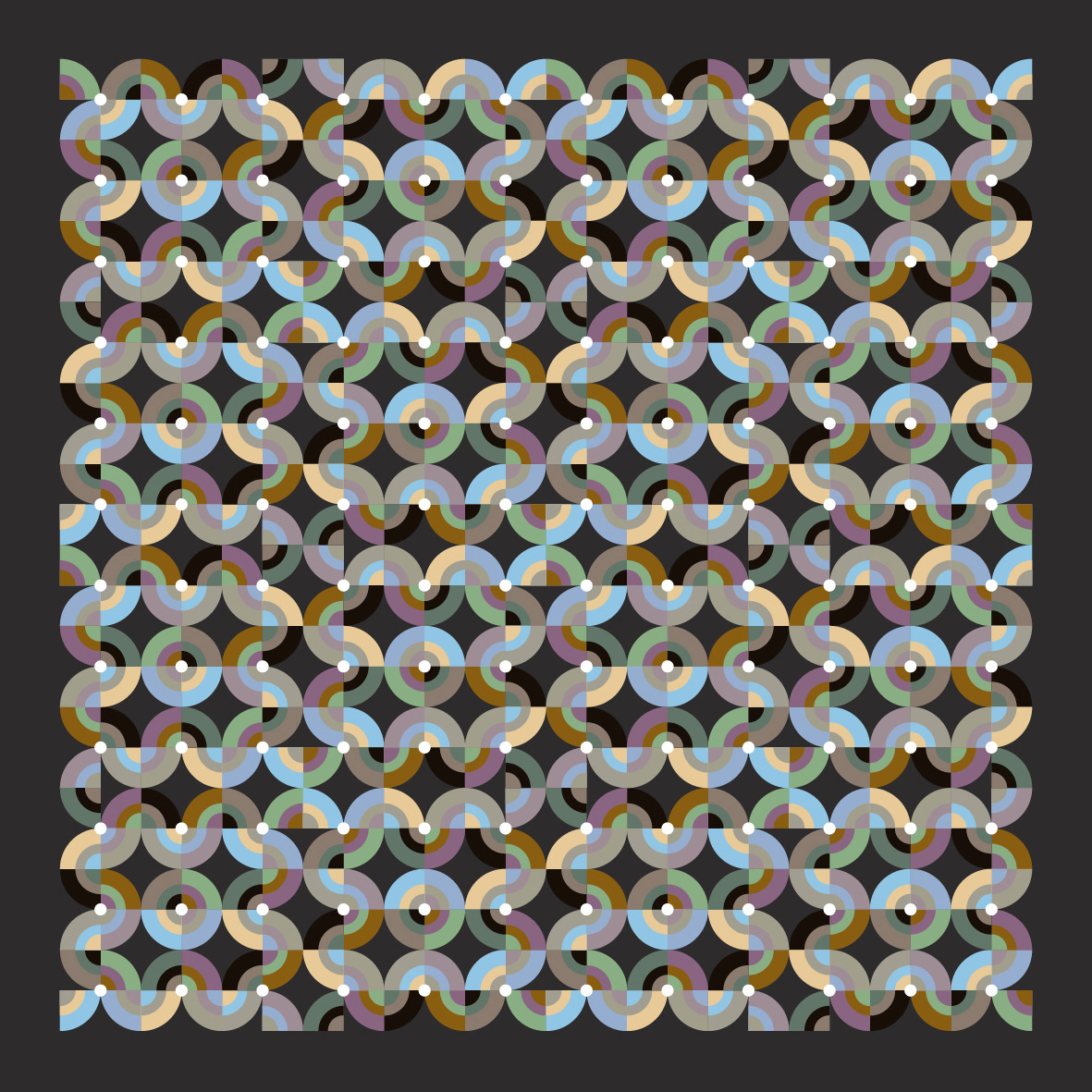
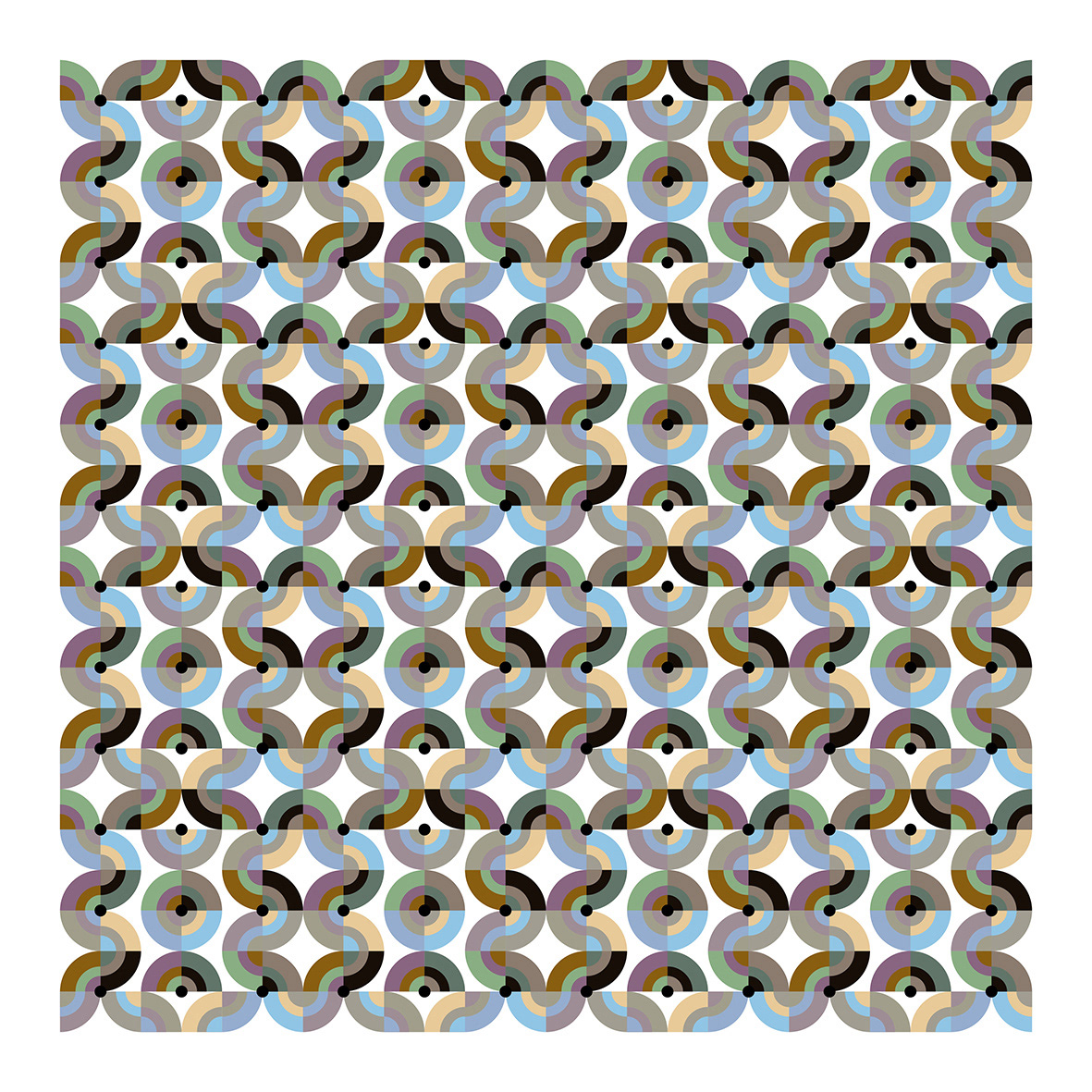
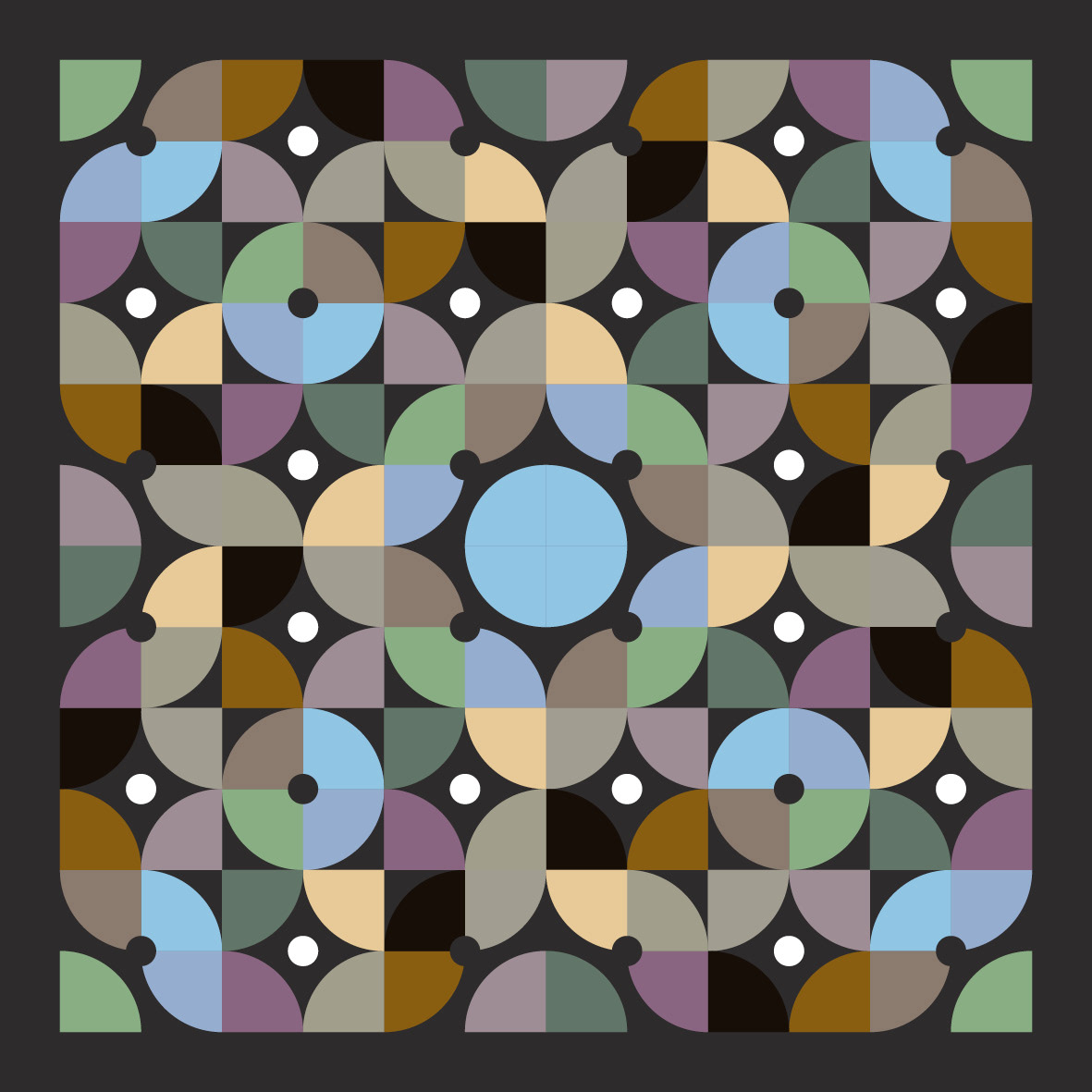
(NL) De module vermenigvuldigd tot de afzonderlijke datum oplost in puur optisch ritme. Lees de regel en het is een kalender; doe een stap terug en het is textiel.
(EN) The module multiplied until the individual date dissolves into pure optical rhythm. Read the rule and it is a calendar; step back and it is textile.
4 · Masker van de aanpassing / Mask of the Operation
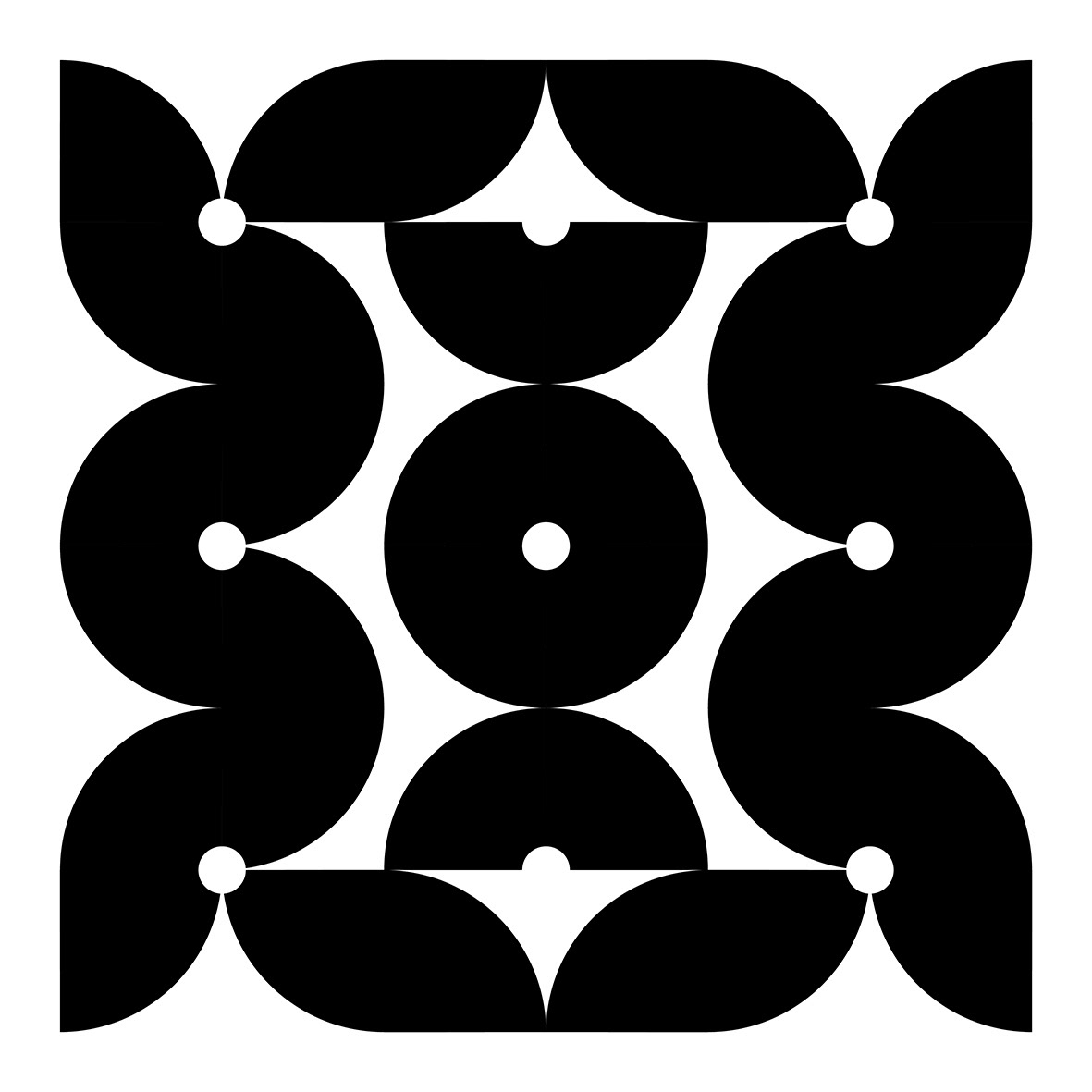
(NL) Dezelfde figuur als de Aanpassing, met de kleurregel uitgeschakeld. Figuur en grond keren om: het heden, eerst een zwart punt, wordt een witte opening.
(EN) The same figure as the Operation, with the colour rule switched off. Figure and ground invert: the present, once a black point, becomes a white opening.
5 · Masker van het veld / Mask of the Field
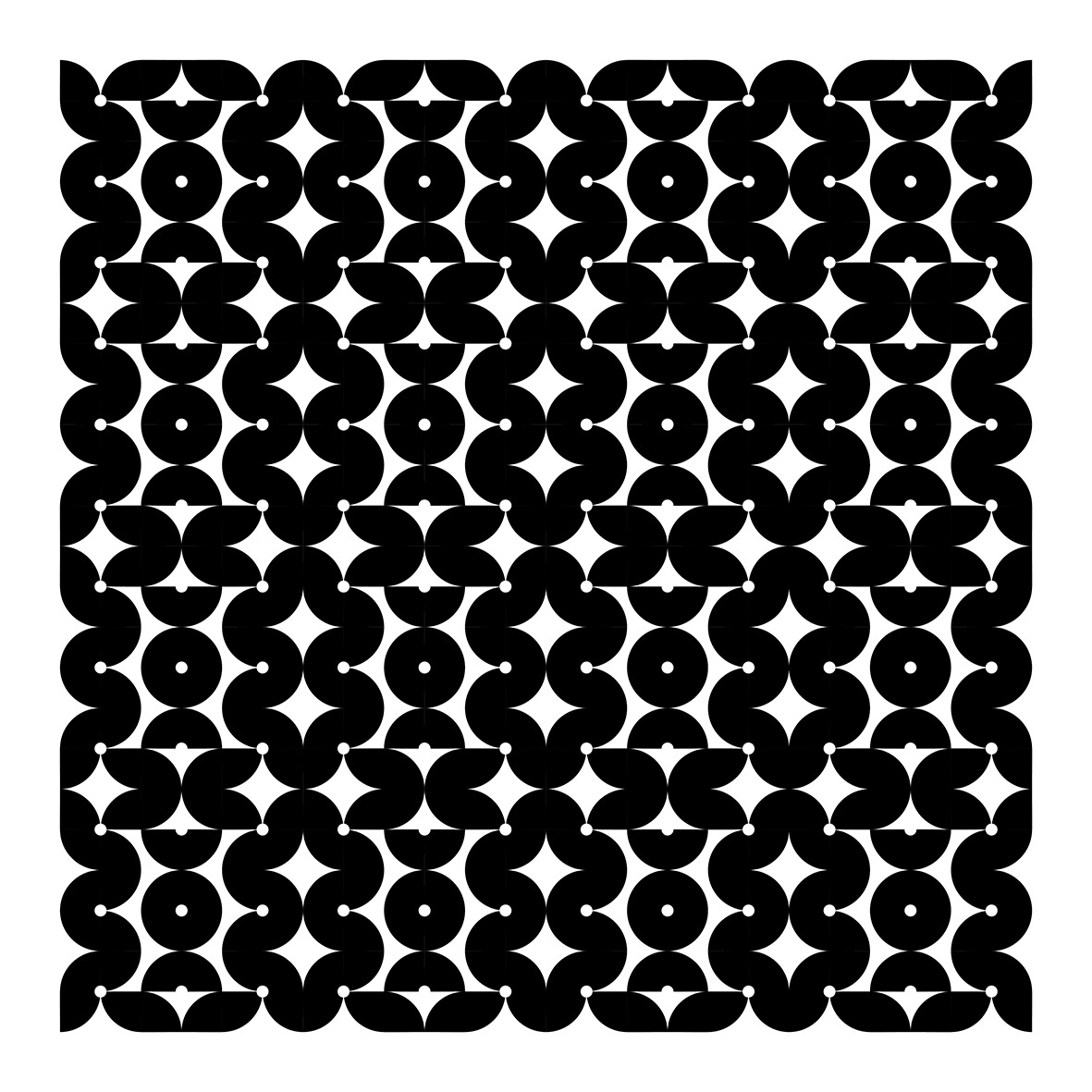
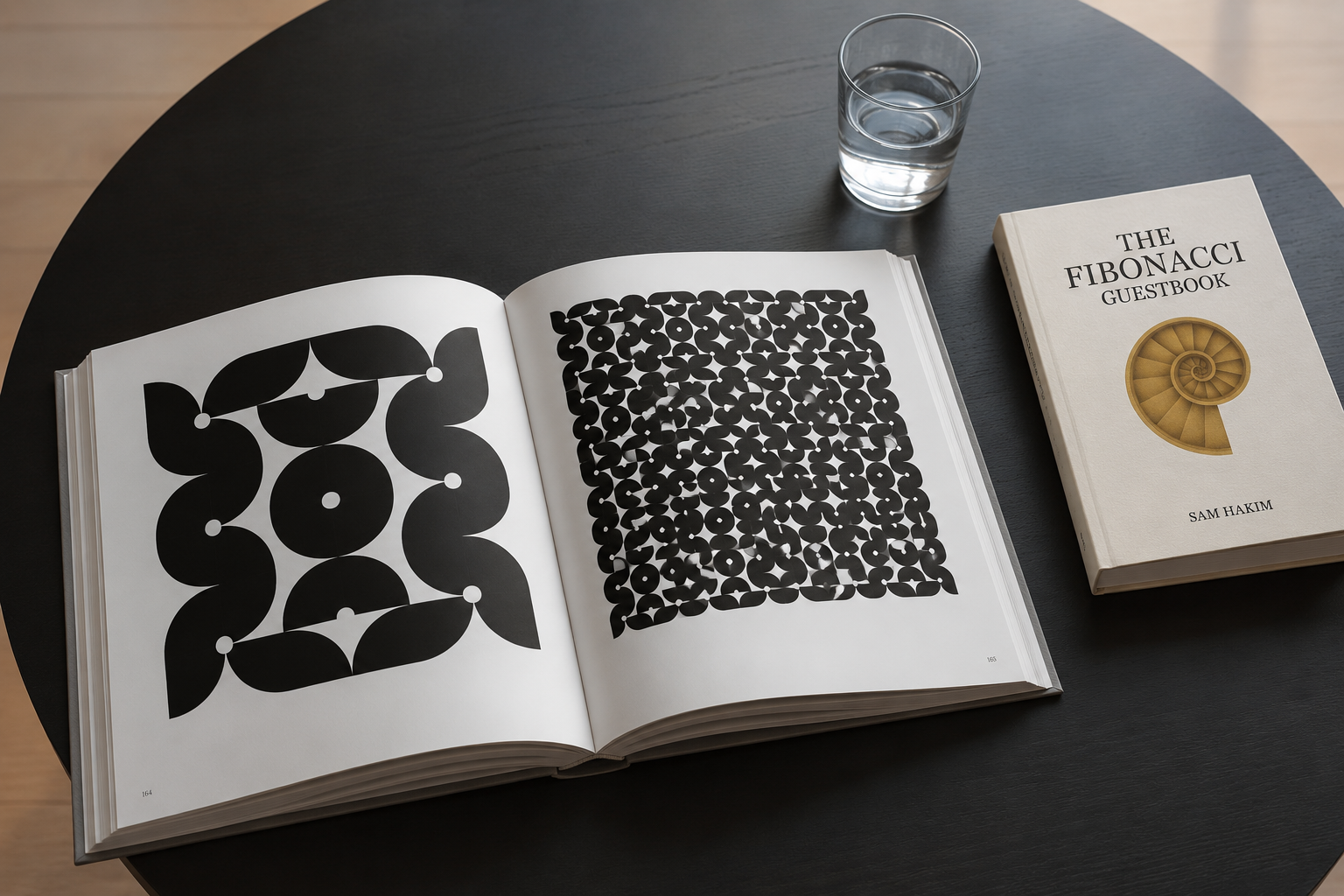
(NL) Dezelfde figuur als het Veld, teruggebracht tot zwart-wit. De kalender is verdwenen; het textiel blijft.
(EN) The same figure as the Field, reduced to black and white. The calendar has gone; the textile stays.
(NL) De datum is 6 juni 1944.
Deze kleuren zijn niet gekozen om hun schoonheid. Ze zijn de rekenkundige uitkomst van een dag waarop op de stranden van Normandië tienduizenden mensen stierven. Het systeem weet dat niet. Het rekent, en levert groen, oker, blauw, zwart.
Daar ligt de vraag die dit werk stelt en niet beantwoordt. Wanneer een datum wordt teruggebracht tot data, wat blijft er dan over van wat er gebeurde? Verdwijnt de geschiedenis in het raster, of wordt ze er juist in bewaard — onleesbaar, maar aanwezig, zoals een naam op een steen die niemand meer uitspreekt? Het patroon zwijgt. Dat zwijgen is niet neutraal.
Elk patroon heeft een breuk nodig om gelezen te kunnen worden. In het hart van elke figuur zit die breuk: een leegte, uit de reeks gestapt, zonder kleur. Noem het het heden. Noem het de plek waar de telling ophoudt.
(EN) The date is 6 June 1944.
These colours were not chosen for their beauty. They are the arithmetic outcome of a day on which tens of thousands died on the beaches of Normandy. The system does not know this. It calculates, and returns green, ochre, blue, black.
There lies the question this work asks and does not answer. When a date is reduced to data, what remains of what happened? Does history vanish into the grid, or is it preserved there — unreadable, but present, like a name on a stone that no one speaks any more? The pattern is silent. That silence is not neutral.
Every pattern needs a break in order to be read. At the heart of each figure that break is waiting: a void, stepped out of the sequence, without colour. Call it the present. Call it the place where counting stops.
COLOFON
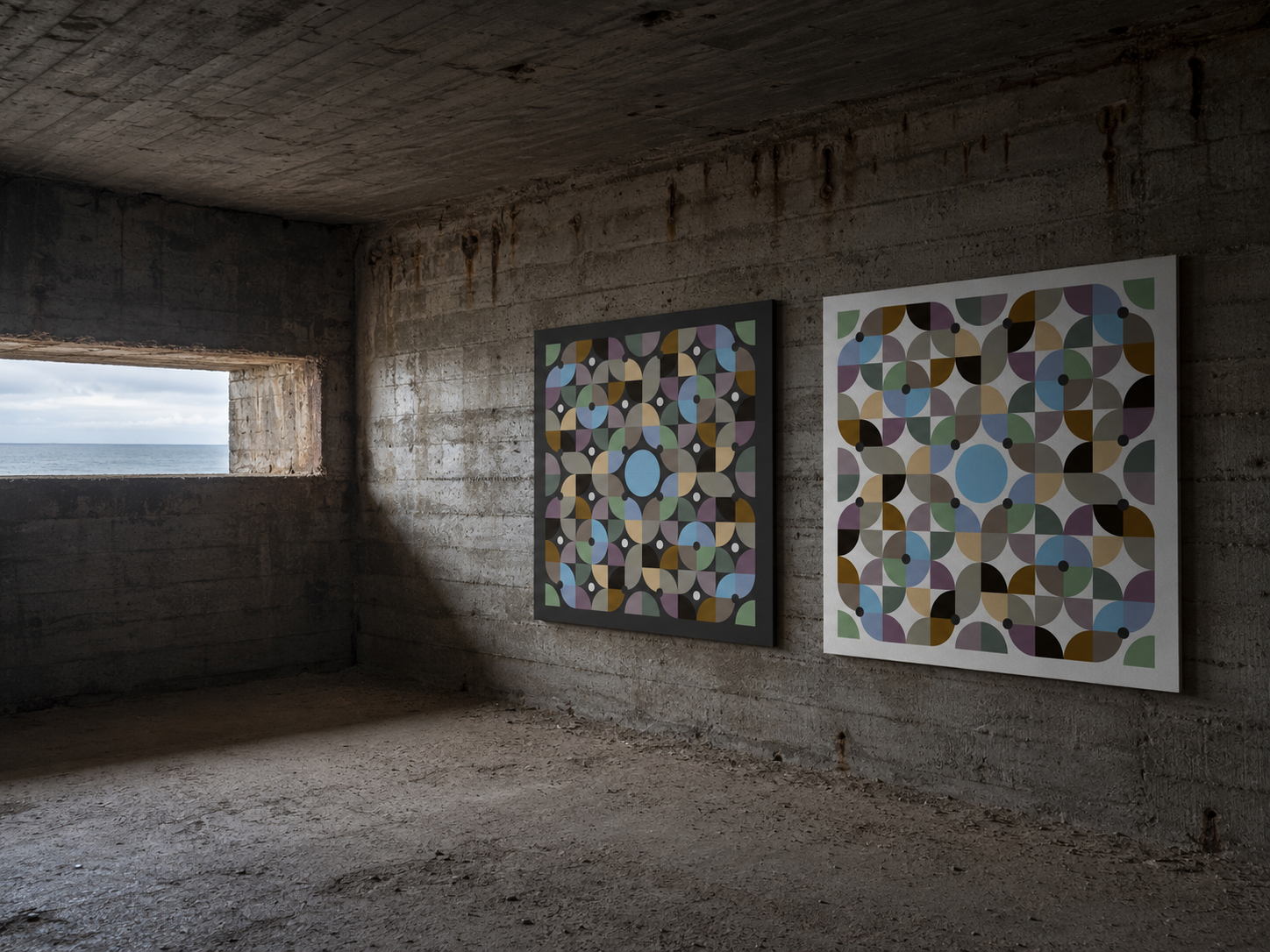
(NL) D-Day PATTERNS · 2026 · Digitaal vectorwerk, archival pigment print · 55 × 55 cm (maat afgeleid uit de Fibonacci-reeks) · Reeks van vijf, met twee maskers · Onderdeel van GIS/WIS, Chromatische Datums · Atelier Argos, Zwolle.
(EN) D-Day PATTERNS · 2026 · Digital vector artwork, archival pigment print · 55 × 55 cm (dimensions derived from the Fibonacci sequence) · Series of five, including two masks · Part of GIS/WIS, Chromatic Dates · Atelier Argos, Zwolle.