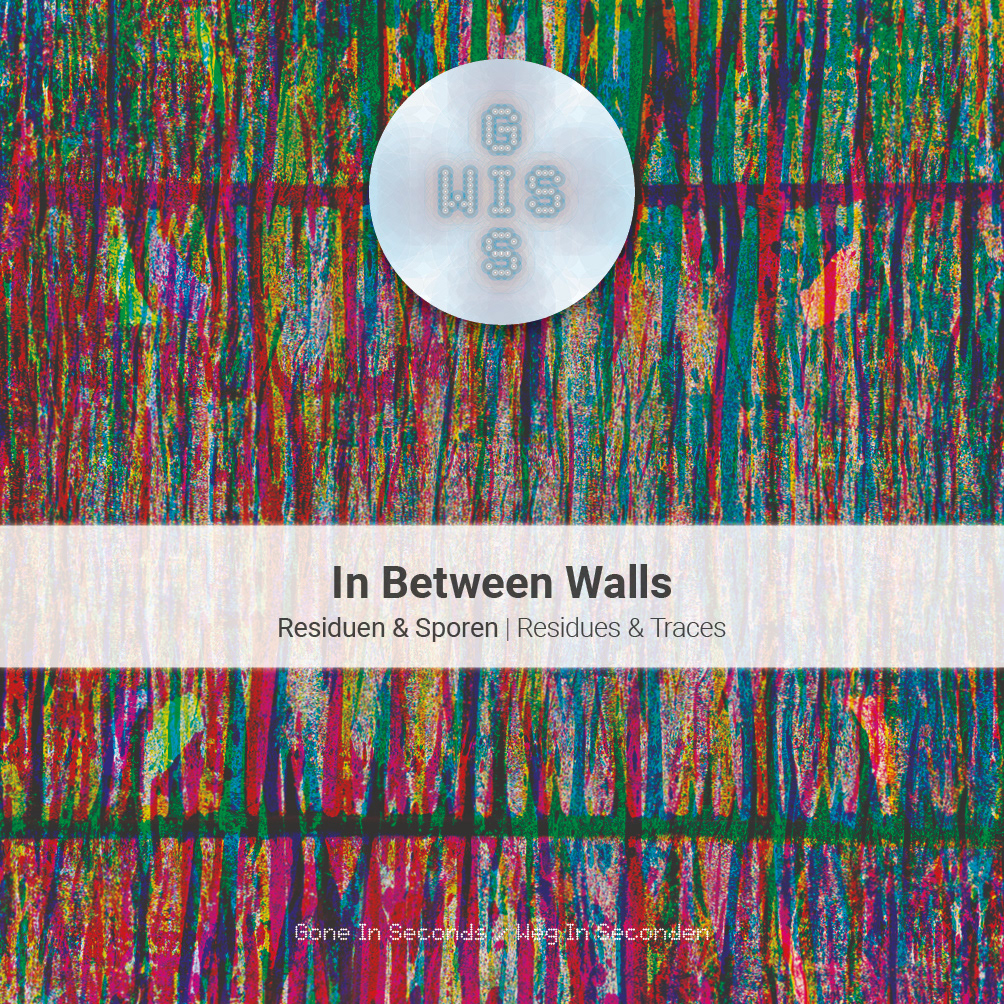
(NL) In Between Walls is een visueel onderzoek naar ruimte, materie en het residu van architectuur. Het project verzamelt sporen op muren — verf, slijtage, lagen, verkleuring en afgescheurde posters — ontstaan door tijd, gebruik en herhaling. Wat ooit oppervlak was, wordt archief: een gelaagde registratie van handelingen en aanwezigheid. Fragmenten van affiches worden opnieuw gelezen en samengevoegd tot nieuwe composities, waarin CMYK-lagen onverwachte beelden genereren.
Waar de muren tonen wat achterblijft, zoekt CornerPiece dezelfde tussenruimte op als gebouwde tegenhanger: geen spoor óp de wand, maar een vorm ín de hoek, waar twee wanden en de vloer samenkomen. Ook hier wordt de kleur niet gekozen maar afgeleid — uit de namen en data van de plek zelf, naar CMYK vertaald. Aangetroffen én geconstrueerd: twee lezingen van dezelfde plek.
De beelden tonen geen objecten, maar processen; geen structuren, maar hun verwering en hergebruik. Tijd manifesteert zich hier als opeenstapeling en positie, niet als lineair verloop. De data wordt niet geconstrueerd maar aangetroffen; het beeld ontstaat uit wat achterblijft én opnieuw wordt geordend. Elke muur functioneert als een huid waarin geschiedenis zich afzet. Binnen GIS/WIS vormt het werk een archief van ruimtelijke sporen, waarin architectuur verandert in geheugen en oppervlak in tijd.
Bezoek hier de verzameling van Residuen en Sporen
(EN) In Between Walls is a visual investigation into space, matter, and the residue of architecture. The project gathers traces on walls — paint, wear, layers, discolouration, and torn-off posters — formed by time, use, and repetition. What was once surface becomes archive: a layered record of actions and presence. Fragments of posters are re-read and reassembled into new compositions, in which CMYK layers generate unexpected images.
Where the walls show what is left behind, CornerPiece seeks out the same in-between space as a constructed counterpart: not a trace on the wall, but a form in the corner, where two walls and the floor meet. Here too the colour is not chosen but derived — drawn from the names and data of the place itself, translated into CMYK. Found and constructed: two readings of the same place.
The images show no objects, but processes; no structures, but their weathering and reuse. Time manifests here as accumulation and position, not as linear progression. The data is not constructed but encountered; the image arises from what remains and is ordered anew. Each wall functions as a skin in which history settles. Within GIS/WIS, the work forms an archive of spatial traces, in which architecture turns into memory and surface into time.
Visit here the collection of Residues & Traces