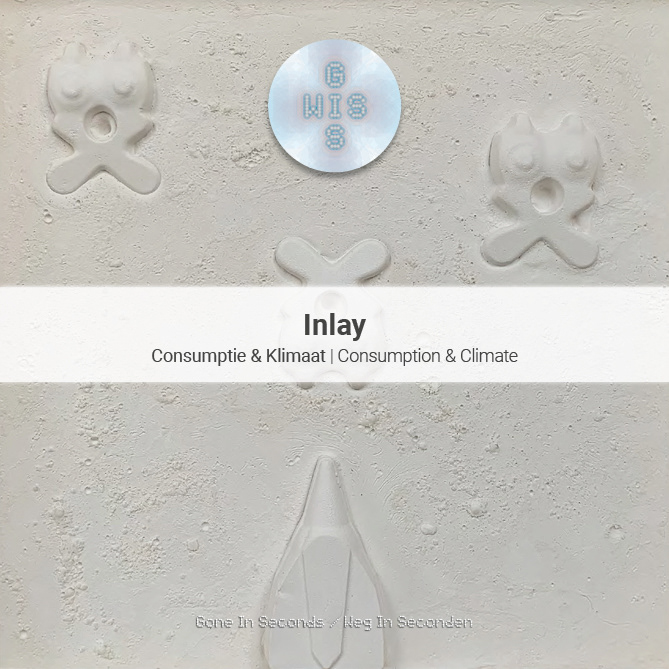
(NL) Inlay is een visueel onderzoek naar vorm, functie en het residu van consumptie. Het project vertrekt vanuit verpakkingsinlays — verborgen structuren die producten beschermen en positioneren. Wat normaal onzichtbaar blijft, verschijnt hier als autonome vormtaal, verwant aan het principe van form follows function. Door deze inlays te verzamelen, te combineren en te vullen met gips, ontstaan nieuwe sculpturale en architectonische composities. De werken resoneren met de Architektons van Kazimir Malevich en de utopische modellen van Alfred Eikelenboom. Tijd manifesteert zich als verschuiving van gebruik naar betekenis. De data wordt niet ontworpen maar hergebruikt; het beeld ontstaat uit bestaande structuren. Wat eenmalig was, wordt herhaalbaar; wat afval was, wordt model. Binnen GIS/WIS vormt Inlay een archief van consumptie, waarin het onzichtbare zichtbaar wordt en het functionele transformeert tot een ruimtelijke en conceptuele orde.
(EN) Inlay is a visual investigation into form, function, and the residue of consumption. The project begins with packaging inlays — hidden structures designed to protect and position products. What usually remains invisible is revealed here as an autonomous language of form, aligned with the principle of form follows function. By collecting, combining, and casting these inlays in plaster, new sculptural and architectural compositions emerge. The works resonate with the Architektons of Kazimir Malevich and the utopian models of Alfred Eikelenboom. Time manifests as a shift from use to meaning. The data is not designed but reused; the image emerges from existing structures. What was single-use becomes repeatable; what was waste becomes model. Within GIS/WIS, Inlay forms an archive of consumption, where the invisible becomes visible and the functional transforms into a spatial and conceptual order.