(NL) Het Vincent van Gogh Project (De weg van schilderij naar gebouw — Deel 1) onderzoekt de transformatie van kunst in het digitale tijdperk.
Internet fungeert als oneindig archief, toegankelijk via de mobiele telefoon.
Tijdens het laden van beelden ontstaan tijdelijke kleurvlakken door trage verbindingen.
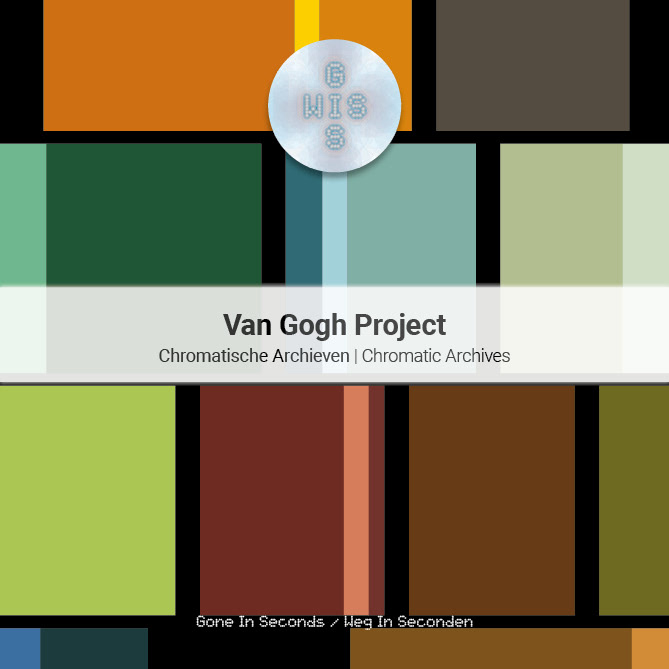
Deze tussenbeelden worden vastgelegd als screenshots — fragmenten tussen verschijnen en voltooiing.
Wat oorspronkelijk figuratief is, verschijnt hier als abstracte structuur van kleur en vlak.
Internet fungeert als oneindig archief, toegankelijk via de mobiele telefoon.
Tijdens het laden van beelden ontstaan tijdelijke kleurvlakken door trage verbindingen.
Deze tussenbeelden worden vastgelegd als screenshots — fragmenten tussen verschijnen en voltooiing.
Wat oorspronkelijk figuratief is, verschijnt hier als abstracte structuur van kleur en vlak.
Uit zoekresultaten rond Vincent van Gogh worden beelden verzameld en opnieuw samengesteld.
Met behulp van een app worden fragmenten gecombineerd tot nieuwe composities.
De data wordt niet geïnterpreteerd maar herordend; het beeld ontstaat uit digitale vertraging.
De werken roepen associaties op met abstractie en systeem, en verbinden onverwacht met Mondriaan en De Stijl.
Met behulp van een app worden fragmenten gecombineerd tot nieuwe composities.
De data wordt niet geïnterpreteerd maar herordend; het beeld ontstaat uit digitale vertraging.
De werken roepen associaties op met abstractie en systeem, en verbinden onverwacht met Mondriaan en De Stijl.
Zo ontstaat een verschuiving van schilderij naar digitaal veld, en van beeld naar architectonisch denken.
Binnen GIS/WIS functioneert het project als een archief van digitale waarneming,
waarin kunst verschijnt als residu van snelheid, technologie en toeval.
Binnen GIS/WIS functioneert het project als een archief van digitale waarneming,
waarin kunst verschijnt als residu van snelheid, technologie en toeval.
(EN) The Vincent van Gogh Project (From Painting to Building — Part 1) explores the transformation of art in the digital age.
The internet functions as an infinite archive, accessed through the mobile phone.
During image loading, temporary colour fields emerge due to slow connections.
These intermediate states are captured as screenshots — fragments between appearance and completion.
What was once figurative appears here as an abstract structure of colour and plane.
The internet functions as an infinite archive, accessed through the mobile phone.
During image loading, temporary colour fields emerge due to slow connections.
These intermediate states are captured as screenshots — fragments between appearance and completion.
What was once figurative appears here as an abstract structure of colour and plane.
Images related to Vincent van Gogh are collected and recomposed from search results.
Using an app, fragments are combined into new compositions.
The data is not interpreted but reorganised; the image emerges through digital delay.
The works evoke associations with abstraction and system, connecting unexpectedly to Mondrian and De Stijl.
Using an app, fragments are combined into new compositions.
The data is not interpreted but reorganised; the image emerges through digital delay.
The works evoke associations with abstraction and system, connecting unexpectedly to Mondrian and De Stijl.
A shift occurs from painting to digital field, and from image to architectural thinking.
Within GIS/WIS, the project functions as an archive of digital perception,
where art appears as a residue of speed, technology, and chance.
Within GIS/WIS, the project functions as an archive of digital perception,
where art appears as a residue of speed, technology, and chance.