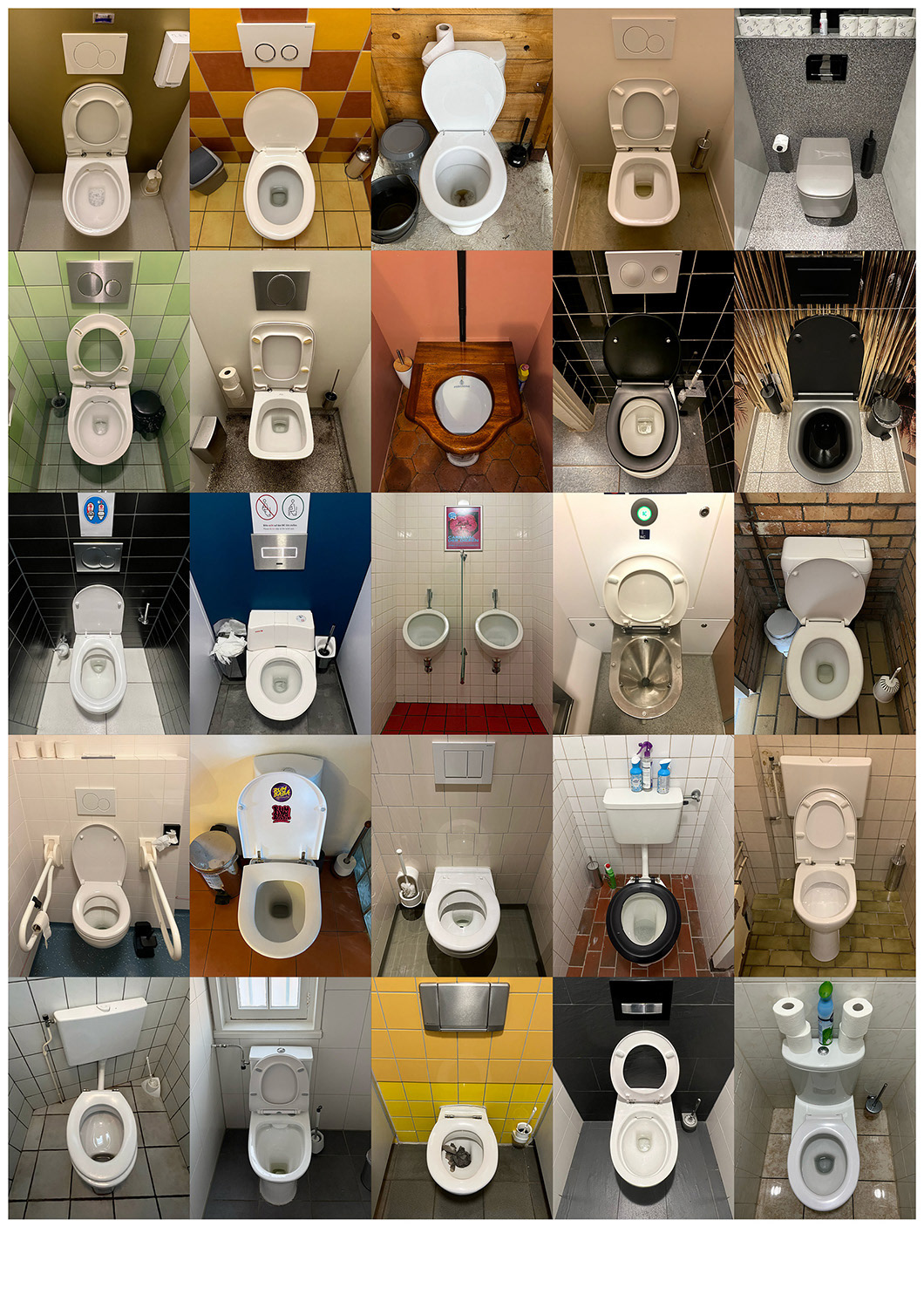
01_ToiletCityTours_The Other Collection (I) — overview
(NL) Het toilet is de kleinste ruimte die we met vreemden delen. Privé en publiek tegelijk: een interieur dat je alleen bezet, achter een deur die een hele stad heeft aangeraakt.
Twee woorden regeren hier — bezet en vrij: de meest gereduceerde bezetting die er bestaat, een grendel, een slot, in de trein een oplichtende groene ring. En toch is het ook tussenruimte — de meest intieme handeling, in de meest anonieme architectuur die we kennen. Een drempel tussen lichaam en stad.
Ik fotografeer deze ruimtes zoals de Bechers hun watertorens fotografeerden: frontaal, egaal, zonder anekdote. Pas in de herhaling verschijnt het systeem. Eén toilet is toeval; honderden zijn een census — van hygiëne, klasse, ontwerp, en de grenzen die een samenleving trekt.
De meeste van deze ruimtes zijn musea — tempels van contemplatie, gezien vanuit de enige ruimte waar het lichaam binnendringt. Hadids MAXXI ontvangt de bezoeker met een schaal van gepolijst staal, hard als een cel; een ander museum kleedt dezelfde handeling in Carrara-marmer. Dit is de collectie die het museum niet toont — de andere collectie.
Drie manieren om deze handeling te huisvesten keren steeds terug: het ambacht (een houten bril, een naam in het porselein), de institutie (staal en marmer, anoniem) en de machine (de sensor, het groene licht dat zichzelf bezet en vrij meldt).
Op de deur staat nog altijd een van de laatste harde binaire codes in de openbare ruimte. Veertig jaar lang heeft mijn werk die reductie geweigerd — en het toilet is precies de plek waar het en/en wordt tegengehouden.
(EN) The toilet is the smallest room we share with strangers. Private and public at once: an interior you occupy alone, behind a door an entire city has touched.
Two words govern it — occupied and free: the most reduced occupation there is, a latch, a lock, on the train a glowing green ring. And yet it is also in-between — the most intimate act, in the most anonymous architecture we know. A threshold between body and city.
I photograph these rooms as the Bechers photographed their water towers: frontal, even, without anecdote. Only in repetition does the system appear. One toilet is an accident; hundreds are a census — of hygiene, class, design, and the borders a society draws.
Most of these rooms are museums — temples of contemplation, seen from the one room where the body intrudes. Hadid's MAXXI receives visitors with a bowl of polished steel, hard as a cell; another museum dresses the same act in Carrara marble. This is the collection the museum does not show — the other collection.
Three ways of housing this act keep returning: the craft (a wooden seat, a name in the porcelain), the institution (steel and marble, anonymous) and the machine (the sensor, the green light reporting itself occupied and free).
On the door still stands one of the last hard binary codes in public space. For forty years my work has refused that reduction — and the toilet is where the and/and is held back.
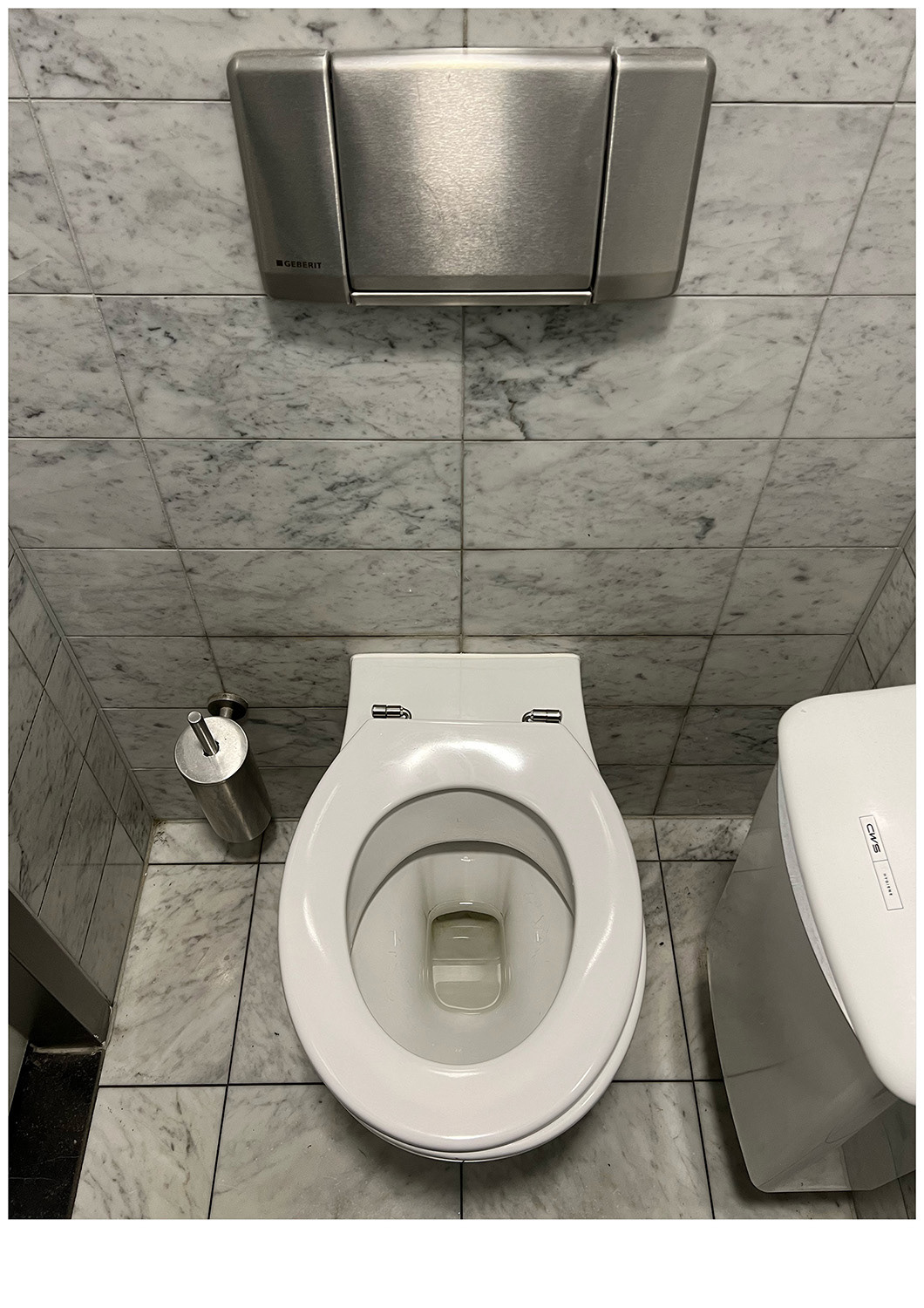
02_ToiletCityTours_Toilet, Van Abbemuseum, Eindhoven, 2024
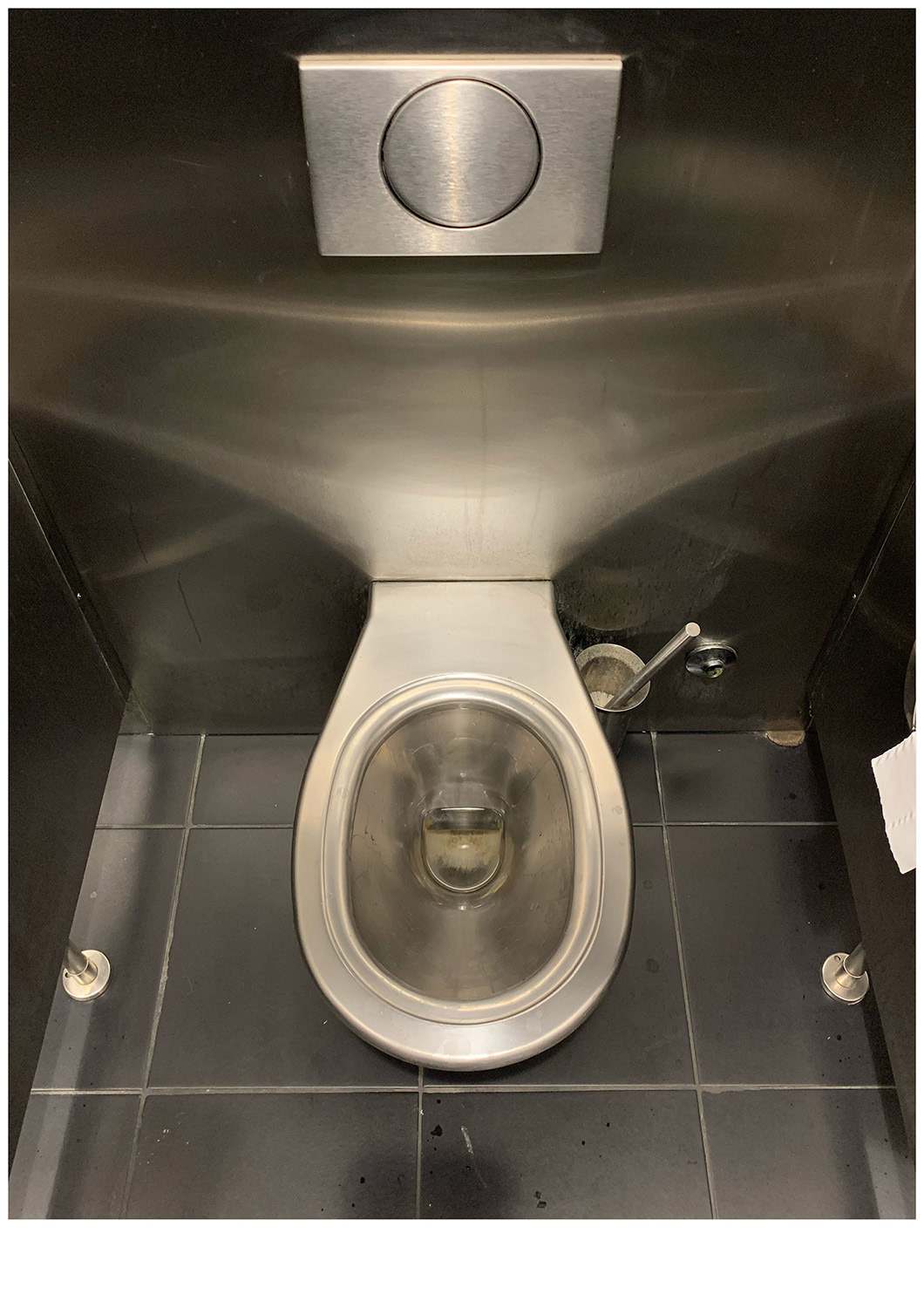
03_ToiletCityTours_Toilet, MAXXI, Rome, 2021
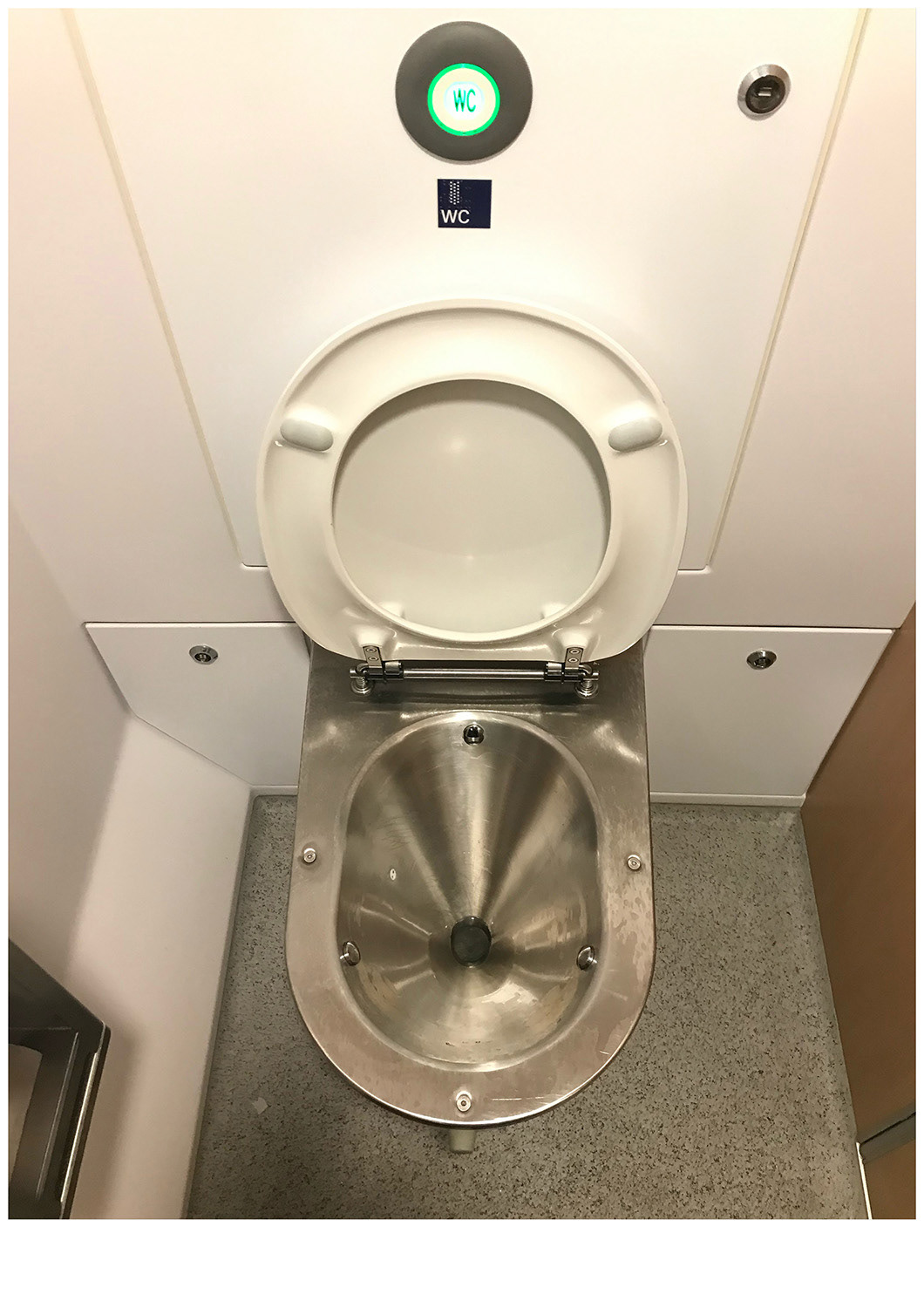
04_ToiletCityTours_Toilet, ICE train, 2021
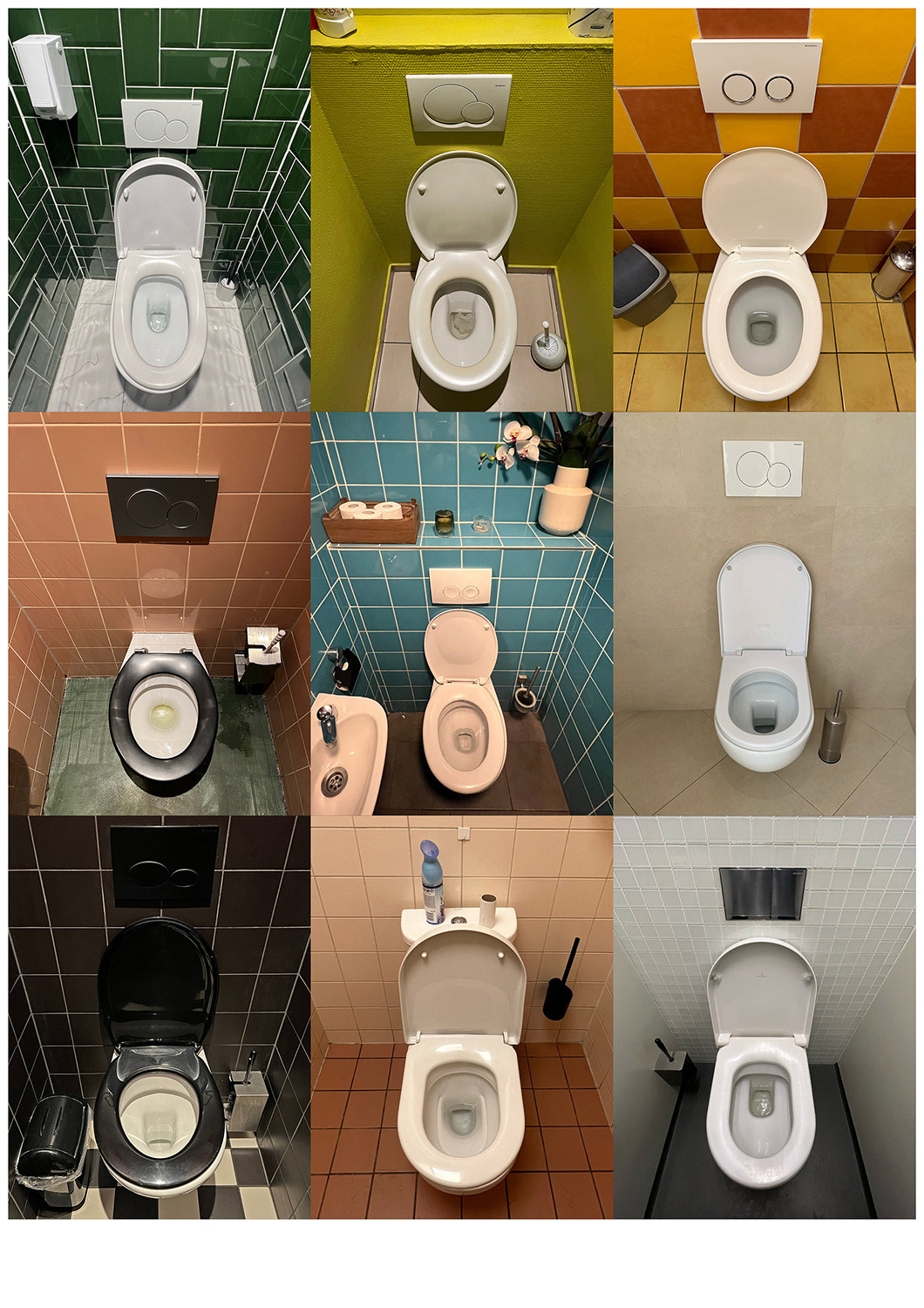
05_ToiletCityTours_The Other Collection (II) — colour
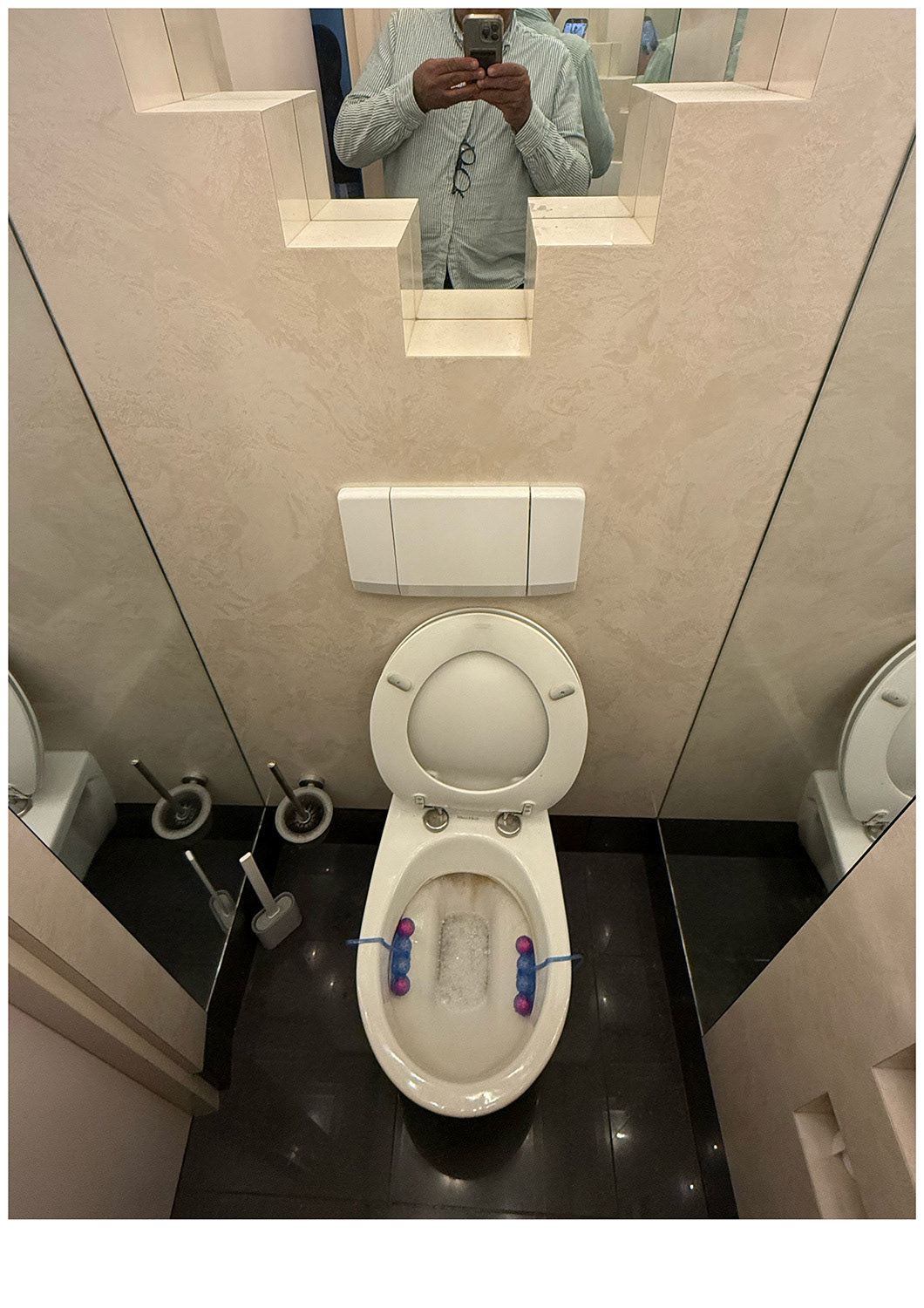
06_ToiletCityTours_Toilet, private house, Deurne, 2026
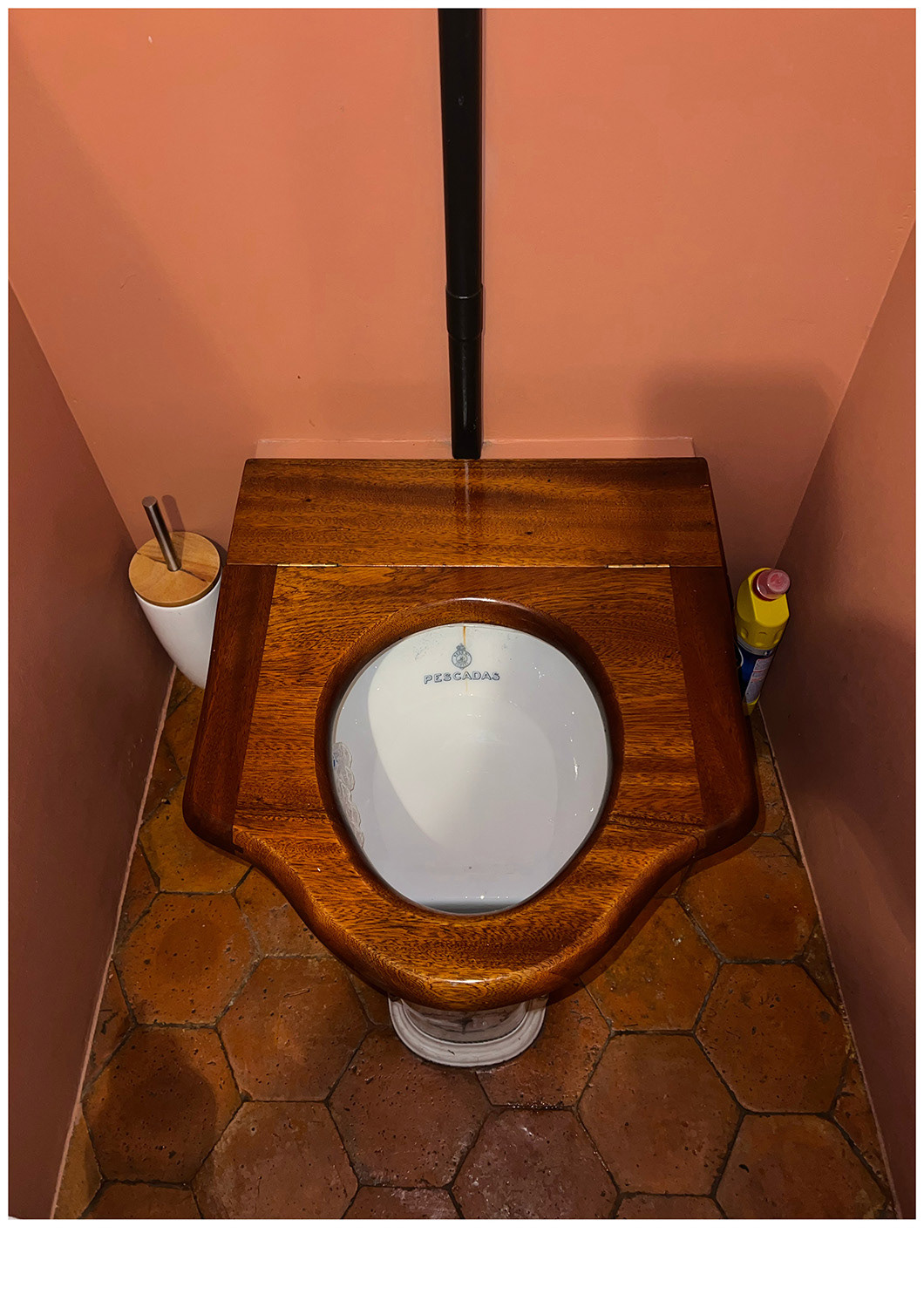
07_ToiletCityTours_Toilet, private house, Breukelen, 2024
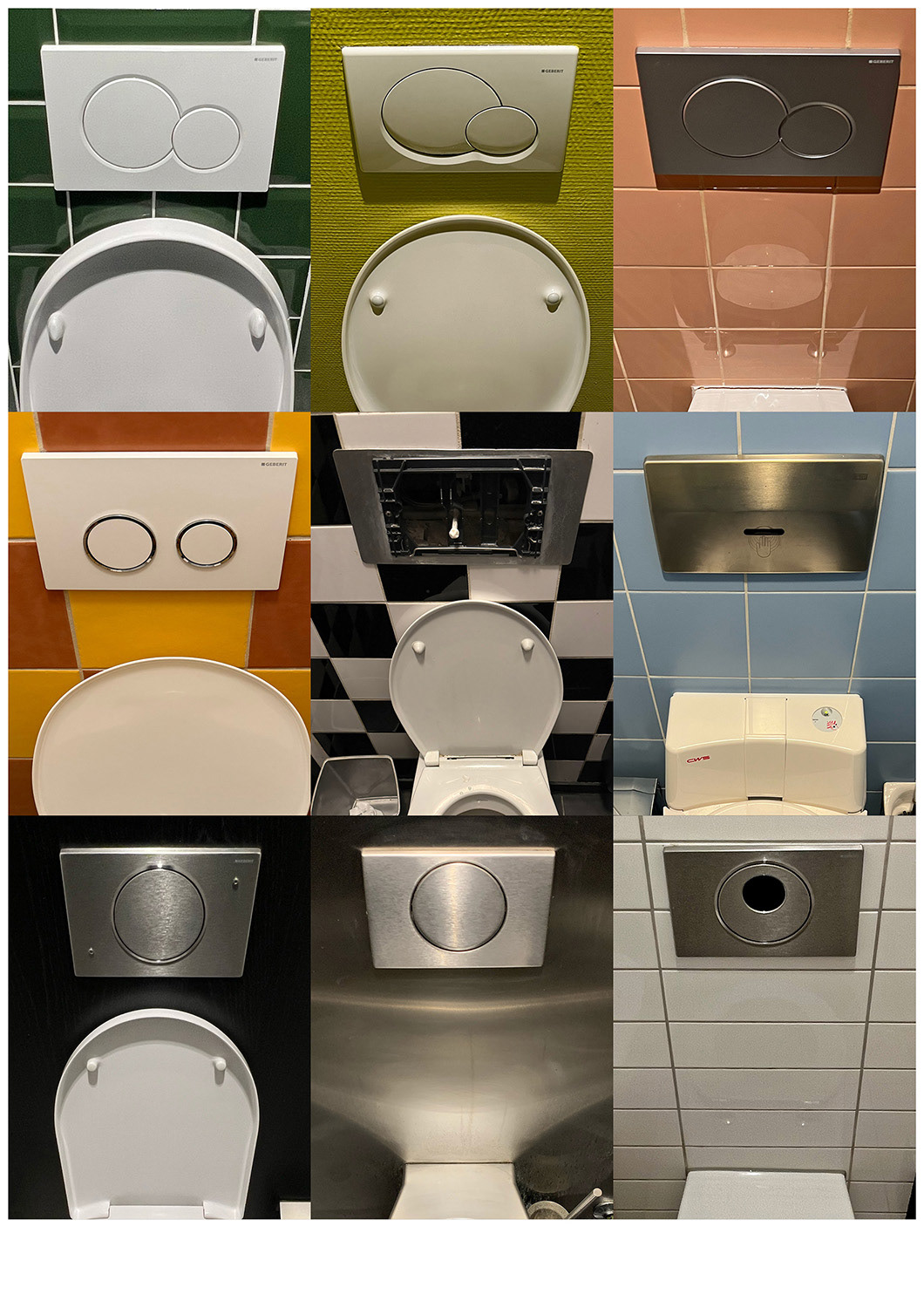
08_ToiletCityTours_The Other Collection (III) — the button
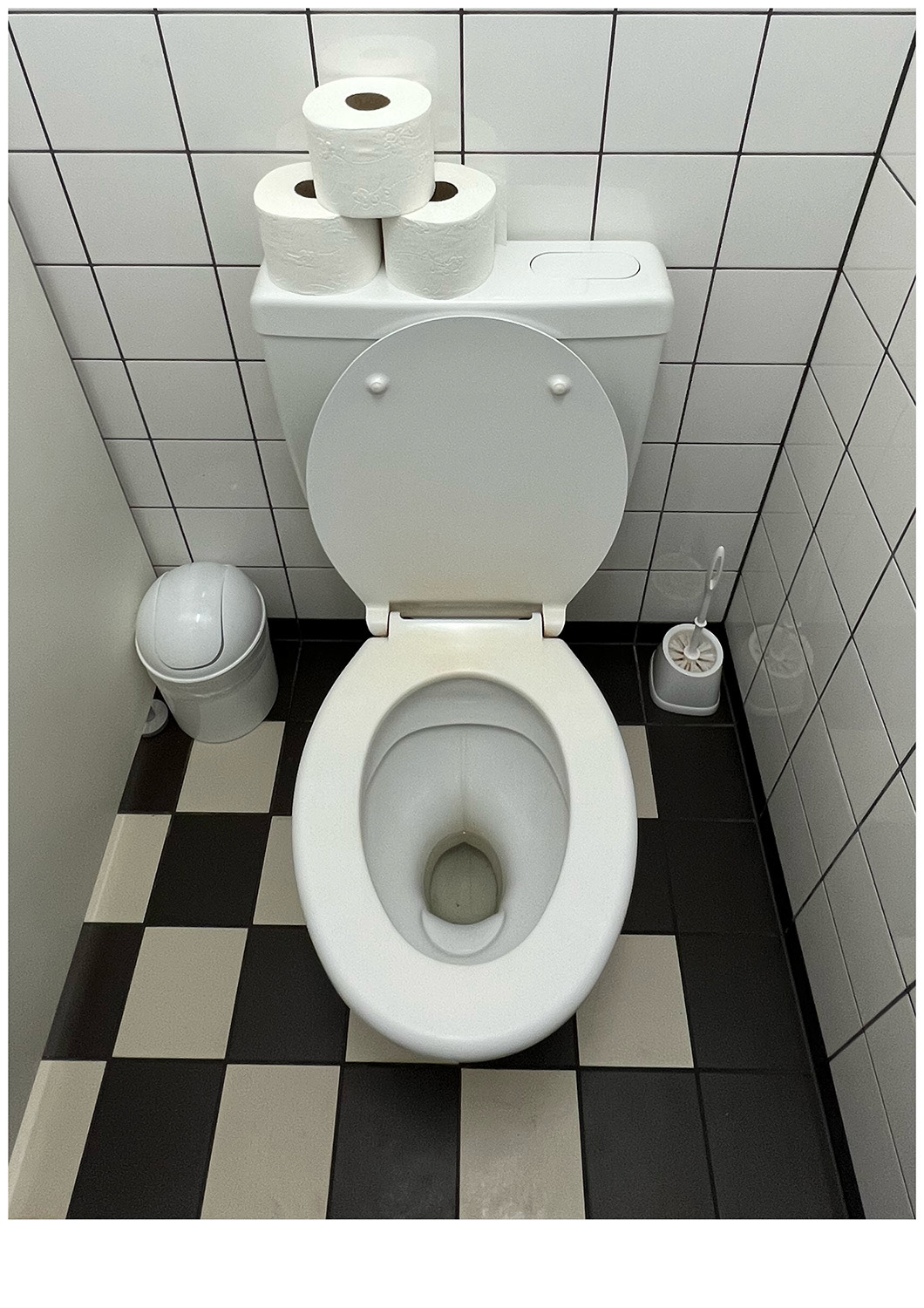
09_ToiletCityTours_Toilet, Hamburger Bahnhof, Berlin, 2023
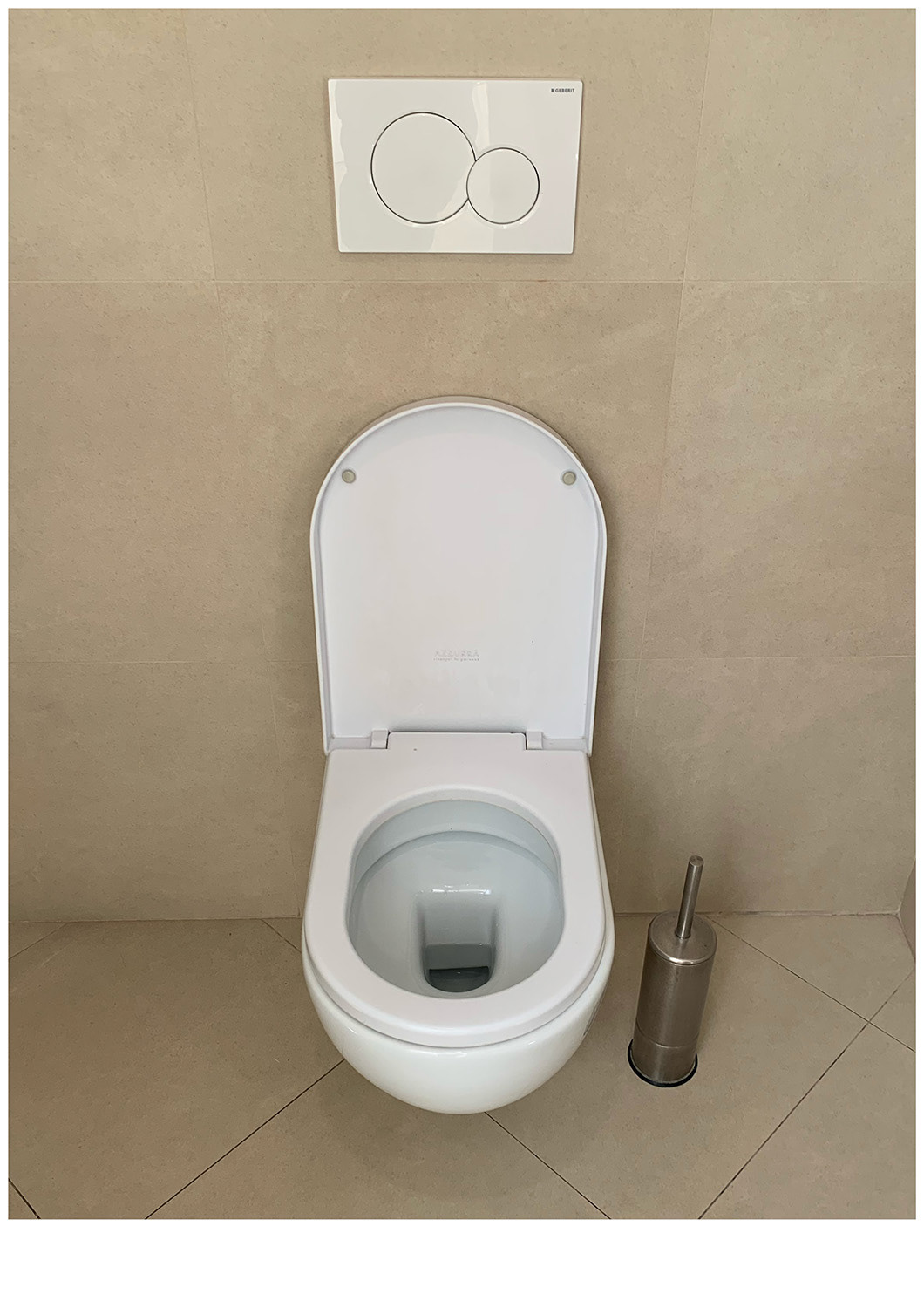
10_ToiletCityTours_Toilet, Galleria Nazionale d'Arte Moderna, Rome, 2021
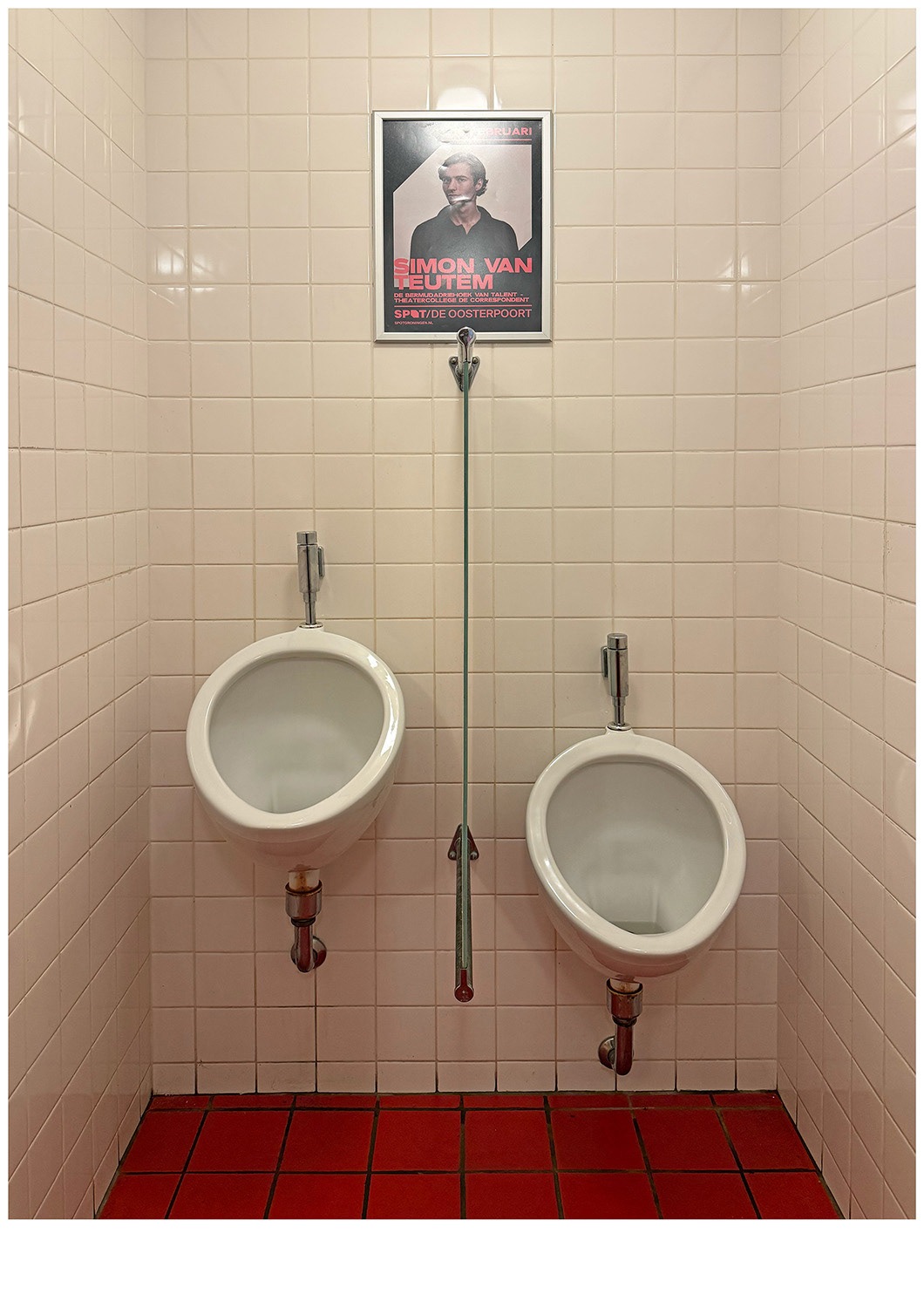
11_ToiletCityTours_Urinals, Theatre De Oosterpoort, Groningen, 2026
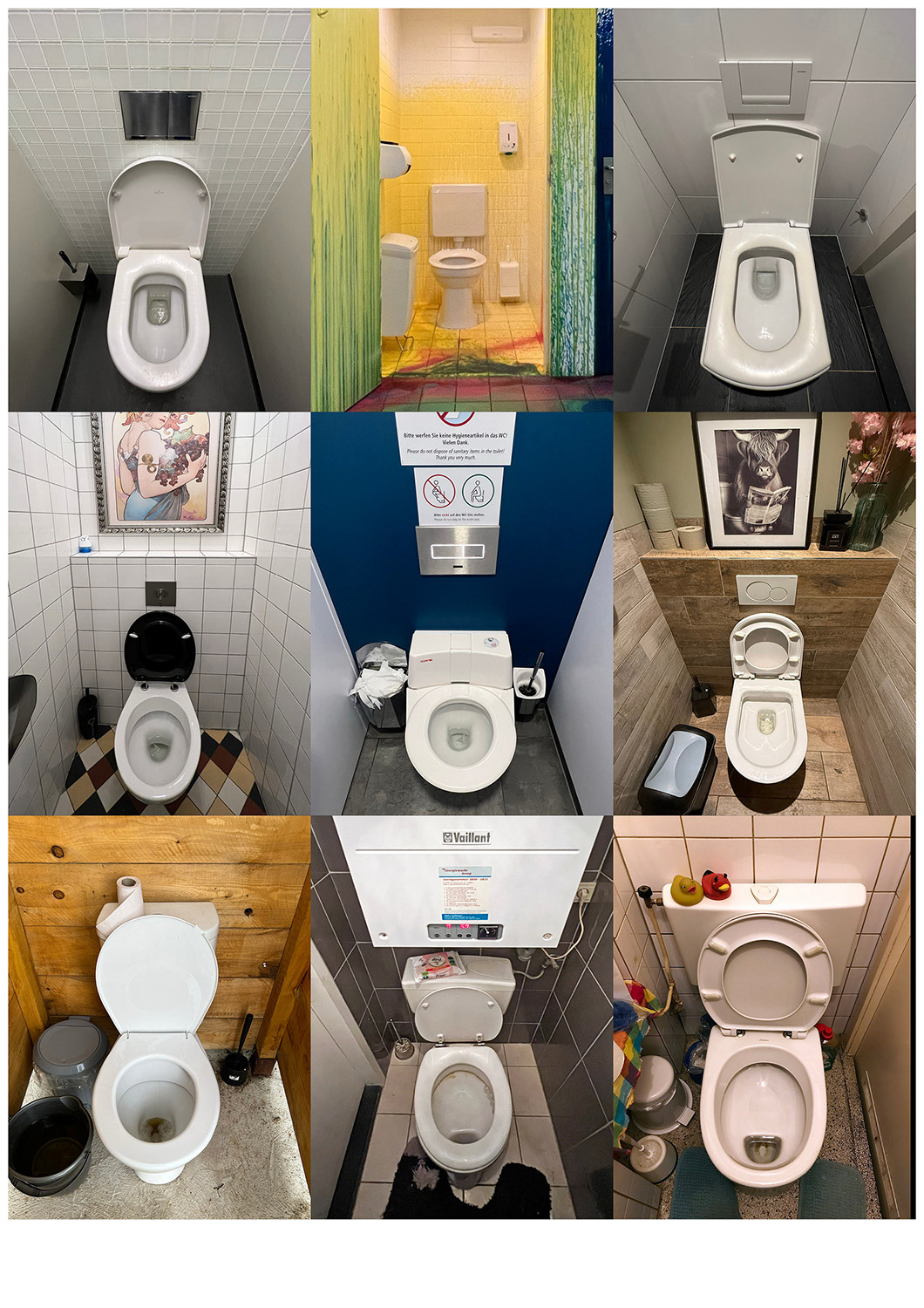
12_ToiletCityTours_The Other Collection (IV) — the edges
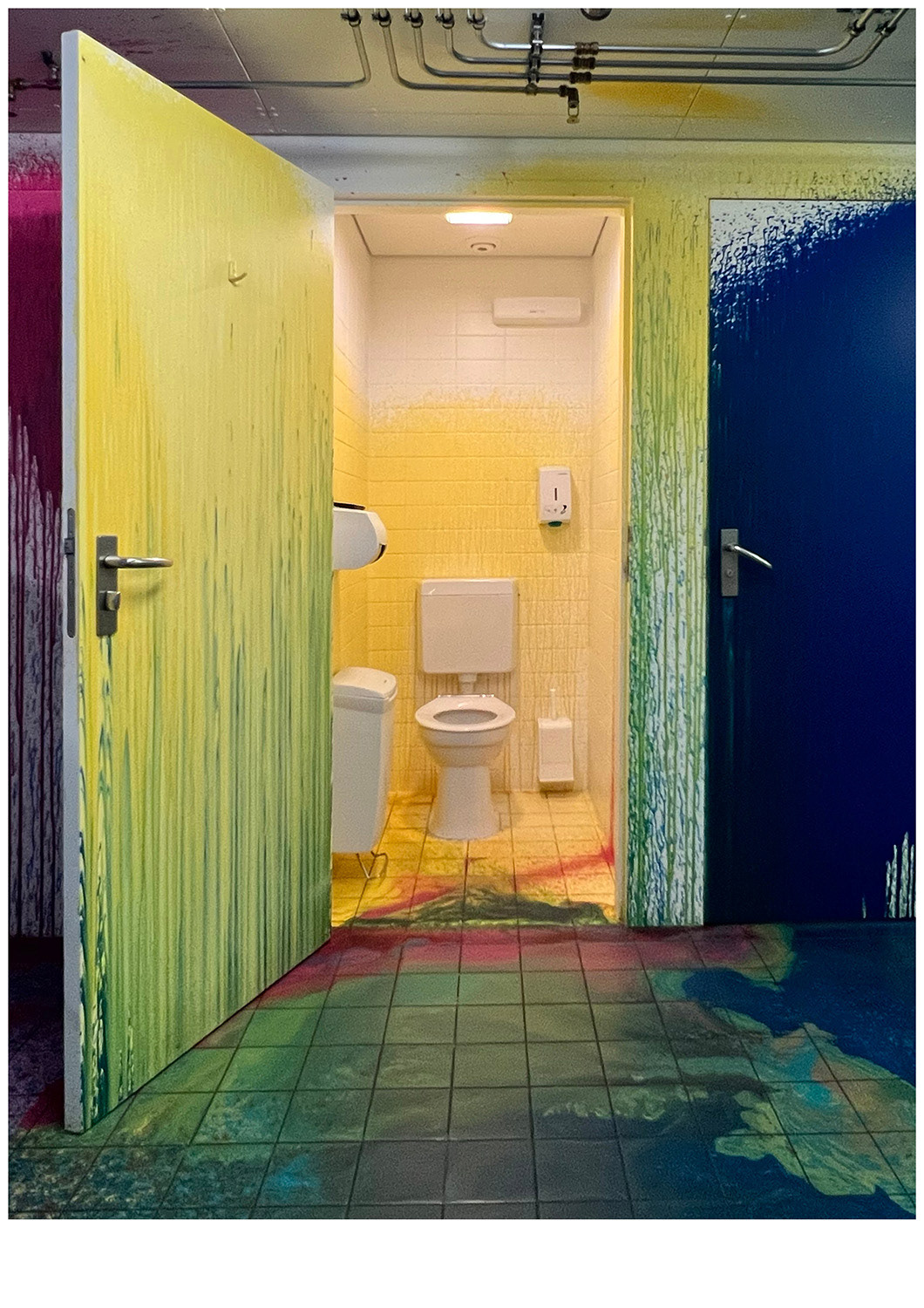
13_ToiletCityTours_Nieuwe Instituut, Rotterdam, 2025
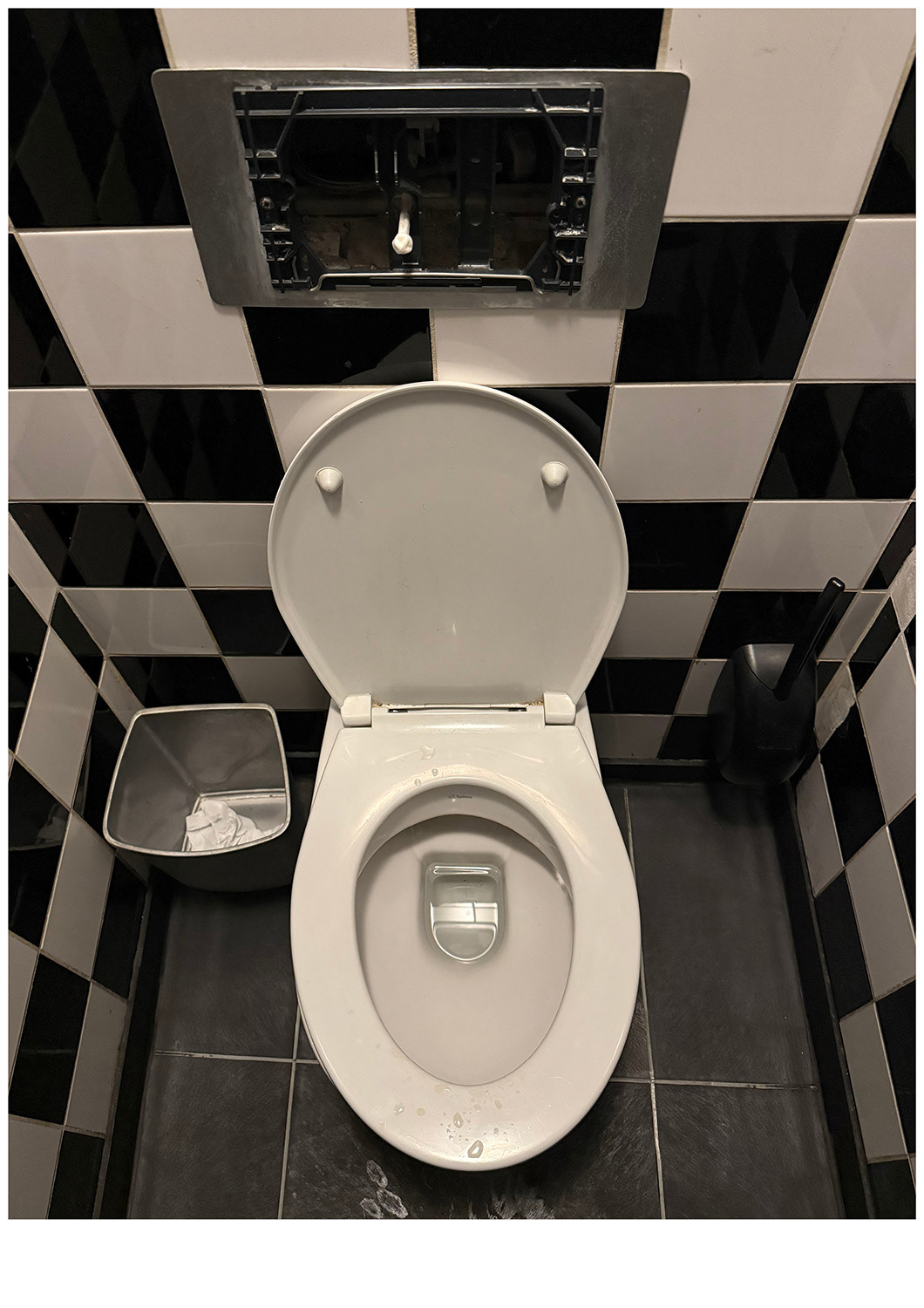
14_ToiletCityTours_VeganTempleBar_2026